
Charter School Reauthorization Newsletter: Communicating the Renewal Process to Families

Charter school reauthorization is the moment when a school's contract with its authorizer comes up for renewal, and the school must demonstrate that it has delivered on the academic and operational promises that justified its charter. For families, reauthorization can feel either like a routine accountability checkpoint or like a threat to their child's school, depending almost entirely on how the school communicates about it.
This guide covers how to write reauthorization newsletters that explain the process clearly, present the school's performance record honestly, and build the community understanding and support that schools need during a high-stakes review.
Starting the conversation early
Families who have never heard about reauthorization before receiving a letter saying it is imminent are not equipped to be supportive stakeholders. A school that begins communicating about an upcoming reauthorization twelve to eighteen months in advance gives families time to understand what the process is, why it matters, and what role they can play.
The first reauthorization newsletter should answer the basic questions: what is reauthorization, when does it happen, who is the authorizer, and what does the process involve. Many families know their child attends a charter school but do not know what that means structurally. Building that foundational understanding before the review period is a precondition for meaningful community engagement when the review begins.
Presenting performance data in context
The academic and operational data that an authorizer reviews is the substance of the reauthorization case. Sharing that data with families in the newsletter, before the authorizer publishes its findings, gives families the school's narrative alongside the institutional one.
Data presented in context is more meaningful than data presented in isolation. Test scores matter relative to where students started, relative to comparable schools, and relative to the trajectory the school has been on. A school that has moved from the bottom quartile to the middle quartile over five years has demonstrated real academic growth. A newsletter that explains that trajectory, rather than just reporting the current scores, gives families a complete picture.
The community hearing: inviting participation
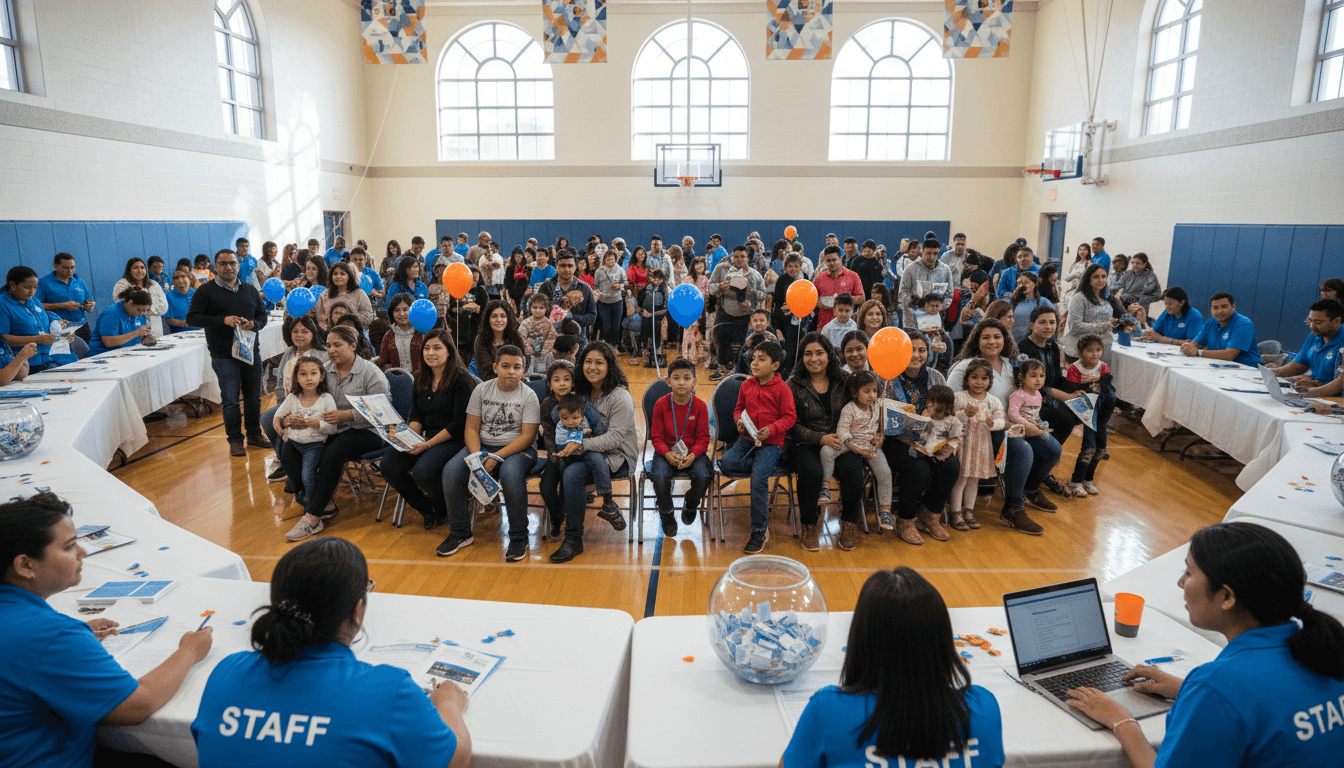
Most reauthorization processes include a public hearing at which community members can speak to the authorizer about the school's performance. This is one of the most important governance moments in a charter school's life, and it is almost always under-communicated.
A newsletter that explains the community hearing clearly, describes what families can say and how long they will have, and provides a simple way to sign up to speak turns a procedural event into a community mobilization. Authorizers are listening for evidence that the school has the support of the families it serves. A well-attended community hearing with articulate family testimony is compelling evidence.
Acknowledging challenges honestly
No charter school arrives at reauthorization having fully met every goal in its original charter. Enrollment targets shifted, a program did not achieve the outcomes the school hoped for, or staff turnover created instability in certain grades. A reauthorization newsletter that acknowledges these realities, explains what the school learned, and describes the changes it has made is more credible than one that presents only successes.
Authorizers expect schools to have faced challenges. What they are looking for is evidence that the school understood what went wrong, responded to it, and has the capacity to continue improving. Families who see that honesty in the newsletter trust the school more, not less.
Communicating the outcome
When the authorizer issues its reauthorization decision, communicate the outcome to families before they read about it elsewhere. Whether the decision is a full renewal, a conditional renewal, or a non-renewal, families deserve to hear it directly from the school with context and next steps. A newsletter sent within 24 hours of a reauthorization decision, explaining what it means and what happens next, demonstrates the same accountability to families that reauthorization itself demands from schools.
Get one newsletter idea every week.
Free. For teachers. No spam.
Frequently asked questions
When should charter schools begin communicating with families about an upcoming reauthorization?
At least twelve months before the renewal hearing. Families who learn about the reauthorization process a year in advance can understand what is being reviewed, what evidence the school is gathering, and how they can contribute to the renewal process. Families who learn about it one month before a high-stakes hearing feel blindsided and anxious rather than informed and supportive. Early communication frames reauthorization as a routine accountability process rather than a crisis.
What should a charter school reauthorization newsletter explain to families?
What reauthorization is and why it exists (charter schools operate on fixed-term contracts with their authorizer, and renewal requires demonstrating that the school has met its academic and operational commitments), the timeline for the renewal process, what evidence the school is submitting, what the authorizer evaluates, and how the outcome will be communicated. Families who understand the process are supportive stakeholders rather than worried bystanders.
How should charter schools communicate their academic performance data in the context of reauthorization?
With specificity and context. A newsletter that says 'our students have grown significantly in mathematics over the past three years, from 42 percent proficiency to 67 percent, which places us in the top quartile of comparable schools in our region' communicates both achievement and trajectory. Data without context is numbers. Data with context is a story of academic progress that families can feel proud of and authorizers can evaluate fairly.
How should charter schools communicate if the reauthorization process reveals areas where the school fell short of its charter goals?
Directly and with an improvement plan. Families who learn about shortfalls from the authorizer's report rather than from the school feel deceived. Families who learn about them from the school, along with a clear explanation of what went wrong and a concrete improvement plan, maintain trust. Charter reauthorization is a structured accountability process. Schools that engage that process honestly with their communities build more durable trust than those that manage information to minimize anxiety.
How does Daystage help charter schools communicate throughout the reauthorization period?
Daystage lets school leaders build a reauthorization communication sequence: the initial explanation newsletter, the midpoint progress update, the community hearing announcement, and the outcome communication. Each template holds the standard process language and is updated with the school-specific data, dates, and outcomes as the review progresses. Families receive consistent, credible communication throughout a process that can span twelve to eighteen months.

Adi Ackerman
Author
Adi Ackerman is a former classroom teacher and curriculum writer with 8 years in K-8 schools. She writes about school communication, parent engagement, and what actually works in real classrooms.
More for Private & Charter
Private School Capital Campaign Newsletter: Communicating Your Campaign to the School Community
Private & Charter · 5 min read
Private School Uniform Policy Newsletter: Communicating Dress Code Clearly and Consistently
Private & Charter · 7 min read
Charter School Founder Day Newsletter: Celebrating Origin and Mission
Private & Charter · 5 min read
Ready to send your first newsletter?
3 newsletters free. No credit card. First one ready in under 5 minutes.
Get started free