

School Translation Services Newsletter: Help Is Available
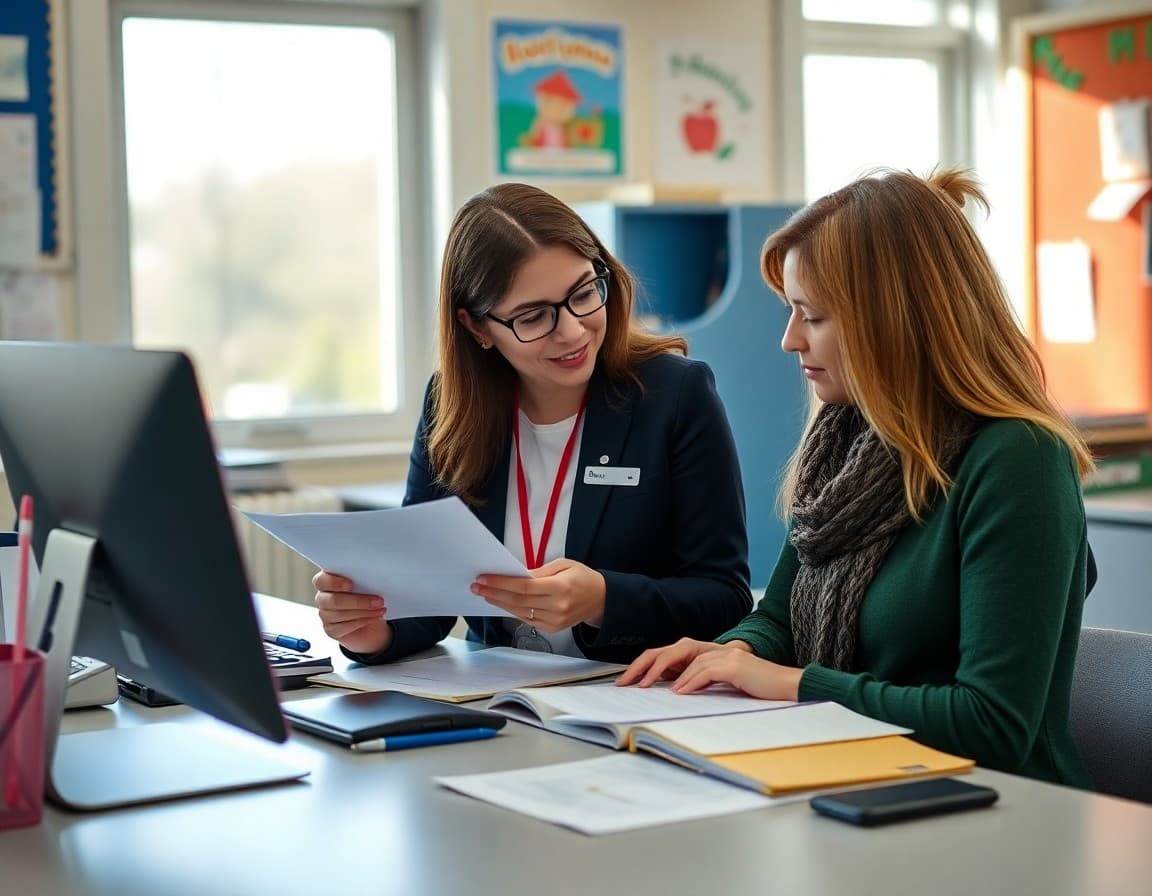
Schools provide translation and interpretation services that many families do not know exist. A family who struggles through a parent-teacher conference nodding along without understanding, or who cannot read the IEP their child signed, is not failing to engage. They are working with incomplete information about services your school is already providing and is legally required to offer. The translation services newsletter is one of the most practically useful things your school can send because it converts a right that exists on paper into something families can actually use.
What Services You Likely Already Offer
Be specific about what is available at your school. Most schools with federal funding provide phone or in-person interpretation for parent-teacher conferences, IEP meetings, and enrollment sessions. Written translation of enrollment forms, report cards, student handbooks, and emergency communications is standard. Some districts contract with telephone interpretation services like Language Line Solutions or CyraCom that can provide interpretation in over 200 languages with minimal notice. If your district uses a phone interpretation service, include the process for accessing it in the newsletter. Families who know about these services use them.
How to Request an Interpreter: Step by Step
Walk families through the exact request process. Do not describe it in general terms. Write the steps they need to follow. Call the main office at [phone number] at least five school days before your meeting. Tell the office staff your name, your child's name and grade, the language you need, and the date and time of the meeting. Interpretation is provided at no cost. If you receive a document in English that you cannot read, bring it to the main office or email [email address] and request a written translation. Most written translations are completed within five business days. That level of specificity removes every barrier except the one a family chooses to leave in place.
Languages Available at Your School
List the specific languages your school can provide in-person or phone interpretation. Families who speak Somali, Vietnamese, or Hmong often assume their language is not available because nobody told them it is. If your district contracts with Language Line or a similar telephone service, include the total number of languages available, which is typically 200 or more. For less commonly spoken languages where in-person interpreters are harder to find, explain the advance notice needed and the process your school uses to locate community interpreters. Transparency about process builds more trust than vague assurances that help is available.
Document Translation: What Gets Translated and How
Explain which documents are translated as standard and which require a request. In most schools, the following are translated as standard: enrollment packets, student handbooks, emergency contact forms, report card cover letters, and crisis or safety communications. Documents requiring a request typically include teacher letters about specific academic concerns, meeting summaries, and specialized program descriptions. Include the request form or email address families use to request translation. If there is a turnaround time, state it. Families can plan around a five-day turnaround if they know about it in advance. They cannot plan around an unknown delay.
Addressing the Fear of Requesting Services
In some communities, requesting services from a public institution feels risky. Immigrant families may worry that using school translation services creates a paper trail, triggers an immigration inquiry, or flags their child for different treatment. Address this directly and without condescension. State explicitly: requesting translation or interpretation services does not affect your child's academic standing, does not generate any immigration inquiry, and does not trigger reporting to any external agency. School language access services are educational support services, the same as tutoring or reading intervention. That sentence, in the newsletter, in the family's language, does more than any other communication to reduce the fear that keeps families from accessing services your school already provides.
Quality: What Good Interpretation Looks Like
Families who have experienced poor interpretation sometimes stop requesting it because they found it unhelpful or confusing. Address interpretation quality proactively. Explain that professional interpreters maintain confidentiality, do not add opinions or advice to what is said, and interpret completely rather than summarizing. If a family ever feels the interpretation they received was incomplete or inaccurate, they have the right to request a different interpreter for the next meeting. Making this explicit gives families a standard to hold services to and a path to better service if the first experience was unsatisfactory.
Making This Newsletter Itself Accessible
There is obvious irony in sending a translation services newsletter only in English. Translate the newsletter into the home languages of your school's primary language groups before sending it. The most important communication in your school year should not require a family to already access translation services to understand that translation services exist. Send this newsletter at the start of the year, before any major meeting season, so families have the information before they need it rather than during a crisis when they are already struggling to navigate an unfamiliar system.
Get one newsletter idea every week.
Free. For teachers. No spam.
Frequently asked questions
What translation services are schools typically required to provide?
Schools receiving federal funding must provide meaningful access to education for families with limited English proficiency. This includes oral interpretation at key meetings (enrollment, IEP, disciplinary hearings, parent-teacher conferences), written translation of essential documents (enrollment forms, report cards, school policies, emergency notifications), and translated versions of critical program information. The standard is meaningful access, not translation of every piece of paper.
How do families request a translator for a school meeting?
Most schools require at least 48 to 72 hours advance notice to arrange interpretation, though the best practice is five business days. Families should call the main office, provide their child's name and grade, specify the language they need, and give the date and time of the meeting. Some districts have a centralized interpretation request system. Your newsletter should include the specific contact information and request timeline for your school rather than directing families to figure it out themselves.
Is it appropriate to use a student as an interpreter for parents?
No. Using students as interpreters for official school matters puts inappropriate responsibility on children and raises serious confidentiality and accuracy concerns. A student translating their own IEP or discipline meeting faces a conflict of interest that no child should navigate. The legal guidance from the US Department of Education's Office for Civil Rights is clear that schools should not rely on students for interpretation in formal school proceedings. Your newsletter should communicate this policy directly so families know to request professional interpretation.
How do I let families know translation services are free?
State it explicitly and prominently. Many families from communities with limited institutional trust assume services cost money or require proof of legal status. Both assumptions are wrong and need to be corrected directly. Translation and interpretation services are provided at no cost, and requesting them does not trigger any immigration inquiry. These two facts, stated plainly, remove the two most common barriers to families accessing the services your school is already required to provide.
Can Daystage help me send translation services information to families in multiple languages?
Yes. Daystage lets you send the same newsletter content in different language versions to the families who need each one. If your school serves families who speak Spanish, Arabic, Somali, and Haitian Creole, you can send each group their newsletter in their home language. The platform tracks delivery and open rates so you know which families received the information. This is exactly the kind of targeted, accessible communication that makes language access real rather than theoretical.

Adi Ackerman
Author
Adi Ackerman is a former classroom teacher and curriculum writer with 8 years in K-8 schools. She writes about school communication, parent engagement, and what actually works in real classrooms.
More for Bilingual
Ready to send your first newsletter?
3 newsletters free. No credit card. First one ready in under 5 minutes.
Get started free