

French Immersion School Newsletter: Bonjour Famille!
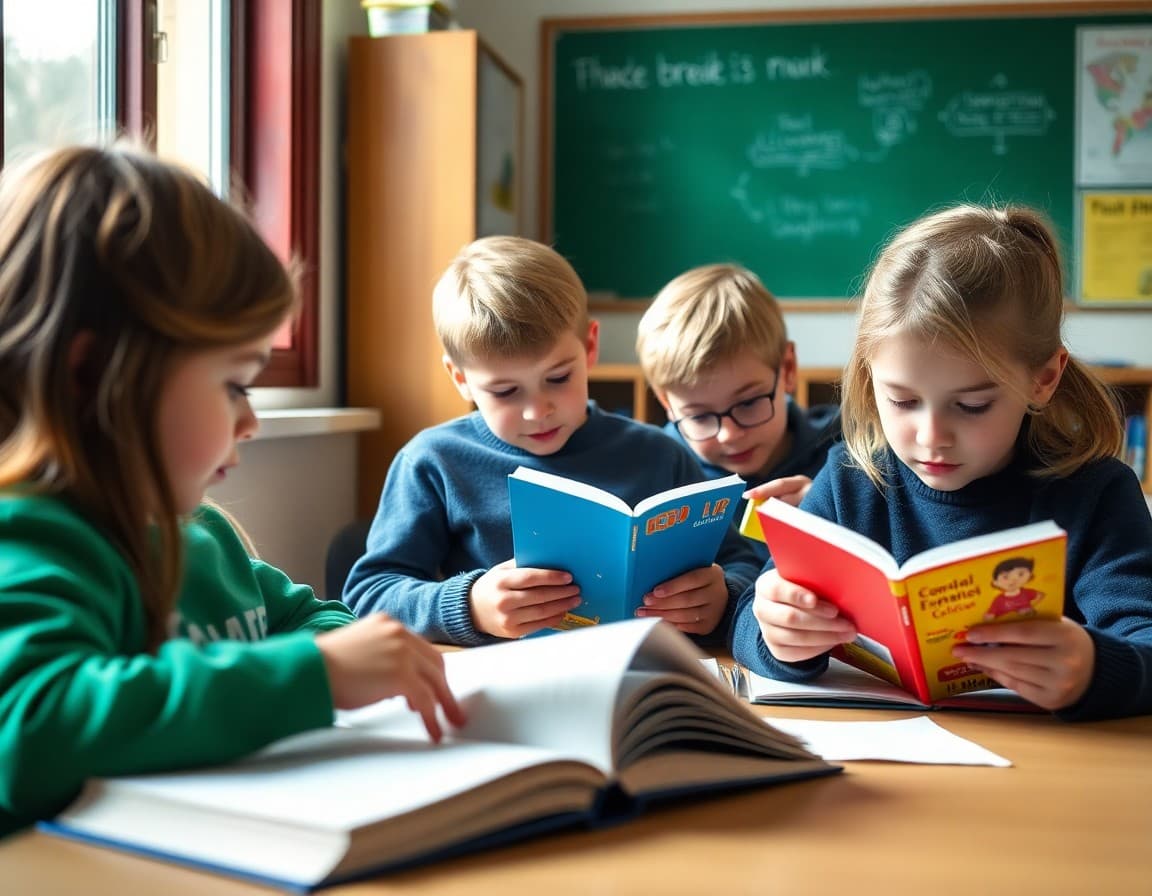
French immersion programs create bilingual learners through full language immersion starting in kindergarten. The newsletter that connects families to this journey needs to do more than translate school events into French. It needs to celebrate the language, build family engagement in the Francophone world, and communicate clearly with families who range from no French fluency to native speakers. Here is how to build that newsletter effectively.
Bonjour, Famille: Open in French Every Time
The most consistently impactful structural choice in a French immersion newsletter is opening with French. "Bonjour, chères familles!" followed by the English version signals from the first word that this school takes French seriously as a language of institutional communication. Families who see this every month recognize it as an identity marker for the program, not just a translation protocol.
Extend the French opening to include a short seasonal or cultural observation: "Nous sommes en novembre, le mois où les feuilles tombent et où nous commençons à penser à la saison des fêtes. We are in November, the month when leaves fall and we begin thinking about the holiday season." This brief sentence gives families a model of natural French in a familiar context and does not require translation assistance to understand alongside the English version.
Include a French Vocabulary Feature Monthly
A "Mot du mois" (word of the month) or "Expression de la semaine" (phrase of the week) feature is among the highest-engagement elements of any French immersion newsletter. Choose vocabulary directly connected to the current classroom unit. Include the French term, its pronunciation guide if useful, the English definition, and a sample sentence from classroom use.
Suggest a family activity: "At dinner tonight, ask your child to teach you how to use this word in a sentence. You will be surprised by their confidence." The teach-back strategy puts the child in the expert role, which is intrinsically motivating and reinforces the vocabulary through active production rather than passive recognition.
Celebrate Francophone Cultural Breadth
French is spoken by approximately 300 million people across five continents. A French immersion program that only references Paris and croissants misses the extraordinary breadth of the Francophone world. Include cultural references that represent the diversity of French-speaking communities: music from Senegal, literature from Quebec, cuisine from Martinique, stories from Ivory Coast, jazz from Louisiana.
A monthly cultural spotlight of 100-150 words about a specific Francophone community, artist, or tradition educates both families and students about a world far larger than any single country. These features also create natural connection points for students whose family heritage is in Francophone communities outside France.
Report French Language Progress at Specific Stages
Families who understand the language development arc in French immersion are less anxious during the early months when progress is invisible from the outside. Your newsletter should include regular, specific progress updates: what French the class is currently producing, what they are developing, and what the typical trajectory looks like.
A sample mid-year progress note: "By January, most of our students are responding to French questions in complete sentences, reading simple French texts with support, and writing 2-3 sentences in French independently. Some students are moving faster; others are still consolidating listening comprehension. All of this is within the typical range for this point in year one. If you have specific questions about your child, please request a conference."
Give Non-Francophone Families Concrete Support Tools
Most French immersion families in North America do not speak French at home. Rather than apologizing for this or suggesting it does not matter, give families practical tools for engaging with the language despite limited fluency. Streaming recommendations: many services carry French children's programming (Zouzous, Toopy and Binoo en français, Télétubbies en français). Library resources: the French section of most urban libraries includes children's books and early readers. Online tools: Duolingo in French gives parents a way to engage in parallel learning that children find delightfully competitive with their parents.
The family engagement tool that consistently generates the most positive feedback: a printable French-English phrase card for mealtime or bedtime. Ten phrases for common daily interactions, printed on card stock, posted in the kitchen. Families who can say "Quelle est ta couleur préférée?" (What is your favorite color?) and understand their child's response feel connected to the language in a way that passive newsletter reading does not provide.
Feature Student French Writing With Parent-Friendly Context
Monthly student French writing samples with English translations give families the most direct evidence of the program's language outcomes. Show the actual text a student wrote, transcribed accurately (including developmental approximations), with a translation and a brief note about what skill it demonstrates. A six-year-old who writes "Je m'appelle Emma. J'ai cinq ans. J'aime les chats." has produced real French academic writing. That is worth celebrating explicitly and publicly, with the student's permission.
Get one newsletter idea every week.
Free. For teachers. No spam.
Frequently asked questions
What French should be included in a newsletter for families who do not speak French?
Include French in ways that are accessible and inviting rather than excluding. A French greeting and closing, section headers in both languages, a monthly vocabulary feature with English translations, and any student French writing with translations give non-Francophone families meaningful contact with the language without requiring fluency. Avoid including French-only paragraphs without translation, which signals that non-Francophone parents are not the primary audience.
How do we connect French immersion to Francophone culture in the newsletter?
France is one of many French-speaking cultures, and an immersion program that only references French culture misses the richness of the Francophone world. Include cultural references from Quebec, West and Central Africa, the Caribbean (Martinique, Guadeloupe, Haiti), Louisiana, and Belgium depending on the communities represented in your school and region. Monthly cultural features that celebrate different Francophone traditions, foods, or artists build cultural breadth alongside language development.
What milestones should French immersion families expect at each grade level?
By the end of first grade in a 90/10 program, children typically understand spoken French for daily classroom functions and produce simple French phrases and sentences. By third grade, most children read simple French texts and write short French paragraphs. By fifth grade, students in well-implemented programs have conversational French and academic French reading and writing skills, with continued development through middle and high school.
How do we support French-heritage families who are enrolled in a French immersion program?
French-heritage families, particularly from Francophone African, Caribbean, or Canadian communities, often have deep language pride and may also carry complex histories with French colonialism that affect their relationship to the language. A newsletter that acknowledges Francophone diversity, includes cultural content from multiple Francophone regions, and invites heritage families to share their linguistic and cultural knowledge creates a more inclusive program culture.
Can Daystage help French immersion programs produce consistent bilingual newsletters?
Yes. Daystage's newsletter formatting supports parallel bilingual layouts that work well for French-English communication. The scheduling feature allows programs to plan their full academic year newsletter calendar in advance, which is especially important for bilingual newsletters where content preparation takes longer. Schools using Daystage for French immersion communication report more consistent newsletter output than those using general email tools.

Adi Ackerman
Author
Adi Ackerman is a former classroom teacher and curriculum writer with 8 years in K-8 schools. She writes about school communication, parent engagement, and what actually works in real classrooms.
More for Bilingual
Bilingual Back-to-School Newsletter: Welcoming Multilingual Families at the Start of the Year
Bilingual · 6 min read
Dual Language Immersion Newsletter: Two Languages One School
Bilingual · 6 min read
Bilingual Arts and Culture Program Newsletter: Engaging Multilingual Families in Creative Programs
Bilingual · 5 min read
Ready to send your first newsletter?
3 newsletters free. No credit card. First one ready in under 5 minutes.
Get started free