
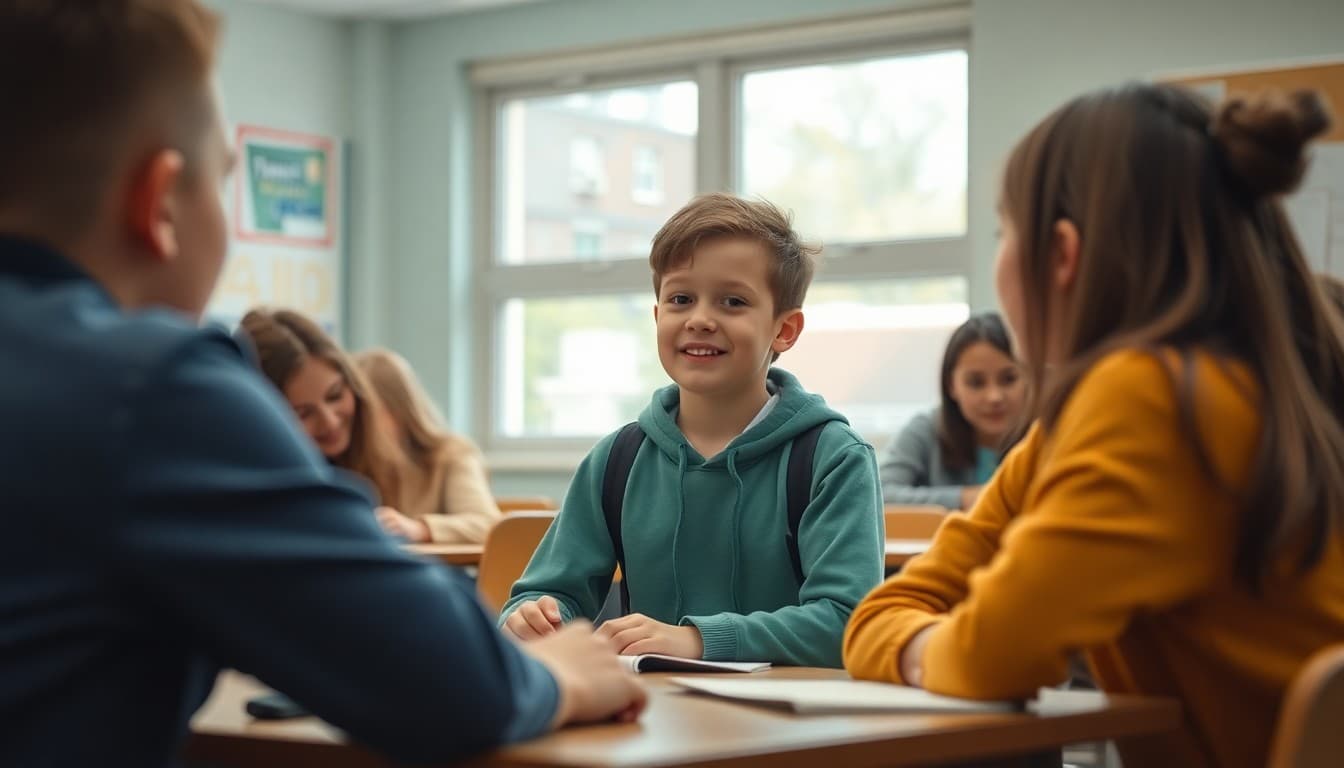
Code-Switching School Newsletter: Understanding Bilingual Behavior
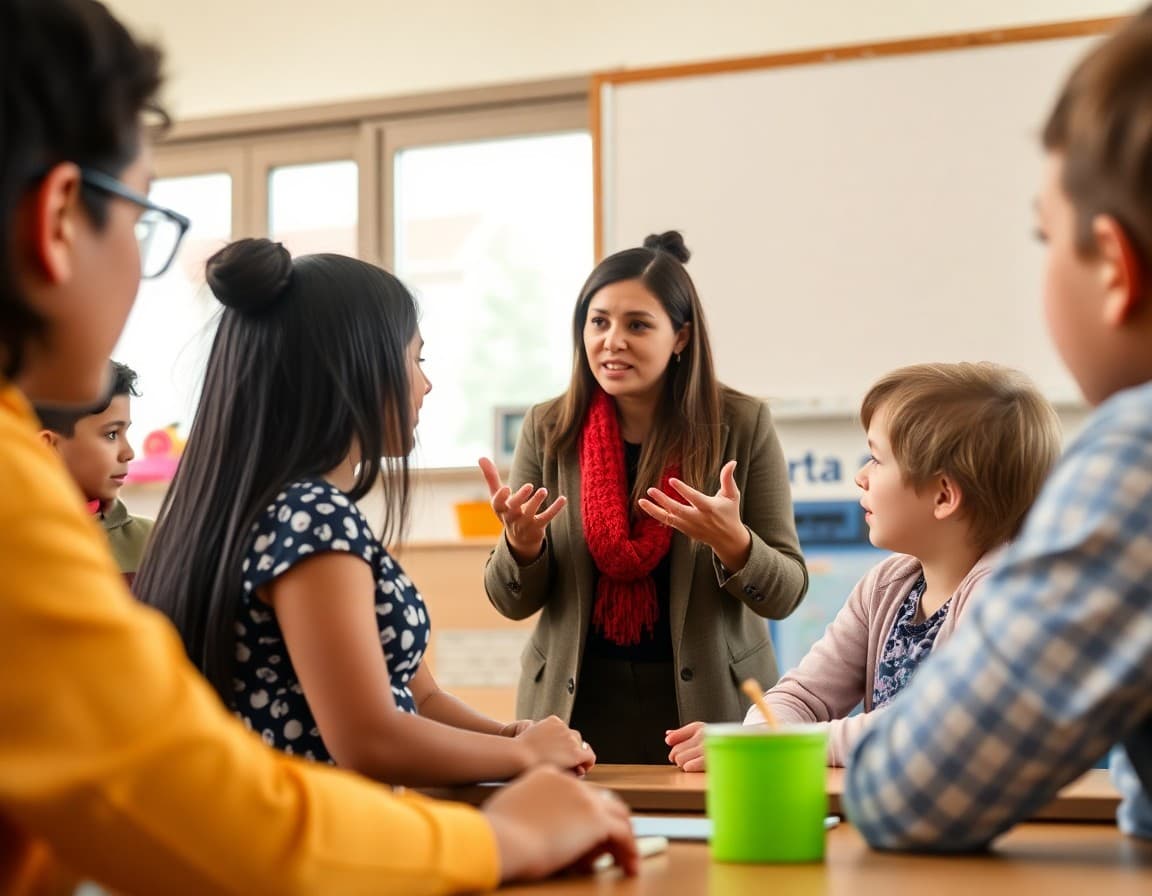
A parent hears their child switch from English to Spanish mid-sentence at dinner and does not know what to make of it. Is this normal? Is it a sign something is wrong? Should they correct it? Most bilingual program newsletters never address this directly, which leaves families to draw their own conclusions. A dedicated code-switching newsletter gives parents the framework they need to understand one of the most visible features of bilingual development, and to feel reassured rather than alarmed.
What Code-Switching Actually Is
Code-switching is the practice of moving between two languages within a conversation, a sentence, or even a phrase. A bilingual child might say "I want to go to la tienda after school" or switch entirely from Spanish to English when explaining something that happened at school. This is not random. Linguists have documented that code-switching follows grammatical rules specific to each language pair. The switch points are not arbitrary; they follow patterns that bilinguals share intuitively. What looks like mixing to a monolingual observer is actually a structured system.
Why Bilinguals Code-Switch: Three Main Reasons
There are three primary reasons a bilingual person code-switches. First, vocabulary access: a word in one language is more quickly available than the equivalent in the other, especially for concepts first learned in one language. A student who learned the word "mariposa" before "butterfly" may always reach for mariposa first. Second, social context: bilinguals adjust language use based on who they are speaking to, just as speakers adjust formality levels. Switching languages can signal closeness, identity, or shared experience. Third, precision: sometimes a concept is more precisely expressed in one language than the other, and the bilingual speaker knows this intuitively.
Early vs. Experienced Bilingual Code-Switching
Code-switching looks different in a child who has been bilingual since birth versus a child who is learning a second language now. Early bilinguals sometimes mix languages because one word is not yet consolidated in the weaker language. This is temporary and resolves as both languages develop fully. Experienced bilinguals code-switch as a deliberate linguistic choice, not because they lack the word in either language. Parents often worry most about the early stage, which is exactly the stage that is most clearly temporary and developmentally expected.
What the Research Says About Code-Switching and Language Competence
The misconception that code-switching indicates weak language skills has been thoroughly studied and consistently disproved. Research by linguist Shana Poplack showed that the most proficient bilinguals code-switch the most freely and accurately, while less proficient speakers code-switch less because they have less access to both language systems. Code-switching requires the speaker to manage two grammatical systems simultaneously, which is more cognitively demanding than staying in one language, not less. Proficiency enables code-switching rather than preventing it.
Addressing the "Speak Only One Language at Home" Myth
Some parents are told to speak only English at home to help their child succeed. This advice is well-intentioned but linguistically backwards. For families whose dominant language is not English, switching to English at home removes the child's strongest model of language complexity, narrative structure, and vocabulary depth. A parent who tells stories, argues, jokes, and explains in their first language is providing their child with richer language input than the same parent struggling in a second language. Encourage families to continue rich communication in their strongest language.
Classroom Code-Switching Policies: What Families Need to Know
Different bilingual programs handle classroom code-switching differently. Some maintain strict language separation by day, by subject, or by classroom. Others allow code-switching as part of instruction. Whatever your school's policy, communicate it clearly. Explain the reasoning behind the policy without suggesting that the alternative approach is wrong. Families who understand the policy as a pedagogical choice rather than a language judgment are far more likely to support it consistently at home.
How to Talk to Your Child About Their Two Languages
Give families specific language for these conversations. Instead of "You need to pick one language and stick with it," try "Tell me that again in Spanish since Grandma is here." Instead of "You're mixing things up," try "I heard you switch to English when you were explaining that. Can you do it in both?" Framing language choices as interesting observations rather than corrections keeps children's relationship with both languages positive. Children who feel judged for code-switching sometimes start avoiding the minority language altogether, which is the one outcome every bilingual program is trying to prevent.
Get one newsletter idea every week.
Free. For teachers. No spam.
Frequently asked questions
What is code-switching and should parents be concerned?
Code-switching is when a bilingual speaker moves between two languages within a conversation or even a single sentence. It is a normal, linguistically sophisticated behavior that reflects high-level competence in both languages, not confusion or carelessness. Linguists study code-switching as a complex grammatical system with its own rules. Parents who observe it in their child are seeing evidence of bilingual development, not a problem that needs to be fixed.
Does code-switching mean a child does not know the full word in one language?
Sometimes, especially in early bilingual development, a child will use a word from their stronger language because the other word is not yet activated. This is developmentally normal and temporary. More often, experienced bilinguals code-switch for social or pragmatic reasons: to signal identity, to be more precise, to match the conversational register of the person they are talking to. Both types are legitimate uses of language.
Should teachers allow code-switching in the classroom?
In designated bilingual or dual-language settings, policies vary. Some programs use strict language separation to support full immersion. Others allow and even encourage code-switching as a pedagogical tool. The key is consistency. Families should understand what the classroom policy is and why, so they can support it at home. Whatever the policy, it should not be enforced in a way that shames students for natural bilingual behavior.
How do I explain code-switching to parents who see it as a sign their child is failing?
Reframe the evidence. A child who code-switches is accessing two complete language systems simultaneously and choosing between them in real time. That is cognitively demanding work. Compare it to a musician who plays two instruments and occasionally blends techniques from both. The blend is not a sign of failure at either instrument. Then show the parent what their child's code-switching actually sounds like and point out the grammatical patterns it follows.
Can a newsletter help families understand code-switching before they worry about it?
Absolutely, and proactive communication is always better than reactive reassurance. Sending a dedicated code-switching newsletter early in the school year gives families the vocabulary and framework to interpret what they see at home. Programs that send this kind of educational newsletter report far fewer parent concerns about mixing languages because parents already understand it as a feature of bilingual development rather than a bug. Daystage makes it easy to schedule this newsletter at exactly the right point in your school year calendar.

Adi Ackerman
Author
Adi Ackerman is a former classroom teacher and curriculum writer with 8 years in K-8 schools. She writes about school communication, parent engagement, and what actually works in real classrooms.
More for Bilingual
Ready to send your first newsletter?
3 newsletters free. No credit card. First one ready in under 5 minutes.
Get started free