

Back to School Health Precautions Newsletter: Keeping Students Safe
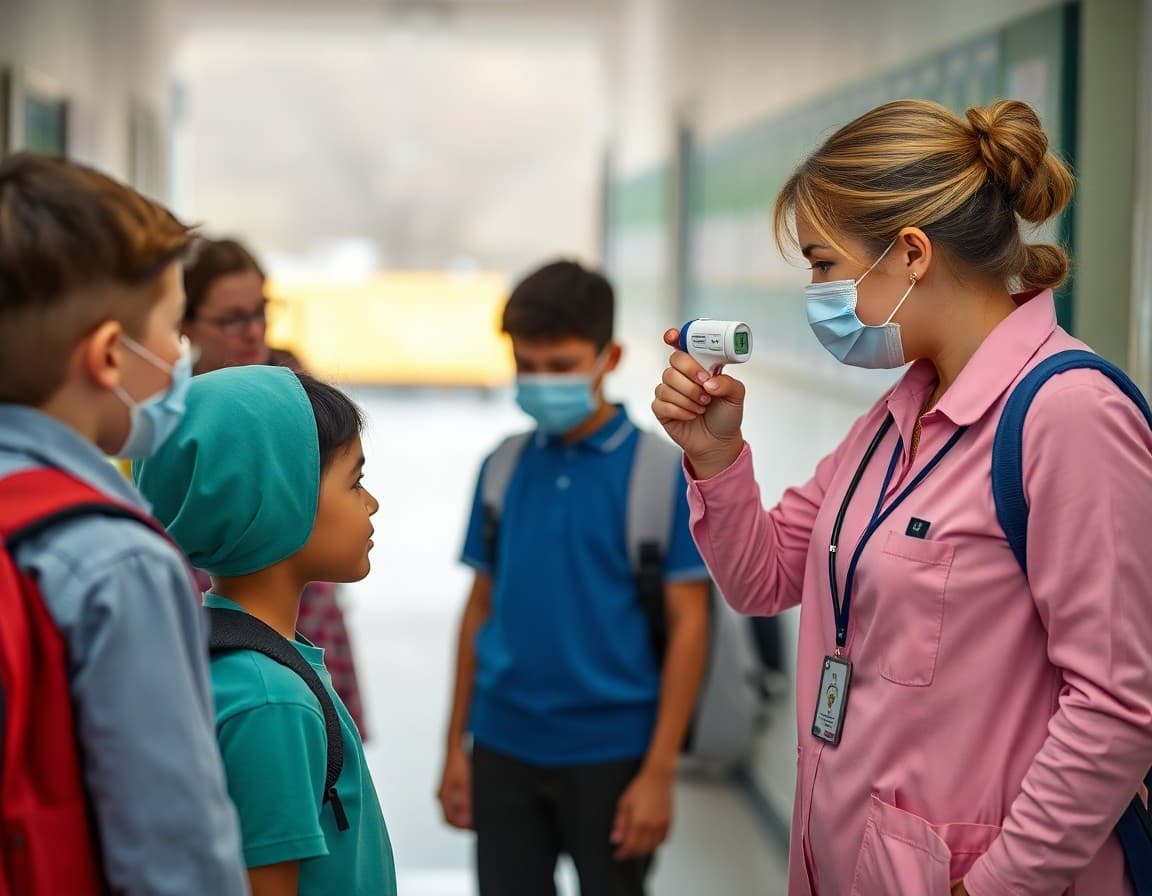
Sending a sick child to school affects the whole building. A clear, direct health precautions newsletter at the start of the year sets the expectation that families and the school are partners in managing illness, and gives families the specific information they need to make good decisions at home on short notice.
State the Illness Exclusion Criteria Specifically
List the symptoms that require a student to stay home: fever of 100.4 degrees Fahrenheit or higher, vomiting or diarrhea in the past 24 hours, a new unexplained rash, conjunctivitis (pink eye), or symptoms of a diagnosed contagious illness such as strep throat or influenza. Families should not have to call the nurse to ask whether their child qualifies as sick enough to stay home. Objective thresholds remove that burden.
Explain the Return-to-School Rules
Spell out the criteria for returning: 24 hours without a fever without using fever-reducing medication, no vomiting or diarrhea for 24 hours, or a medical note clearing the student to return for a diagnosed condition. Note that a student who leaves school sick mid-day should not return the following day unless the 24-hour rule is met. Families sometimes interpret "better in the morning" as clearance to return, and this section prevents that misunderstanding.
Describe the Reporting Process for Positive Tests
Give families the specific process for reporting a positive test for a contagious illness: call the nurse at a specific number, email a specific address, or complete an online form. State the school's obligation to notify the class or grade if there is a confirmed case (without disclosing the student's identity), and explain the timeframe for that notification. Transparency about the reporting process builds trust.
Cover Enhanced Hygiene Measures at School
Describe what the school does proactively: handwashing instruction for younger students, hand sanitizer dispensers at classroom entrances, daily cleaning of high-touch surfaces, ventilation standards, and any updated cafeteria or transition procedures. Specific measures are more reassuring than vague statements like "we take health seriously." If your school has a health liaison or works with the district's public health partner, mention that as well.
Template Excerpt: Illness Exclusion Reminder
Here is a paragraph you can use directly:
"Please keep your student home if they have a fever of 100.4°F or higher, have vomited or had diarrhea within the past 24 hours, or have been diagnosed with a contagious illness. Students may return to school 24 hours after fever breaks without medication and after symptoms resolve. When in doubt, call our school nurse, Ms. Alvarez, at (555) 224-5500 before sending your child to school."
Address the Cafeteria and Shared Space Protocols
Shared meals, water fountains, and high-traffic hallways are common illness transmission points. Explain any protocols specific to these spaces: assigned seating in the cafeteria, individual water bottles recommended over fountains, and physical education or recess modifications during high-transmission periods. Families who understand the reasoning behind these measures are more likely to reinforce them at home.
Support Families Navigating Work and School Illness Conflicts
Acknowledge directly that keeping a sick child home is harder for some families than others. Note available resources: whether the district has a family support coordinator who can connect families with emergency childcare options, whether the school can provide schoolwork for a student who must stay home but is well enough to complete assignments, and whether the school offers after-hours drop-off for families with inflexible work schedules. Empathy in the logistics section signals that the school understands real family constraints.
Close With the Nurse's Contact Information
End every health communication with the school nurse's direct phone number, email, and available hours. Include a note that families can call before sending a child to school if they are unsure about symptoms. A nurse who receives a call at 7:15 AM is far more helpful than a family guessing at home. Make sure the contact information is current and that the nurse knows it is published in the newsletter.
Get one newsletter idea every week.
Free. For teachers. No spam.
Frequently asked questions
What should a back to school health precautions newsletter include?
Cover the school's illness exclusion criteria (which symptoms require a student to stay home), the reporting process for positive test results, the return-to-school protocol after illness, any enhanced hygiene measures in place, and what families should do if they are unsure whether to send their child. Include contact information for the school nurse and the health department guidance your policies are based on.
How should schools communicate symptom exclusion criteria clearly?
Use a simple list with specific symptoms rather than vague language. Say 'fever of 100.4°F or higher, vomiting within the past 24 hours, diarrhea, or a rash of unknown cause' rather than 'if your child feels unwell.' Families need objective criteria they can apply at home at 7:00 AM, not general guidance that requires a nurse's judgment to interpret. Include the rule for returning: typically 24 hours fever-free without medication.
How do I communicate health protocols without creating anxiety?
Use a matter-of-fact tone that acknowledges the school takes health seriously without catastrophizing. Focus on what the school is doing proactively rather than on worst-case scenarios. Acknowledge that illness is normal in schools and frame protocols as sensible precautions rather than emergency measures. A calm, specific newsletter does more to build confidence than a lengthy disclaimer-heavy document.
What is the recommended return-to-school timeline after a respiratory illness?
Follow your local health department's current guidance, which often specifies 24 hours fever-free without fever-reducing medication and symptom improvement before returning. For diagnosed communicable illnesses, the exclusion period may be longer and determined by the disease type. Always direct families to the school nurse or their child's physician for specific cases rather than making individualized determinations in the newsletter.
Can Daystage help send timely health precaution updates to families?
Yes. Daystage lets you send formatted health newsletters quickly when protocols change mid-year, which happens regularly. You can reach all families at once, embed links to the nurse's contact form and current health department guidance, and track whether the message has been received. Speed and clarity matter especially when communicating about health.

Adi Ackerman
Author
Adi Ackerman is a former classroom teacher and curriculum writer with 8 years in K-8 schools. She writes about school communication, parent engagement, and what actually works in real classrooms.
More for Back to School
Ready to send your first newsletter?
3 newsletters free. No credit card. First one ready in under 5 minutes.
Get started free