

Back to School Classroom Tour Newsletter: Our Learning Space
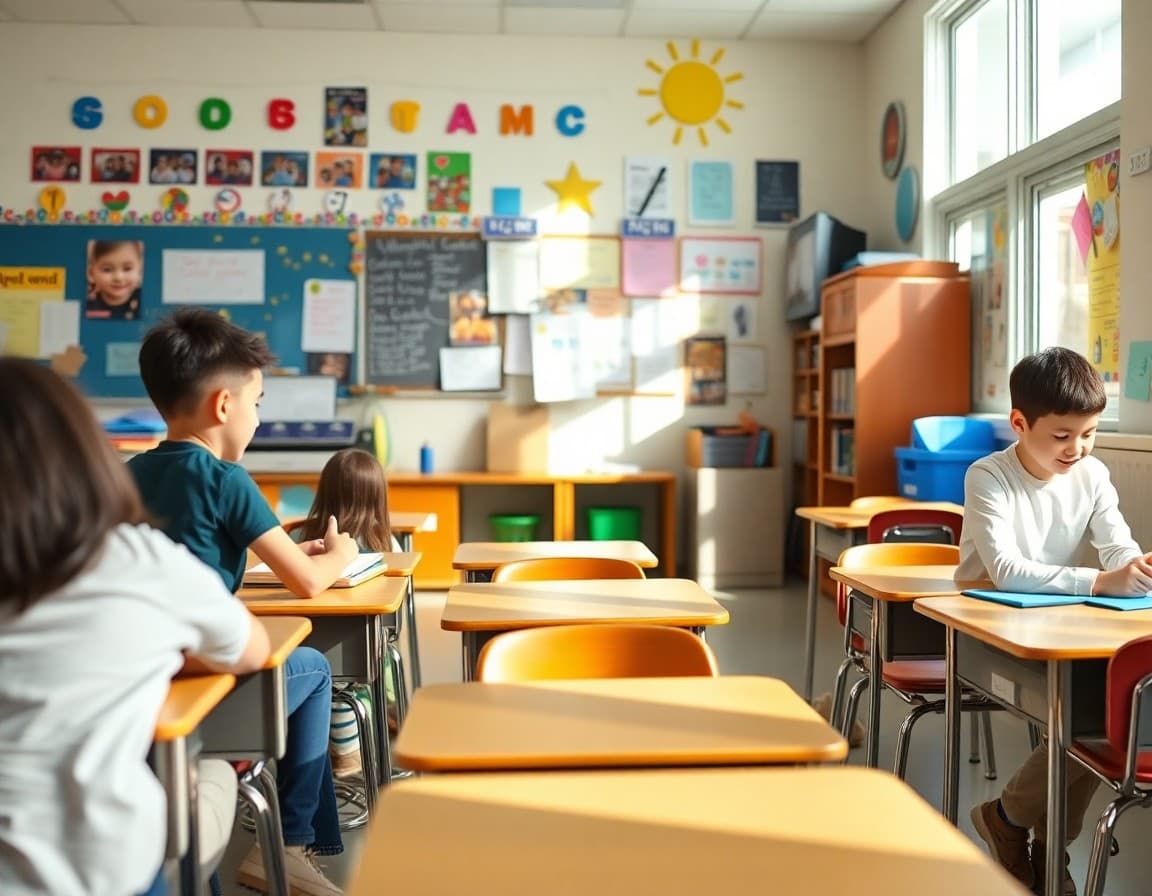
For a six-year-old, an unfamiliar room full of strangers is a genuinely stressful situation. A classroom tour newsletter that shows families and students the space before the first day removes one of the main sources of first-day anxiety and gives you a natural opportunity to communicate what kind of environment you have built for your students.
Start With the Overall Room Layout
Describe or show the general setup: student desks or tables, the teacher's area, group work zones, and the classroom entrance. Note whether desks are in rows, pods, or a mixed arrangement, and whether students have assigned seats or a choice in the first week. A quick orientation to the floor plan helps students mentally place themselves before they walk through the door.
Show Where Students Store Their Belongings
Point out the cubbies, coat hooks, or locker area for backpacks and jackets. Note where students put their completed homework, their daily folders, and any permission slips or forms coming back from home. If students will have a personal supply box or drawer, describe what goes in it and what stays in the shared supply area. Knowing the storage system in advance prevents the first-day scramble of eight students asking where to put their bag at the same time.
Introduce the Reading and Library Corner
If you have a classroom library, show it and explain how it works. Are books organized by level, genre, or topic? Can students browse freely during independent reading time? Is there a checkout system or do books stay in the room? A reading corner or cozy seating area is often the feature students remember from the tour, and describing it briefly in the newsletter creates anticipation rather than anxiety.
Describe the Classroom Zones and Their Purpose
If your classroom has distinct areas beyond desks and a library, name them and explain what happens there. A maker space with craft and building materials is used during project time. A calm-down corner with fidgets and breathing prompt cards is available anytime. A small group table near the whiteboard is where the teacher works with three or four students at a time. Students who understand the room's zones use them appropriately from the start.
Template Excerpt: Classroom Tour Introduction
Here is a newsletter paragraph you can use:
"Take a peek at Room 7 before the first day! Your desk is in a pod of four near the windows on the south wall. Your backpack hook is labeled with your name outside in the hallway. Our classroom library has over 300 books sorted by genre. The beanbag chairs in the corner are for silent reading time. I have set up a supply station near the door with sharpened pencils, extra erasers, and sticky notes so you can grab what you need without interrupting the class. See you August 28!"
Explain Classroom Rules and Routines Briefly
Include the two or three most important classroom routines in the tour: what students do when they first arrive in the morning, how they signal that they need help, and how they get permission to use the restroom. These micro-routines seem trivial but are exactly what students worry about when they imagine a new classroom. A teacher who addresses them preemptively in the tour newsletter saves significant first-day explanation time.
Mention Anything Special or Unique About the Room
If your classroom has something students will notice and comment on, name it in the newsletter: a class fish tank, a student of the week display board, a word wall that will grow all year, a sensory pathway taped on the floor, or a special project in progress from last year's class. Something distinctive makes the room feel like a real place rather than a generic school space.
Close With Supply List Reminders and a Warm Note
End with a brief reminder of what students should bring on day one and a sentence that captures your genuine excitement about the year. Families have been reading functional logistics all summer. A closing sentence like "I have been setting up this room for two weeks and I cannot wait to fill it with your student's work" communicates more about your investment in the class than any professional credential could.
Get one newsletter idea every week.
Free. For teachers. No spam.
Frequently asked questions
Why send a classroom tour newsletter before school starts?
Children who have seen their classroom before the first day arrive with less anxiety and more confidence. A short virtual tour in a newsletter lets students identify where their desk is, where supplies are stored, where the classroom library lives, and how the room is organized. For families, the tour signals that the teacher has prepared a thoughtful space and is excited to welcome their child.
What should a classroom tour newsletter cover?
Describe or show the seating arrangement, the classroom zones (reading area, maker space, group work tables), where students store belongings, how materials are organized, the classroom library or book collection, the bathroom pass procedure, and any special features like a calm-down corner or a community circle rug. Photos or a short video link are more powerful than text alone.
Should a classroom tour newsletter include photos or just descriptions?
Photos are significantly more effective than descriptions, especially for younger students. If you can include three to five labeled photos: the full room from the doorway, the student supply area, the reading corner, and the teacher's whiteboard area, families and students can orient themselves before they arrive. If photography is restricted by your district, a hand-drawn labeled map is a reasonable substitute.
How do I make the classroom tour accessible for families who speak other languages?
Use labeled photos rather than dense text wherever possible, since visual content crosses language barriers. For written descriptions, translate the key sections into the primary home languages in your class. If your district uses a translation service or a parent communication platform with translation support, use those tools for the classroom tour newsletter just as you would for any other family communication.
Can Daystage help teachers send a classroom tour newsletter with photos?
Yes. Daystage makes it straightforward to embed photos and short video links directly in the newsletter. A teacher can send a classroom tour with labeled images, a link to a walkthrough video, and supply list reminders all in one message, and it arrives in every family's inbox formatted and readable on any device.

Adi Ackerman
Author
Adi Ackerman is a former classroom teacher and curriculum writer with 8 years in K-8 schools. She writes about school communication, parent engagement, and what actually works in real classrooms.
More for Back to School
Ready to send your first newsletter?
3 newsletters free. No credit card. First one ready in under 5 minutes.
Get started free