
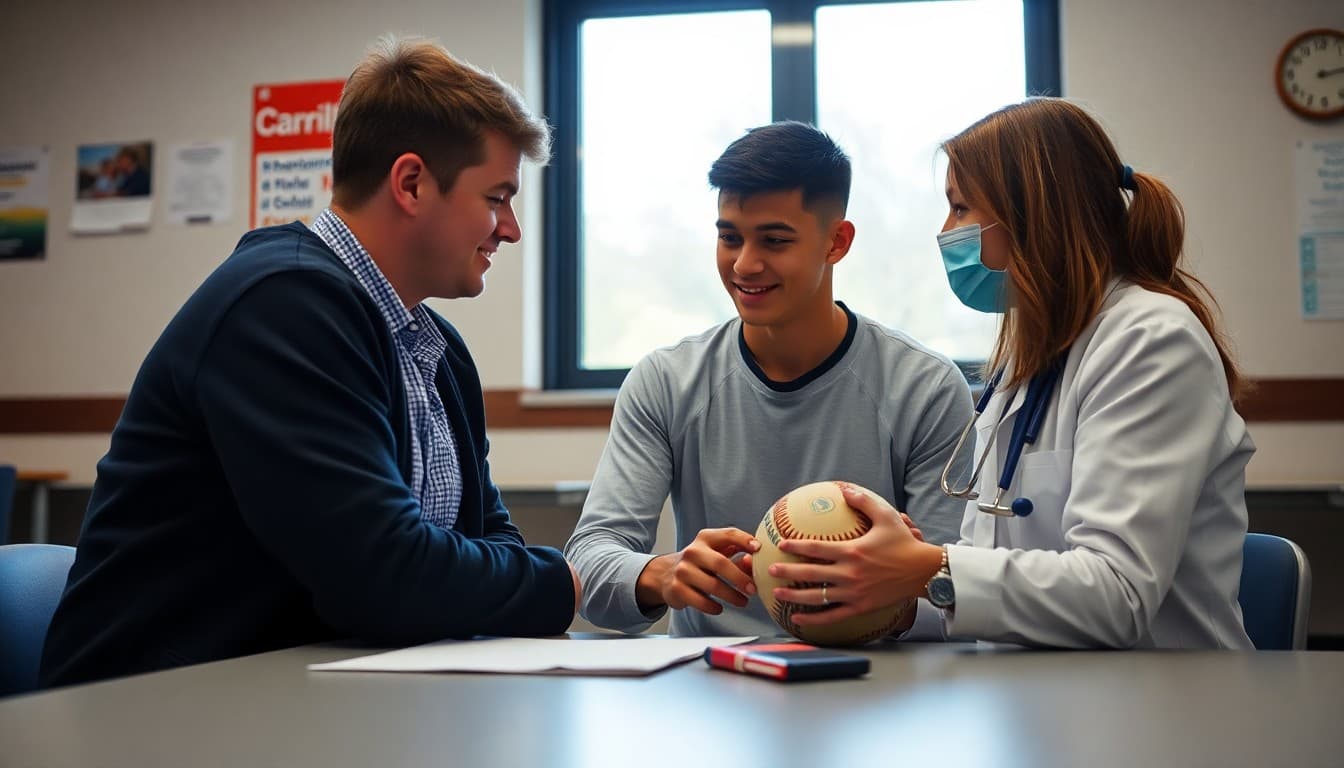
Sports Physicals Newsletter: What Athletes Need to Participate

Every fall, the same situation plays out at schools across the country: a student shows up to the first day of practice having not completed their sports physical. They thought they could turn it in later. They did not know which form to use. Their regular physical from last year was the wrong kind. A sports physicals newsletter sent three to four weeks before the deadline eliminates all of these scenarios.
What a Sports Physical Is -- and What It Is Not
A sports physical is not the same as a regular school physical or annual wellness exam. A standard school physical documents a student's overall health and immunization status. A pre-participation physical examination (PPE) specifically evaluates whether it is medically safe for a student to participate in competitive athletics. The focus is different, the form is different, and in many states the certification document is different.
Families who schedule a regular physical and ask their doctor to sign the school sports form sometimes receive the appropriate exam and sometimes do not, depending on whether the provider adjusts their evaluation accordingly. The safest approach is to bring the required state athletic participation physical form to the appointment and ask specifically for a sports participation evaluation.
Which Form to Use
This is the most common source of sports physical problems: families bring a completed physical on the wrong form. Most states require the official state athletic association physical examination form, which is distinct from any physician's standard form. Your newsletter should include a direct link to download the correct form, and a clear statement that forms other than the official state form will not be accepted.
Some physicians have their own physical forms. Families who have their child's physical completed on a physician's in-house form and bring it to the athletic office expecting it to be accepted will be told to redo the physical on the correct form. Preventing this by specifying the form in advance saves families time and frustration.
Where to Get a Sports Physical
Include a practical list of local options in your newsletter with approximate costs. Primary care physicians are the standard option but often require appointments scheduled weeks in advance. For families who have missed the window for a primary care appointment, urgent care facilities, Minute Clinics, and CVS Health locations often offer sports physicals for $30 to $60 without an appointment. Some school districts partner with local clinics to offer on-site sports physical days before the school year begins.
If your school or district offers a low-cost or free sports physical day, promote it prominently in this newsletter: "Free sports physicals are available at [location] on [date] from [time] to [time] for all students planning to participate in school athletics. No appointment required. Bring the official physical form (download at [link])."
A Template Sports Physical Deadline Newsletter
Here is a format that works for the annual sports physical newsletter:
"All students participating in school athletics must have a current sports physical on file before the first practice of any sport. The physical must be dated within 12 months of the first day of practice, must be completed using the [state] Athletic Participation Physical Form (download at [link]), and must be signed by a licensed physician, physician assistant, or nurse practitioner. The deadline to submit your physical to the athletic office is [date]. Athletes who do not have a current physical on file may not participate in any practice or competition. Low-cost physicals are available at: [list of options with addresses and prices]. Free physical day: [date, location, time]. Questions: contact [athletic trainer name] at [phone/email]."
What Happens at the Physical
Some student athletes -- particularly those with a history of cardiac symptoms, prior concussions, or significant musculoskeletal injuries -- may receive a conditional clearance or referral at their physical. Your newsletter should explain what this means: "A conditional clearance or referral does not mean your child cannot play sports. It means the provider wants additional information before granting full clearance. If your child receives a conditional clearance, please contact [athletic trainer name] at [contact] immediately. We can often coordinate follow-up evaluation quickly so athletes are not delayed more than necessary."
Annual vs. Multiseason Physicals
Some families believe a physical completed at the start of fall season covers all sports their child plays throughout the year. Clarify your school's policy explicitly: "A sports physical remains valid for [X] months from the date of the examination, or until the end of the school year, depending on your state's rules. Athletes who participate in fall, winter, and spring sports only need one physical per year as long as it is current throughout each season. Contact the athletic office if you have questions about whether a specific physical is still valid."
Get one newsletter idea every week.
Free. For teachers. No spam.
Frequently asked questions
Why is a sports physicals newsletter necessary?
Sports physical requirements are missed by students every year, preventing participation on the first day of practice or in the first competition. The reasons are predictable: families did not know the deadline, did not know which form was required, scheduled the wrong type of exam, or did not know where to get a physical completed. A dedicated newsletter that covers all of these points clearly and well in advance of the deadline eliminates these preventable barriers to participation.
What does a pre-participation physical examination (PPE) actually cover?
A sports physical or pre-participation physical examination (PPE) evaluates whether it is medically safe for a student to participate in competitive athletics. It covers cardiovascular health (heart murmurs, irregular rhythm, blood pressure), musculoskeletal history and range of motion, vision, history of concussions or head injuries, history of heat illness, respiratory health, and any medications or conditions that require accommodations. The exam is different from a standard school physical and must be performed by a qualified provider on the required state form.
What medical providers can perform a sports physical?
In most states, sports physicals may be performed by a medical doctor (MD), doctor of osteopathic medicine (DO), physician assistant (PA), nurse practitioner (NP), chiropractor (DC in some states), or other licensed healthcare providers as defined by state law. Your newsletter should name the accepted provider types rather than just saying 'a doctor' -- families who see a physician assistant may not realize that qualifies. Also note that urgent care facilities, CVS Minute Clinic, and similar walk-in providers typically can perform sports physicals.
What happens when a student fails or is restricted during a sports physical?
Some students receive medical restrictions or disqualifications during sports physicals -- usually related to cardiac conditions, orthopedic issues, or uncontrolled chronic conditions. Your newsletter should address what happens in these cases: the student is referred to a specialist for further evaluation before clearance, not permanently disqualified. Most conditions that raise concerns can be evaluated and cleared with additional testing. Families should contact the school athletic trainer if their student receives a restriction or conditional clearance.
How does Daystage help schools communicate sports physical requirements to all sport families?
Daystage lets athletic directors send a professional sports physical requirement newsletter to all athletic families simultaneously, with downloadable links to the required forms, a list of low-cost physical locations, and the submission deadline clearly highlighted. Schools that send this newsletter three to four weeks before the physical deadline report significantly fewer students showing up to first practice without clearance. That number drops further when a reminder newsletter goes out one week before the deadline.

Adi Ackerman
Author
Adi Ackerman is a former classroom teacher and curriculum writer with 8 years in K-8 schools. She writes about school communication, parent engagement, and what actually works in real classrooms.
More for Athletics
Ready to send your first newsletter?
3 newsletters free. No credit card. First one ready in under 5 minutes.
Get started free