
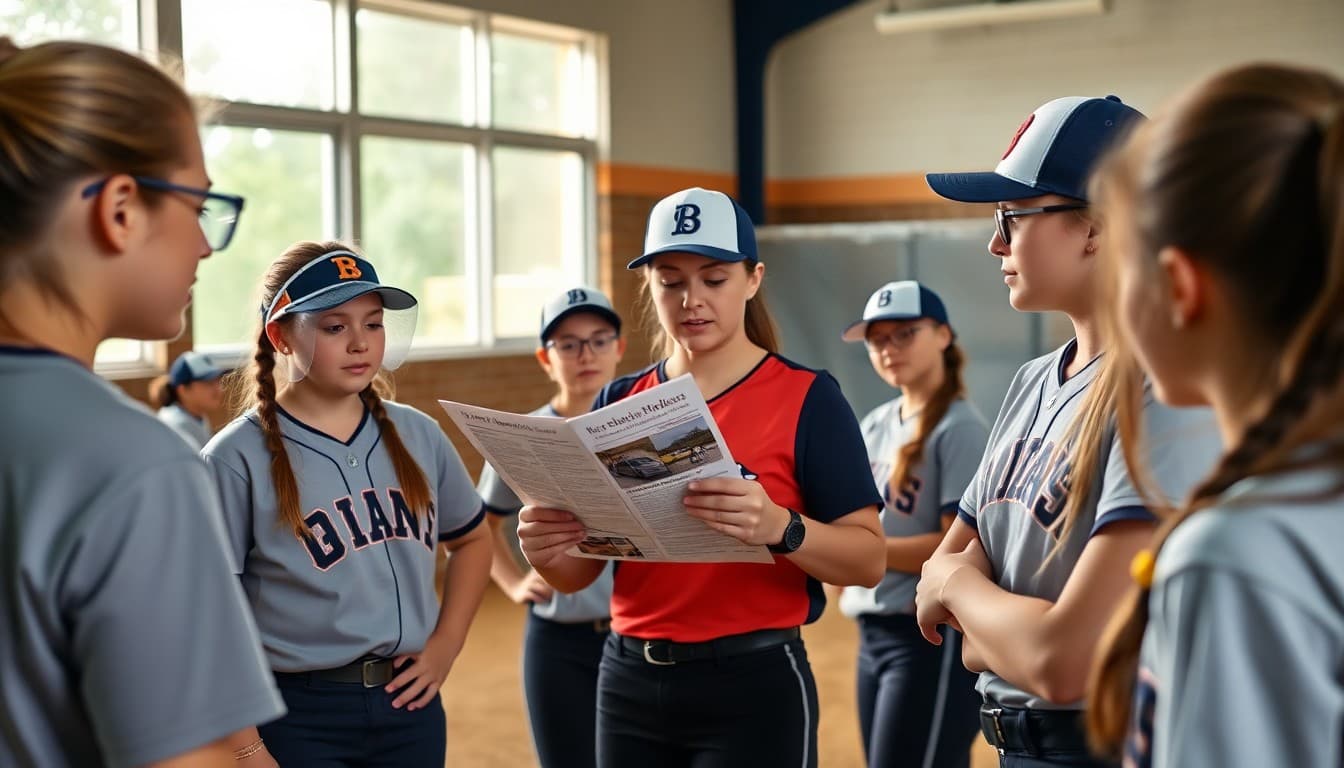
Softball Team Newsletter: Season Communication for Families
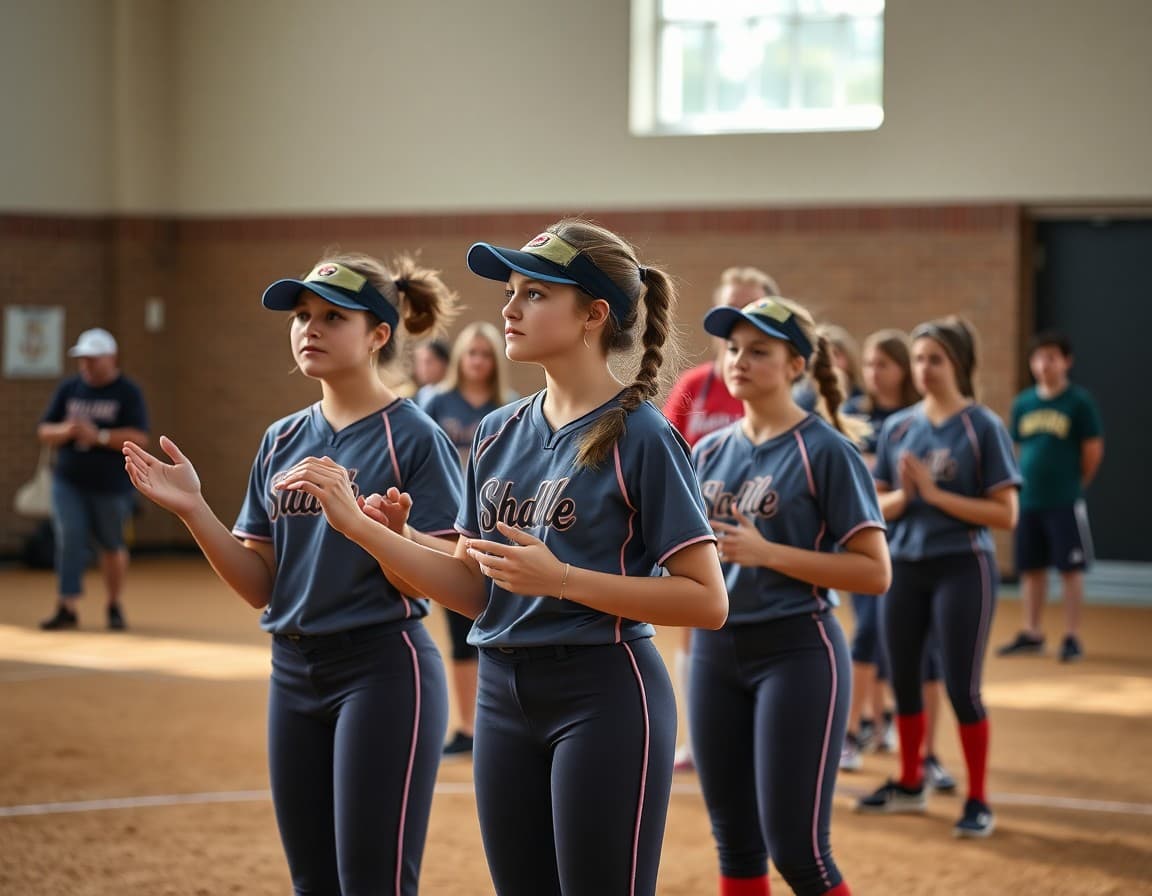
Softball families are among the most invested parents in spring athletics. They track everything. They remember every game. When communication is inconsistent, they fill the gaps with speculation. A well-run softball team newsletter keeps the information channel open and the speculation at bay.
The Opening Newsletter of the Season
Your first newsletter of the season sets expectations for everything that follows. It should cover: the complete schedule, coaching staff introductions, physical exam and eligibility deadlines, equipment requirements (cleats, batting helmet, batting gloves, catcher's gear if applicable), transportation and carpool policies for away games, and your communication preferences for questions and concerns.
Include one specific paragraph about the doubleheader format if you play them: "Several games on the schedule are doubleheaders, meaning we play two complete games on the same day, typically with a 30-minute break between games. Plan for athletes to be at the field for approximately five hours on doubleheader days. Athletes should bring extra food, water, and any equipment they need for two complete games."
Pitching and Arm Care Communication
Softball pitching mechanics (underhand windmill delivery) differ from baseball, and the arm care protocols differ accordingly. Many families new to softball do not understand why their pitcher might be limited in certain games or practices. A brief explanation in the season newsletter -- "We follow a pitch count protocol that limits the number of pitches our pitchers throw in practice and games to protect their arms over the full season. This means some games will feature multiple pitchers as a planned part of our program, not as a reaction to poor performance" -- prevents the "why did she come out?" questions after every game where a pitcher is pulled early.
Tournament Communication
Spring softball tournaments often require more logistical communication than regular season games. Tournament schedules are rarely finalized until the night before, bracket play means the number of games is unknown in advance, and multiple games in a single day require families to plan food, transportation, and schedules more carefully.
Your newsletter should set up tournament communication early: "Tournament schedules are typically released 24 hours before the event. We will send a same-day notification via [platform] with specific game times and locations as soon as they are available. Pack accordingly for a full day at the field, including sunscreen and multiple layers if morning temperatures are expected to be cold."
A Template Midseason Softball Newsletter
Here is a template that works for a midseason team update:
"[Team Name] Softball Update -- Week [X]. We are [record] this season, [conference record] in [conference name]. Last week we [brief game summary]. Highlights: [team achievement or moment]. This week we play [opponent] on [day/time/location] and [opponent] on [day/time/location]. Doubleheader note: [date] is a doubleheader, plan for a 5-hour day at [location]. Away game transportation departs [time] from [location]. Senior Night is approaching -- see details below."
That covers the essentials in under 100 words. Add coach's note, photos, and any logistics details and you have a complete issue.
Managing the Hitting Slump Conversation
Batting slumps are a normal part of softball, and families notice them immediately. A newsletter section that occasionally addresses the team's hitting as a whole -- without naming individual players -- normalizes the fluctuation and keeps families from treating each hitless game as a crisis. "Hitting is one of the most difficult skills in sports. A team batting .300 makes an out seven of ten at-bats, and the best hitters in the country face slumps. We are working hard on approach and mechanics in practice and are confident the results will follow" is the kind of contextualizing communication that keeps softball season in perspective for families who are very close to the outcome of every at-bat.
Spring Break Practice Expectations
Communicate spring break expectations clearly in February or early March, before families book travel. If you hold mandatory practices during break, say so with specific dates and times. If practice is optional during break, say that too. Families who find out on the Friday before spring break that Monday practice is mandatory -- and have already booked flights -- become the families who carry resentment through the rest of the season.
Recruiting and College Pathway Communication
Many softball families have eyes on college softball for their daughters. A newsletter section that covers the recruiting timeline -- when athletes can have official contact with college coaches, what academic requirements different Division levels look for, how showcases and travel ball relate to the high school program -- is genuinely useful content that many families are actively seeking. Frame it as information for all families rather than commentary on specific players, and it serves the community without creating interpersonal dynamics in the team.
Get one newsletter idea every week.
Free. For teachers. No spam.
Frequently asked questions
What information is unique to a softball team newsletter versus other spring sports?
Softball team newsletters have some specific content needs: pitch count and arm care protocols differ from baseball in ways families may not know, travel for tournaments often requires parents to know whether athletes stay overnight, and the doubleheader format (two games on the same day) is common in softball but less familiar to families new to the sport. Explaining the doubleheader format in your first newsletter -- including the typical time gap between games and whether families should bring extra food -- prevents confusion at the field.
How do you handle recruiting communication in a high school softball newsletter?
If any players on your team are being recruited by college programs, handle this carefully. A team newsletter that singles out specific players being recruited can create tension among families of players who are not. A better approach is a general section on the college softball pathway -- how recruiting timelines work, what academic and athletic standards college programs look for, and how the high school coach can support the process -- that is useful to all families without spotlighting individuals.
What should a softball parent handbook or season packet cover beyond the newsletter?
A season packet for softball parents should include the full season schedule with officials' contact information, the code of conduct for families and spectators, the academic eligibility policy, equipment and uniform requirements and care instructions, transportation policies for away games, the tournament invitation protocol, and the coach's communication preferences. The team newsletter supplements this packet with weekly updates but does not replace the comprehensive reference document that families need at the start of the season.
How should a softball newsletter address the competitive culture around lineup decisions?
Lineup decisions -- who plays where, who starts, how playing time is distributed -- are the most common source of parent frustration in team sports. Your newsletter is not the place to explain individual lineup decisions, but it is the right place to set expectations about coach-family communication. A clear statement early in the season -- 'Lineup decisions are made by the coaching staff and will not be explained in writing. Families who wish to discuss playing time may schedule a meeting with Coach after 24 hours have passed following any game' -- establishes a constructive process and reduces reactive confrontations.
Can Daystage help softball coaches communicate efficiently throughout the spring season?
Yes. Daystage lets coaches build a professional newsletter template for the season and update it weekly with minimal effort. Photos from recent games, an updated schedule, and a message from the coach can all be added in 20 to 30 minutes. The newsletter goes to all team families at once rather than requiring individual messages. Coaches who use Daystage for team communication report that the sideline dynamics improve throughout the season because families feel informed and respected.

Adi Ackerman
Author
Adi Ackerman is a former classroom teacher and curriculum writer with 8 years in K-8 schools. She writes about school communication, parent engagement, and what actually works in real classrooms.
More for Athletics
Ready to send your first newsletter?
3 newsletters free. No credit card. First one ready in under 5 minutes.
Get started free