
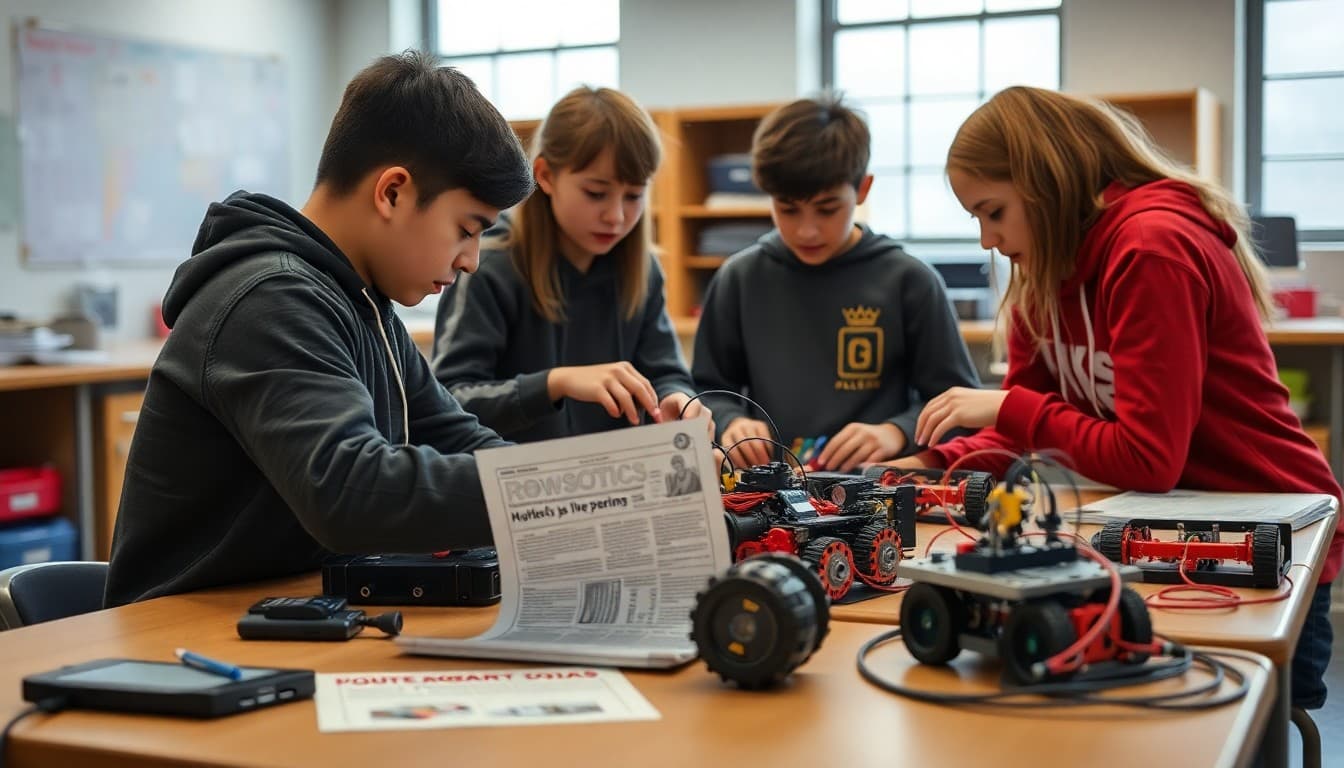
Robotics Team Newsletter: Competition Season Communication
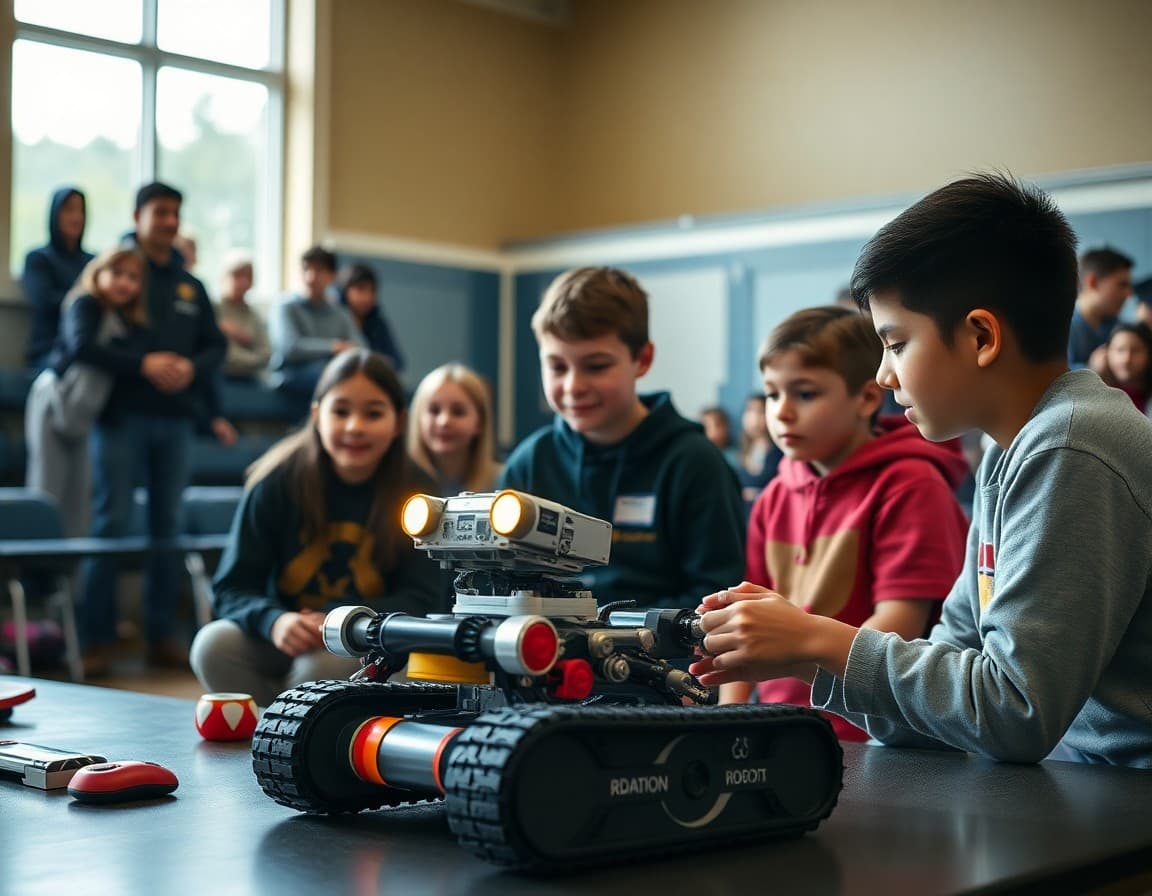
Robotics programs often operate with minimal family visibility. Students disappear into a workshop for weeks during build season, travel to competitions, and return with results that most families cannot interpret without context. A robotics team newsletter that translates the technical work and competition format builds the parent community that every program needs to be sustainable.
Game Reveal and Build Season: The Start of the Communication Year
For FIRST Robotics Competition teams, the season officially begins on Kickoff Day in January when the game for the year is revealed. This is the starting gun for a six-week build season during which the robot must be designed, built, programmed, and tested. Your first newsletter of the build season should explain what was just revealed: the game objective, the key challenges the team will need to solve, and what the build season timeline looks like.
Non-technical families do not need a full engineering analysis. They need enough to understand what their student is working on: "This year's game involves robots scoring points by launching foam discs into targets at various heights. Our team's early strategy sessions are focused on a robot design that excels at both scoring and defending. Over the next six weeks, students will build and test a robot capable of competing at regional events in March."
Build Season Schedule Communication
Build season places intense demands on student time. A team competing at a regional event needs a functional robot in six weeks. That timeline requires after-school practices of three to four hours, weekend work sessions, and a culture of accountability that can surprise families not expecting this level of commitment from a school club.
Your first build season newsletter should communicate the schedule clearly and honestly: "Build season practice schedule: [days of week, times, location]. Weekend work sessions: [schedule]. This is a significant time commitment that we take seriously -- our team's success depends on consistent attendance. If your student has a conflict that will prevent them from attending scheduled sessions, please communicate with [advisor contact] as early as possible."
Explaining the Competition Format
FIRST Robotics competitions use a format that is genuinely confusing to first-time spectators. Qualification rounds pair randomly assigned three-team alliances that change each match. After qualifications, the top-seeded teams select alliance partners for elimination rounds. Awards are given for on-field performance, engineering excellence, team culture, community impact, and innovation -- a team that struggles in match play can still win a prestigious award for their robot design or community outreach.
Your competition preview newsletter should explain this: "At regional competitions, our team will compete in [number] qualification matches alongside two randomly assigned alliance partners. After qualifications, the top teams select alliances for elimination rounds. We are also competing for design, innovation, and community awards that recognize our work beyond the robot's on-field performance. These awards represent what FIRST values: well-rounded teams that excel technically, culturally, and as community members."
A Template Competition Preview Section
Here is a format for a competition preview newsletter:
"[Regional/Event Name] -- [Date(s)]. Venue: [name and full address]. Schedule: Day 1 (practice/inspection day) -- students and mentors only. Day 2 (qualifying rounds) -- spectators welcome beginning at [time]. Day 3 (eliminations and awards) -- spectators welcome beginning at [time]. Our match schedule will be published [day before] at [link]. Spectator admission: [cost or free]. Students and mentors depart school at [time] on [date]. Families driving separately: hotel information is included below for overnight stay."
Celebrating Technical and Award Achievements
Robotics success is not measured only by win-loss records. Your post-competition newsletter should celebrate any award received with a full explanation of what it recognizes. "The Engineering Inspiration Award recognizes teams that represent the ideals of FIRST through exceptional community outreach and team culture -- receiving this award at [event] is one of the most meaningful achievements a FIRST team can earn." Context makes recognition meaningful. Without it, a trophy or certificate is just a thing.
Build Season Safety Communication
Workshop safety is a real concern in robotics programs. Students work with power tools, pneumatics, electrical systems, and sometimes hazardous materials. Your newsletter should cover the program's safety training protocol, what safety gear students use in the workshop, and the procedures for reporting injuries or safety concerns. Families who know safety is taken seriously are more supportive of the after-school time commitment the program requires.
Get one newsletter idea every week.
Free. For teachers. No spam.
Frequently asked questions
What makes a robotics team newsletter different from a sports team newsletter?
Robotics team newsletters must explain a competition structure that is fundamentally different from traditional sports: a six-week build season following a game reveal, qualification events, alliance selection, elimination rounds, and specialized awards beyond simple placement. The newsletter also needs to cover the team's technical progress during build season in ways that non-technical families can understand without needing an engineering background. The goal is the same as any team newsletter -- keep families informed and invested -- but the content requires more translation work.
How do you explain FIRST Robotics competition format to families?
FIRST Robotics Competition events use a format where teams compete in qualification rounds, then form three-team alliances for elimination play. Awards cover technical innovation, team culture, community impact, and on-field performance. A team that never wins a match can win a prestigious engineering award. Explaining this clearly in your newsletter prevents families from evaluating the team only by match wins and misunderstanding the full scope of what success looks like in competitive robotics.
What should a build season newsletter communicate to families?
During build season (the six weeks between game reveal and robot bag day for FRC, or the build period for FTC and VEX), families need to know: practice schedule and hours (build season requires significant after-school commitment), safety training and workshop rules, component purchasing and budget status, progress milestones, and what role student sub-teams play (programming, mechanical, electrical, strategy, outreach). Parents who understand what their student is working on during long build season evenings are more supportive than those who only know their child is 'at robotics.'
How should a robotics newsletter cover the student mentorship aspect of the program?
Mentors -- engineers, programmers, and professionals from outside the school -- are often central to competitive robotics programs. Your newsletter should introduce mentors with their professional background and the specific area they support, explain the mentor-student relationship (mentors guide, students build), and acknowledge their contribution to the team. Families who understand that their child is working alongside professional engineers in a real-world problem-solving context understand the educational value of the program beyond competition results.
Can Daystage help robotics programs communicate with families during build season and competition season?
Yes. Daystage lets robotics advisors send professional newsletters with photos from the build floor, competition schedule and results, and team progress updates all in one send. During build season, a weekly newsletter with a brief technical update and a team photo keeps families connected to the work. At competitions, a same-day recap newsletter with results and award recognition builds excitement and community around the team. Programs that communicate consistently using Daystage report stronger parent engagement and better fundraising support.

Adi Ackerman
Author
Adi Ackerman is a former classroom teacher and curriculum writer with 8 years in K-8 schools. She writes about school communication, parent engagement, and what actually works in real classrooms.
More for Athletics
Ready to send your first newsletter?
3 newsletters free. No credit card. First one ready in under 5 minutes.
Get started free