
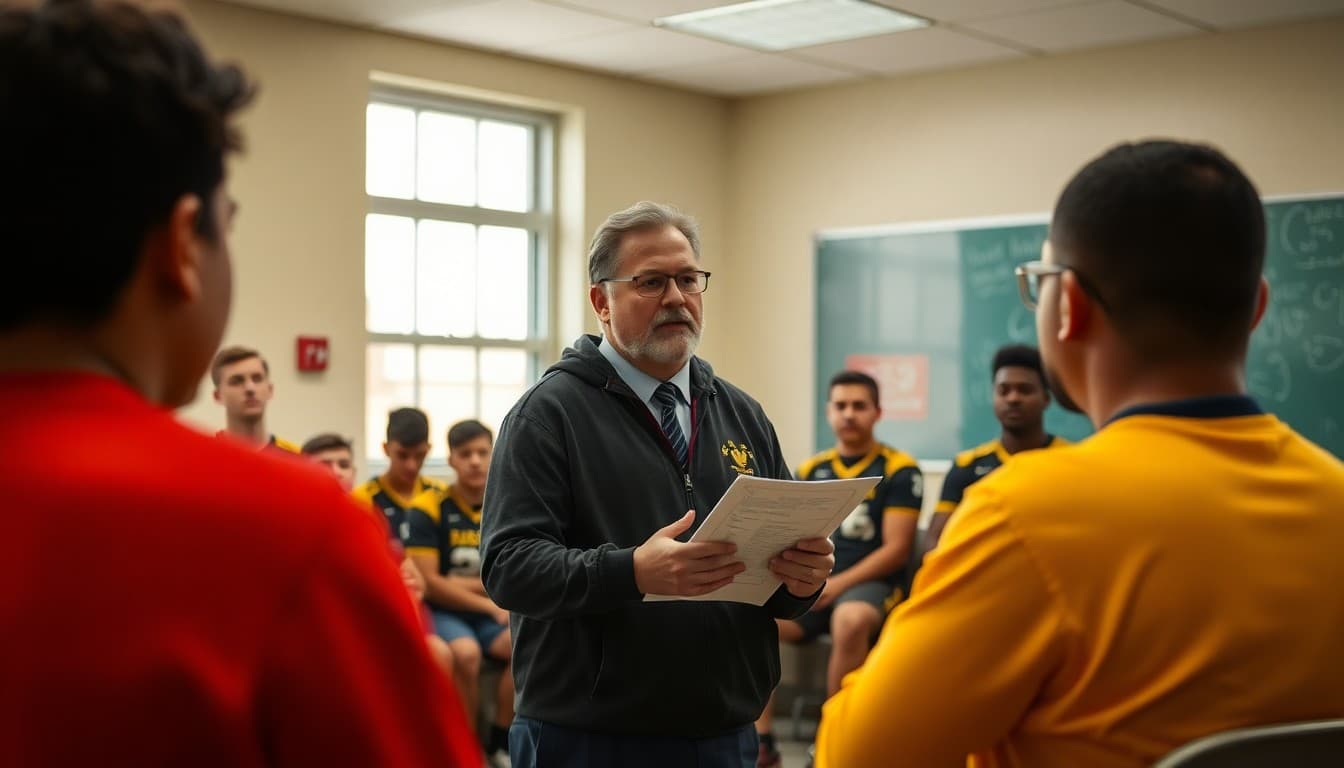
Athletic Code of Conduct Newsletter for Athletes and Families

The athletic code of conduct is the document that defines what your program stands for and what participating in it requires. Too often it is handed to students as a signature page buried in a packet of forms. A newsletter that presents the code as a living document connected to program values -- not just a list of rules -- does actual culture-building work.
Leading with Values, Not Rules
The most effective code of conduct communication starts with the question: what do we believe? Before listing academic eligibility thresholds and substance use consequences, articulate what the athletic program is for. Competition develops character. Teamwork teaches skills that matter beyond the field. Representing the school requires conduct that honors everyone who came before.
Your newsletter can communicate this: "Being a student athlete at [School] means more than playing a sport. It means representing thousands of alumni who wore this uniform before you. It means being part of a team where your teammates depend on you. It means carrying yourself with integrity in competition, in the classroom, and in the community. Our code of conduct reflects those values. Please read it as a statement of what we stand for, not only as a list of rules."
Academic Eligibility: The Non-Negotiable
Academic eligibility requirements are the most consequential conduct-related policy for student athletes. In most states, athletes must maintain a minimum GPA -- typically 2.0 -- and pass a minimum number of courses to remain eligible to compete. Eligibility is typically checked at the semester grade report and sometimes biweekly or quarterly.
Your newsletter should be specific: "Athletes who fall below [minimum GPA] at any grade check period are declared ineligible to compete until the next eligibility check shows they have met the standard. Ineligibility may allow continued practice participation at the coach's discretion. The academic eligibility standard is set by [state athletic association] and cannot be waived by the school or coach. If you are concerned about your student's academic standing, please contact their teachers now rather than waiting for a grade report."
A Template Code of Conduct Summary Section
Here is a summary section format that works in an annual code of conduct newsletter:
"The [School] Athletic Code of Conduct applies to all student athletes from the first day of practice through the end of the athletic year. Key standards include: academic eligibility (minimum [GPA] and no failing grades); 100 percent attendance at practices and competitions unless excused by the coach in advance; social media conduct that reflects positively on the program and school; no use or possession of alcohol, tobacco, vaping products, or illegal substances; sportsmanlike behavior toward opponents, officials, and spectators at all times. Violations of the code result in [first offense, second offense, third offense consequences]. The complete code of conduct is available at [link]. Both student and parent/guardian signature is required. Return signed forms to the athletic office by [date]."
Substance Use Policy Communication
Substance use policies are among the most sensitive components of an athletic code of conduct. Your newsletter should communicate the policy clearly and note that it typically applies year-round, not only during the active season: "The [School] substance use policy applies to student athletes 12 months per year, not only during the sports season. This includes alcohol, tobacco, vaping/e-cigarettes, marijuana, and any illegal or controlled substance not prescribed to the athlete. First-offense consequences are [consequence]. Second-offense: [consequence]. Students who self-report a substance use concern may access counseling resources without immediate conduct consequences -- contact [school counselor contact] confidentially."
Parent and Spectator Conduct
Many schools have formalized spectator conduct expectations in response to increasing incidents of parent behavior that disrupts competition and reflects negatively on the school. Your newsletter should address this specifically: "Parents and spectators represent our school community at all athletic events. Behavior that is threatening, abusive, or disparaging toward officials, coaches, opponents, or other spectators is not acceptable and will result in removal from the facility and potential ban from future events. We ask all members of our athletics community to model the sportsmanship we ask of our athletes."
The Signature Form and Documentation
Requiring a signed acknowledgment form from both the athlete and a parent or guardian does two things: it ensures the family read the code (at least the document, even if not thoroughly), and it creates a documentation record. If a conduct issue arises during the season, a signed acknowledgment form demonstrates that the school communicated expectations and the family acknowledged them. Include the form link and the return deadline prominently in your newsletter, and send a reminder one week before the deadline for families who have not yet returned it.
Get one newsletter idea every week.
Free. For teachers. No spam.
Frequently asked questions
What should an athletic code of conduct newsletter include?
An athletic code of conduct newsletter should cover: academic eligibility standards and how they are monitored, attendance expectations for practices and games, social media and online behavior standards, substance use policy, behavior expectations at competitions as participants and spectators, the consequences for code violations at first, second, and third offense levels, and the process for appealing a disciplinary decision. The newsletter should be a clear summary that points families to the full code of conduct document for complete details.
How do you communicate code of conduct consequences without sounding punitive?
Frame the code of conduct as a set of standards that the community holds together, not a list of punishments. Lead with the values the code is designed to protect: commitment to teammates, integrity in competition, respect for opponents, and pride in representing the school. Consequences exist because the community takes these values seriously. A consequence section that follows a values section lands differently than a list of penalties presented cold. 'Here is what we stand for, and here is how seriously we take it' is more effective than 'here is what happens if you break the rules.'
How should the code of conduct apply to parent behavior at athletic events?
Parent conduct at athletic events is a significant issue in high school athletics. Negative parent sideline behavior affects athlete performance, reflects on the school, and is subject to consequences at many schools, including being asked to leave and being banned from future events. Your newsletter should address parent conduct standards specifically, not just athlete conduct, including: expectations for behavior toward officials, opposing teams, and coaches, the procedure for reporting parent misconduct, and the consequences for parents who violate conduct standards.
What social media standards should the athletic code of conduct cover?
Athletic programs increasingly include social media standards in their codes of conduct. Common provisions include: prohibiting posts that disparage teammates, coaches, opponents, or officials; requiring that posts during the season do not violate team standards; and noting that content posted publicly is considered public representation of the school. Your newsletter should summarize these standards without trying to replace the full policy document -- direct families to the full policy for complete details.
Can Daystage help athletic programs communicate conduct expectations to families at scale?
Yes. Daystage lets athletic directors send a professional code of conduct newsletter to all athletic families simultaneously, with links to the full conduct policy and the signature form that families need to return. Schools that send this newsletter before the season starts and collect signed acknowledgment forms have documentation of family communication that is useful if a conduct issue arises later in the season. Programs that use Daystage for this communication report fewer 'I didn't know' responses when conduct consequences are enforced.

Adi Ackerman
Author
Adi Ackerman is a former classroom teacher and curriculum writer with 8 years in K-8 schools. She writes about school communication, parent engagement, and what actually works in real classrooms.
More for Athletics
Ready to send your first newsletter?
3 newsletters free. No credit card. First one ready in under 5 minutes.
Get started free