
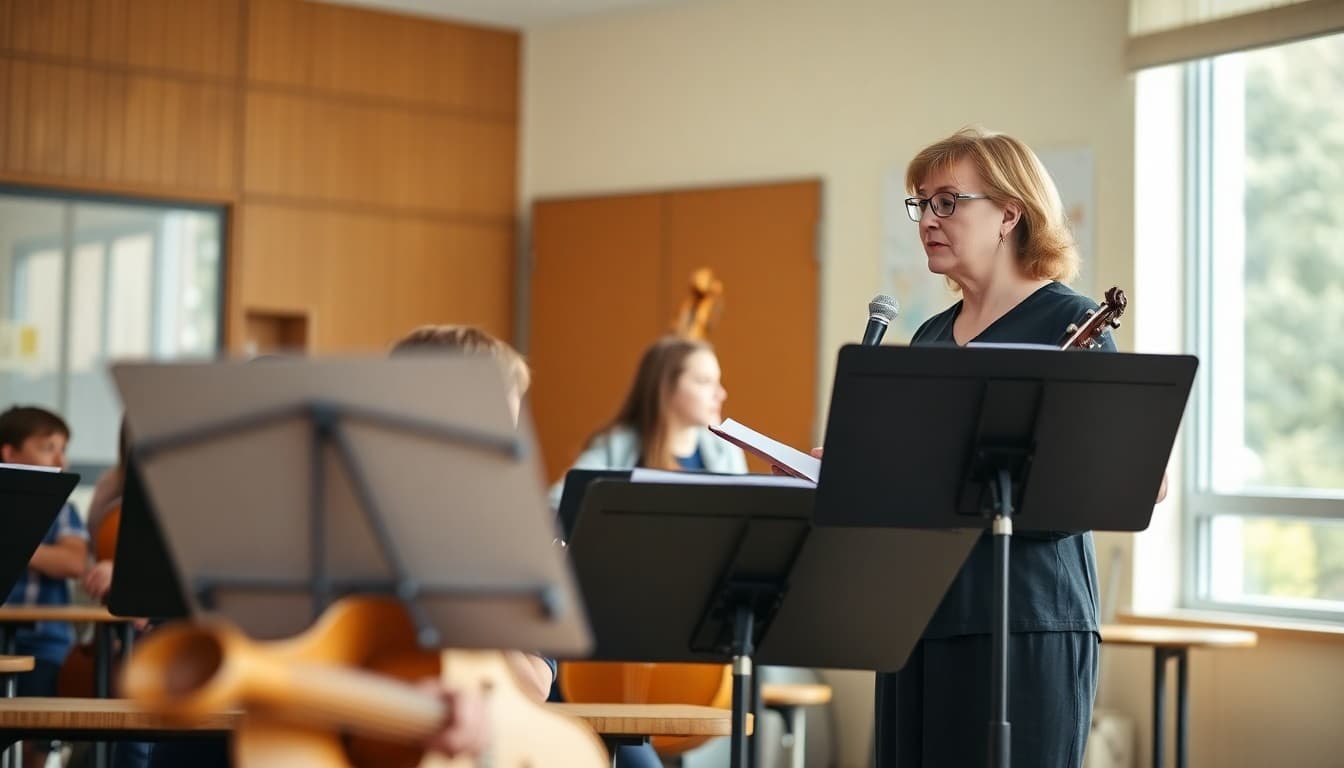
September Music Class Newsletter: What We Are Learning

The September music class newsletter does more than announce the start of the year. It introduces a curriculum that many families have never had explained to them, sets expectations for practice and participation, and begins the communication relationship that will sustain the music program across the full year. Start strong in September and you set up every newsletter that follows.
Introduce yourself and your background
New and returning families both benefit from a genuine introduction at the start of the year. Share your name, your instrument or musical background, and what drives you to teach music. A paragraph of personal voice makes the September newsletter feel like it comes from a teacher, not a department announcement.
Describe the year's curriculum in accessible language
Map the year for families in terms they can follow. What will students be learning in the first semester? What skills will the second semester add? For ensemble programs, name the repertoire goals and the performances planned. For general music classes, name the major concepts: rhythm, melody, harmony, form, and how those concepts build on each other.
State practice expectations clearly
Practice is where musical learning happens, and families need to know what their child should be doing between class sessions. Name a specific recommended daily practice time. Describe what practice should include: warm-up, technique exercises, and repertoire. Tell families what their role is even if they are not musicians: creating the time and space for practice is as important as the practice itself.
"The recommended practice time for beginning band students is 15 to 20 minutes per day, five days per week. If your child is practicing six days a week, that is ideal. If they miss a day, catch up the next day rather than doubling up. Short, consistent practice sessions are more effective than long, infrequent ones."
Cover instrument logistics
If students have or are getting instruments, address logistics in the September newsletter: rental information, maintenance expectations, what to do if something breaks, and what consumable supplies students need. A specific section on this prevents the mid-year calls about broken equipment that could have been avoided with early information.
Sample newsletter template excerpt
Dear Music Families,
Welcome to the year. I'm Mr. Torres, and I will be teaching band and general music this year. We start September with rhythm fundamentals in general music and long tones and scale work in band. No concert dates yet, but our first performance will be in December.
Band students should be practicing 15 to 20 minutes per day. If you do not have an instrument yet, please arrange rental through the school office by Friday.
Name the first performance milestone
Even if the first concert is months away, naming it in September gives students and families a goal to work toward. A concrete horizon makes daily practice meaningful rather than abstract. Tell families when the first performance is, what kind of event it is, and what students will be performing.
Tell families how to stay connected
End the September newsletter by telling families how to reach you, how often to expect newsletters, and what to do if they have questions. Families who know the communication system from day one are easier partners than families who feel like they are chasing information all year.
Get one newsletter idea every week.
Free. For teachers. No spam.
Frequently asked questions
What should a September music class newsletter cover?
The September newsletter introduces the year's curriculum, names the instruments or musical skills students will be developing, and explains how the class is structured. For families with students in an ensemble, it should describe ensemble expectations, rehearsal schedules, and instrument rental or maintenance information. For general music classes, it should name the musical concepts that will be covered and how families can engage with the music at home.
How do you introduce music fundamentals to families who are not musicians?
Most families do not have a background in music theory or performance. A September newsletter that explains in plain terms what students are learning, not using technical jargon but describing what the skills sound like and why they matter, makes the curriculum accessible to all families. 'We are starting by learning to read rhythm, which means students will learn to clap or tap patterns of long and short sounds before they ever play a note. This skill transfers to every instrument and to singing.'
Should a September music newsletter include practice expectations?
Yes. Practice expectations should be stated clearly at the start of the year so families can plan for them. Name the recommended daily practice time, what students should practice during that time, and how families can help without needing to be musicians themselves. 'Even if you don't play an instrument, you can help by making sure there is a quiet time for practice each day and by asking your child to play something they have been working on.'
How do you set instrument care expectations in September?
A brief section on instrument care is essential for any ensemble newsletter. Tell families what the instrument should look like after every practice session: wiped down, stored correctly, reeds changed on schedule, rosin applied appropriately. Instruments that are not maintained correctly fail at the worst times. Families who receive clear maintenance instructions in September prevent the majority of instrument issues that arise throughout the year.
How does Daystage help music teachers start the year with families?
Daystage gives music teachers a professional format for the September newsletter that includes practice schedules, instrument requirements, and curriculum introductions in one clean, shareable layout. When the first communication of the year looks polished and organized, families start the year with confidence in the program.

Adi Ackerman
Author
Adi Ackerman is a former classroom teacher and curriculum writer with 8 years in K-8 schools. She writes about school communication, parent engagement, and what actually works in real classrooms.
More for Arts & Music
Ready to send your first newsletter?
3 newsletters free. No credit card. First one ready in under 5 minutes.
Get started free