

Booster Club Travel Newsletter: Away Game and Tournament Trips
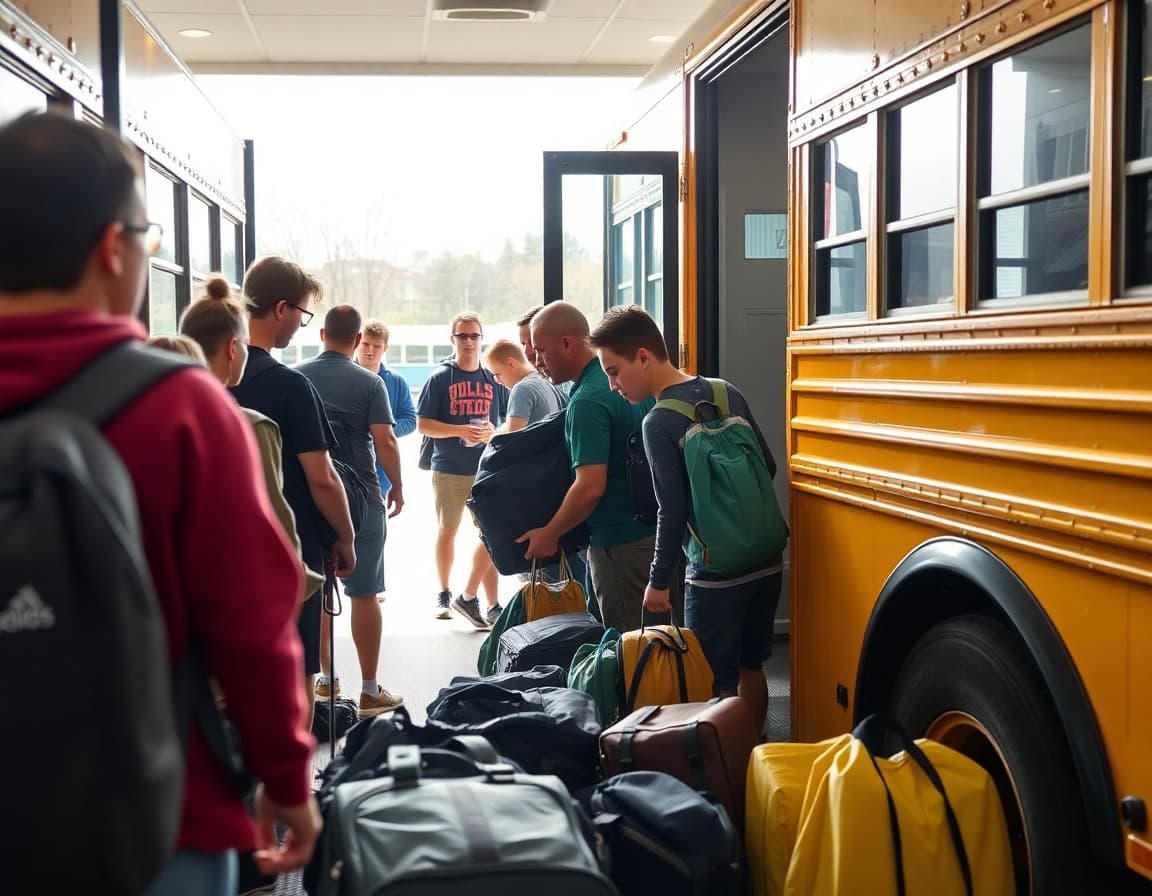
Away games and tournament trips are the highlight of any athlete's season. They are also a significant logistical lift for the booster club. A clear travel newsletter does the heavy work for you: it collects consent, communicates expectations, and answers the 20 questions you would otherwise get individually. Here is how to build one that covers everything.
Announce the Trip with Full Details First
Your first travel newsletter should include every fact a family needs to decide whether their athlete is participating and what they need to do. That means: destination, dates and departure time, return time, mode of transportation (school bus, charter, or carpool), overnight or day trip, total cost per athlete, and the deadline to commit.
If you are still finalizing hotel or venue details, say so explicitly and give a date when you will follow up. "Hotel TBD, will confirm by October 15th" is far better than sending an incomplete newsletter and having families call for information you do not have yet.
List Every Required Form and Deadline
Travel trips generate more paperwork than any other booster event. Create a checklist in your newsletter so families can track what they have and have not submitted. A standard overnight trip might require a district travel permission form, a medical emergency authorization, a code of conduct agreement, and a copy of the athlete's insurance card.
Assign a specific deadline for each form, not just "before the trip." "All forms due to the front office by November 1st" gives the booster club and school staff time to review submissions and chase missing paperwork before departure day. Late form submissions are the leading cause of last-minute trip stress.
Break Down the Costs Transparently
Families trust you more when you show your math. Instead of just saying "the trip costs $175 per athlete," break it down: transportation $65, hotel two nights $80, two team meals $30. This context helps families understand what the money covers and reduces the perception that the booster club is inflating costs.
If the booster club is subsidizing any portion of the trip through fundraising, note that too. "The full cost is $250, but the booster club is covering $75 per athlete from the [Fundraiser] proceeds, so your athlete's share is $175." Families appreciate knowing that fundraising directly benefits their kids.
Set Clear Behavior and Electronics Expectations
Team travel brings out the best and occasionally the worst in high school athletes. Include a brief behavior expectations section in your newsletter that echoes what coaches will communicate directly. Cover curfew times for overnight trips, phone use during team meals and meetings, any "no roommate changes" or buddy system rules, and the consequence for policy violations (typically sent home at family expense).
Putting these expectations in writing before the trip means no family can claim surprise if there is a discipline issue. It also signals to athletes that the booster club and coaching staff are coordinated.
Provide a Packing List for Every Trip Type
For a same-day away game, the list is simple: uniform, warm-ups, cleats or appropriate footwear, water bottle, and a snack for the return bus. For an overnight tournament, it expands significantly. Break the packing list into sections: competition gear, personal items, meals and money, and any special items like team-issued gear the coach requires.
Sample overnight packing template: "Competition: [sport] uniform x2, practice jersey, team warmup jacket and pants, appropriate shoes, extra socks. Personal: toiletries, any prescription medications in original packaging, charger, earbuds, one personal bag. Meals: school will provide dinner Friday and breakfast Saturday; bring snacks and $15-20 for Saturday lunch."
Coordinate Fan and Family Travel Separately
If parents and family members want to attend the tournament or away game, they typically travel independently. Include the venue name and address, nearby parking options, admission costs if applicable, and the team's competition schedule so families can plan when to arrive. If the event is at a venue that requires tickets purchased in advance, include that link prominently.
For families booking hotels nearby, a few recommended options near the venue save them time on research. The booster club does not need to coordinate this, but pointing families toward a hotel block from a competing school's booster club notice or a Google Maps search is a helpful touch.
Send a Pre-Departure Reminder the Day Before
A short reminder email the day before departure covers the essentials: departure time and location, what to wear on the bus, and a final checklist of anything that cannot be forgotten (forms, medication, gear). Keep this email to under 200 words. By this point, families have the full information. They just need a final check-in.
Include a "team send-off" note if your school community typically gathers to see athletes off. Some programs have a brief send-off in the school parking lot. Others just appreciate a word of encouragement. Either way, a warm closing message from the booster club reinforces that the whole community is behind the team.
Send a Post-Trip Thank You
After the trip, send a brief newsletter with results, a photo from the tournament, and thanks to the families, drivers, chaperones, and coaches who made it happen. If you received donations or fundraising proceeds that covered travel costs, acknowledge that here. This closes the loop and reminds families that their involvement with the booster club has real impact on athlete experiences.
Get one newsletter idea every week.
Free. For teachers. No spam.
Frequently asked questions
What paperwork do families need to submit for tournament travel?
Standard travel paperwork includes a signed permission form with the trip dates, destination, and mode of transportation, an emergency contact update if not already on file for the season, and any medical authorization forms required by your district. If the trip crosses state lines or involves an overnight stay, additional district-level approval may be required. Always check with your athletic director before booking.
How do we handle travel costs fairly for families?
Communicate costs upfront and offer a payment plan if the trip is expensive. Many booster clubs subsidize travel through fundraising so athlete out-of-pocket costs are lower. If some families cannot afford the full cost, have a discreet process for partial assistance. A scholarship or travel fund draw request submitted to the booster president works well and preserves athlete dignity.
What should athletes pack for an overnight tournament?
Your packing list should include team uniform and practice gear for each competition day, school-appropriate casual clothes for downtime, toiletries, any prescription medications in original packaging, a phone charger, snacks, and a small amount of spending money if you will stop at a restaurant. Remind athletes to label all gear with their name since bags look identical at a hotel.
Can parent chaperones attend tournament trips?
This depends on your school and district policy. Many schools limit chaperone access for overnight trips due to supervision ratios, insurance, and background check requirements. If you are organizing parent travel separately (families traveling on their own to watch the tournament), include the hotel and venue address in your newsletter so they can book their own accommodations nearby.
How can Daystage help with travel newsletter logistics?
Daystage lets you include an RSVP or consent form link directly in your newsletter so families can confirm participation and submit permission in one step. You can track who has responded, send follow-up reminders to non-responders, and keep all communication in one organized thread rather than juggling email replies. This is especially helpful when you are managing travel logistics for 30-plus athletes.

Adi Ackerman
Author
Adi Ackerman is a former classroom teacher and curriculum writer with 8 years in K-8 schools. She writes about school communication, parent engagement, and what actually works in real classrooms.
More for Alumni & Boosters
Ready to send your first newsletter?
3 newsletters free. No credit card. First one ready in under 5 minutes.
Get started free