
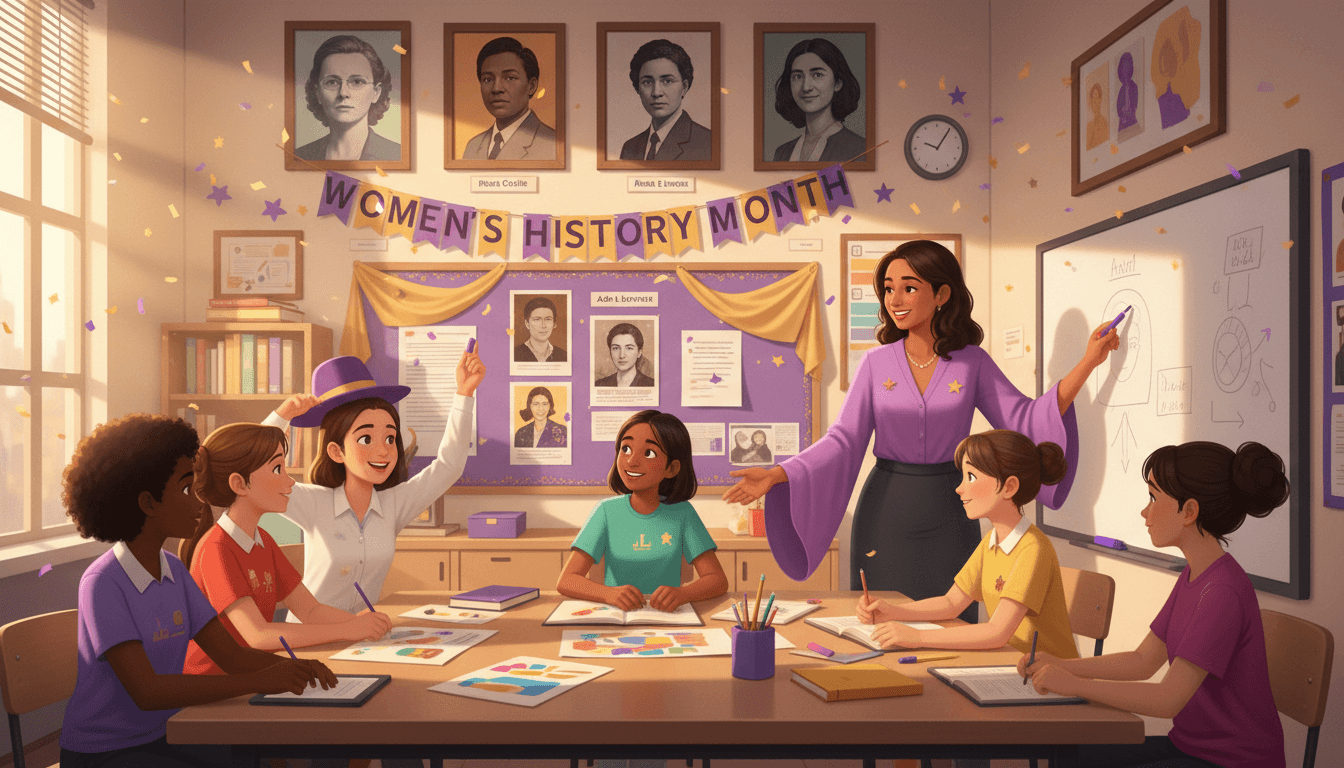
Women's History Month School Newsletter Template
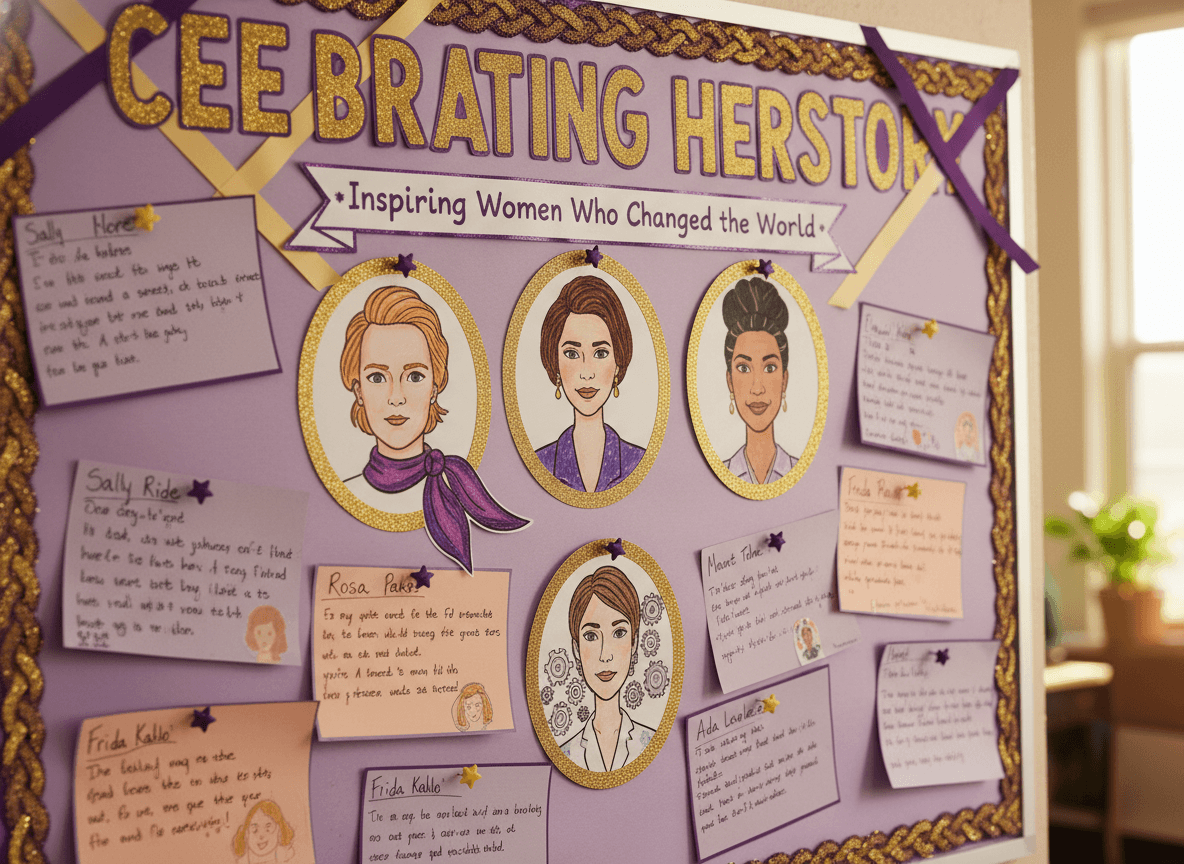
Women's History Month is observed every March. For schools, it is an opportunity to connect history, literature, science, and social studies curriculum to the stories of women whose contributions have often been undertaught. A newsletter that communicates your plans clearly, early in March, helps families reinforce classroom learning at home and signals that the observance is woven into your curriculum, not just a hallway display.
This template covers what to include in your Women's History Month newsletter, how to frame the content, and sample copy you can adapt for any grade level.
When to send and what to say first
Send your Women's History Month newsletter in the first week of March, before the month fills up. Families with daughters especially appreciate knowing that the classroom is spending real time on this. But this observance matters for all students, regardless of gender, and your newsletter tone should reflect that. Women's history is history, not a niche topic for a subset of your class.
What to include
A brief context-setter. What is Women's History Month and why March? A sentence or two is enough. This started as a local event in California in 1978, became National Women's History Week in 1980, and was designated a month-long national observance in 1987. Families who know this will appreciate the accuracy. Those who do not will appreciate the background.
Who and what you are studying. Be specific. "We are studying women in history" is less useful than "We are reading about Marie Curie, Katherine Johnson, and Malala Yousafzai, and comparing their challenges and contributions across three different time periods." Specificity signals that the observance is curriculum-driven, not decorative. Include women of diverse backgrounds, not just the same handful of names students see every year.
How this connects to your current curriculum. Is Women's History Month integrated into a unit you are already teaching? Are you pausing a different unit to give this month real time? Families who understand the curricular context are more likely to reinforce learning at home.
Suggestions for home conversations. One or two questions families can ask at dinner. "Who is one woman from history that you learned about today and what surprised you about her?" is more useful than a generic "talk about what you learned." Give families something concrete to work with.
An invitation to share. Some families may have stories of women in their family history, or cultural figures who do not appear in standard curricula. A brief, low-pressure invitation to share these is worth including. Oral history is a legitimate and rich source of women's history.
Any related events or project dates. Presentations, share days, school-wide events, visiting speakers. Give dates with enough notice for families to plan.
Sample newsletter copy
Subject line: March is Women's History Month. here is how we are celebrating in class
Opening: "March is Women's History Month, a time to recognize the contributions of women whose stories have often been left out of the history books we learned from. This month, our class is going to change that."
What we are studying: "We will be spending March exploring the lives and work of women across science, politics, literature, and social movements. We are starting with [names and brief descriptions] and students will choose one woman to research and present on at the end of the month. Our reading corner is stocked with books featuring women in leading roles, and we will be pulling quotes and ideas from that reading throughout March."
How you can help: "If you know of a woman in your family's history or cultural background whose story deserves to be told, I would love for your child to bring that story into our classroom conversation. There is no formal assignment involved. A story shared at dinner can become something your child shares with the class. That kind of connection is exactly what this month is for."
What to avoid
- Limiting your focus to the same three or four figures every year
- Centering only American or Western European women when the observance is global
- Framing the celebration as being for the girls in your class rather than all students
- Using language that inadvertently positions women's history as supplemental to "real" history
- Sending the newsletter in mid-March when half the month is already gone
Tone and length
Engaged and direct. Your newsletter should communicate that this is not an add-on month but a genuine curriculum priority. Keep it under 400 words. A clear structure with a brief context section, a specific classroom plan, and a simple family invitation is the right shape.
Using Daystage in March
March tends to pile up. You often have spring break communication, standardized testing reminders, and end-of-trimester updates all hitting at the same time. Daystage lets you write and schedule your Women's History Month newsletter in advance so it goes out on the date you choose without competing with other communications in your drafts. Send the Women's History Month newsletter the first week of March, schedule your testing prep update for mid-month, and give yourself space to focus on teaching rather than logistics.
Curriculum that lasts beyond the month
The best Women's History Month classrooms do not return their bulletin boards to normal on April 1. The figures, questions, and habits of inquiry introduced in March should echo through the rest of the year. A newsletter in early March that frames this as a month-long launch rather than a self-contained celebration sets the right expectation from the start.
Get one newsletter idea every week.
Free. For teachers. No spam.
Frequently asked questions
When should schools send a Women's History Month newsletter template?
Send it at the start of March, before classroom activities begin. Families benefit from knowing which women and historical themes their children will be studying before the month progresses rather than learning about it after the fact.
What should a Women's History Month newsletter include?
Describe the specific women being studied and what aspects of their contributions the class is focusing on, list any books, films, or primary sources being used, note any family engagement opportunities, and share how families can extend the learning at home with names and resources rather than generic suggestions.
How should teachers customize a Women's History Month newsletter template?
Replace generic references to 'important women' with the names and stories your class is actually exploring. A newsletter that mentions Marie Curie, Ida B. Wells, or Malala Yousafzai in specific context signals real curriculum depth rather than surface-level recognition.
What makes a school newsletter template ineffective for Women's History Month?
Limiting the recognition to a few well-known names without addressing the systemic barriers those women overcame reduces the month to biography collection rather than historical education. Families and students notice the difference between listing names and teaching history.
Where can teachers find a good Women's History Month newsletter template?
Daystage has heritage month newsletter templates including Women's History Month, designed to help teachers communicate the scope and depth of their classroom curriculum to families in a format that signals genuine engagement.

Adi Ackerman
Author
Adi Ackerman is a former classroom teacher and curriculum writer with 8 years in K-8 schools. She writes about school communication, parent engagement, and what actually works in real classrooms.
More for Templates
Jewish Holidays School Newsletter Template: Rosh Hashanah, Yom Kippur, and Hanukkah for Teachers
Templates · 7 min read
Pi Day Classroom Newsletter Template: How to Share the March 14 Math Celebration with Families
Templates · 5 min read
Student Council Election Newsletter Template for Schools
Templates · 5 min read
Ready to send your first newsletter?
3 newsletters free. No credit card. First one ready in under 5 minutes.
Get started free