

Winter Break School Newsletter Template: What to Send Before the Holiday Break
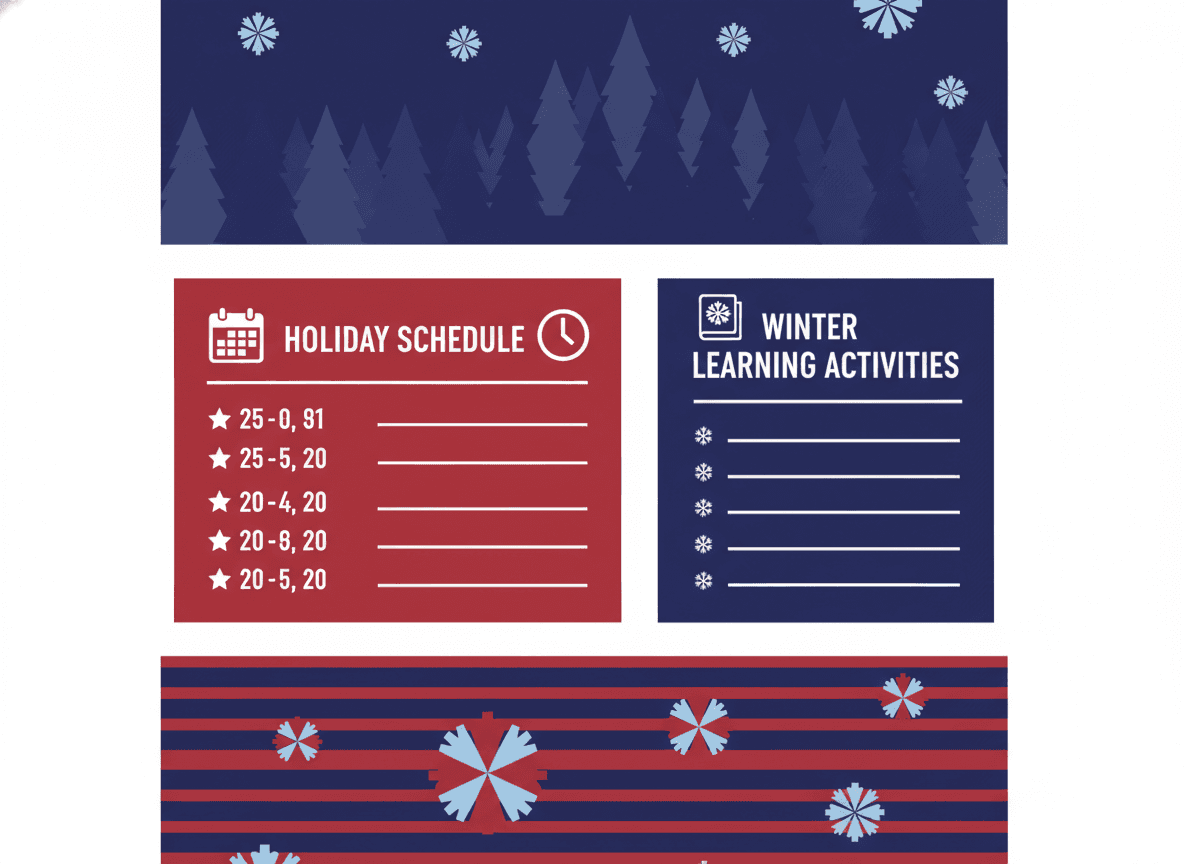
The pre-winter break newsletter is one of the most read school communications of the year. Families are looking for last-day logistics, break activities for their kids, and any important information they need to hold onto over two weeks away from school. Getting this newsletter right does not require length. It requires clarity and timing.
Here is a template and five topic ideas for a winter break newsletter that actually helps families.
When to send it
Send the winter break newsletter three to five days before the last day of school. Not the day before. Not the morning of. Three to five days out gives families time to read it, note the last-day logistics, and plan the break around any recommendations you include.
If your school also requires a year-in-review newsletter in December, send that one first (early December), and let the pre-break newsletter be a shorter, logistics-focused send closer to the last day.
The two jobs of the winter break newsletter
The pre-winter break newsletter has two jobs. The first is practical: tell families what is happening on the last days of school and give them anything they need to know before two weeks away. The second is relational: close the first semester in a way that maintains the parent relationship through the break and sets up January well.
Both jobs can be done in a single, well-structured newsletter. It does not need to be long.
Suggested structure for the winter break newsletter
- Last-day schedule and logistics. Start here because it is the most urgent information. Last bell time, pickup procedures if they differ from normal, what to do with classroom materials, and any items students should bring home. Families who miss this section struggle on the last day.
- Classroom celebration details. If there is a holiday or winter party, describe it: when it is, what students are doing, whether families are attending, and any food allergy considerations if treats are involved. If there is a gift exchange, include the details and the spending limit.
- A first-semester reflection. Two to four sentences on what the class has accomplished since September. This does not need to be a full review, just a brief acknowledgment of the semester's arc. It gives families a sense of closure on the first half of the year.
- Winter break at home: low-key suggestions. One reading recommendation, one optional learning activity, and a reminder that the break is a break. Keep this section brief and frame everything as optional. Families who want to do something with their child now have ideas. Families who need a break do not feel pressured.
- What January looks like when we return. The date school resumes, a preview of the first week back, and one or two highlights from the second semester curriculum. Families who know what to expect in January have an easier time helping their child transition back after two weeks off.
Five winter break newsletter topic ideas
1. The last-day schedule in detail. When is the final bell? Is there an early dismissal? Is the classroom party during school hours or after? What should kids bring home on the last day? A clear, specific logistics section saves you from ten individual emails and one angry parent who missed pickup.
2. What we have learned since September: a brief celebration. Three or four specific things the class has mastered, completed, or experienced since the first day of school. Projects, books, field trips, academic milestones. This section does not need to be comprehensive. It just needs to feel real and specific.
3. A winter reading list for break. Two or three books appropriate for your grade level that are good for holiday travel, cozy afternoons, or gift-giving. A short sentence on why you love each book makes the recommendation feel personal. Families use teacher reading recommendations more than any other source.
4. The classroom holiday celebration: what to expect. Whether you are doing a winter party, a cultural celebration of December holidays, or a simple classroom pajama day, describe it. Families who do not celebrate certain holidays appreciate knowing the specific activity rather than assuming based on the name.
5. A genuine thank-you for the first semester. Not a generic "thank you for your continued support." A specific acknowledgment of what your parent community did this semester that made your classroom work better. This is the kind of content that families share with other parents and remember months later.
Handling holiday inclusivity before winter break
December celebrations include Christmas, Hanukkah, Kwanzaa, Yule, and for many families, nothing in particular. In your newsletter, use language like "winter break," "holiday season," and "winter celebration" rather than defaulting to Christmas framing. Describe the specific activities you are doing rather than naming them with a holiday title. This is not about erasing celebration. It is about making sure every family in your classroom feels included in your communication.
Winter break newsletters and Daystage
The week before winter break is one of the busiest of the school year. A tool like Daystage makes the pre-break newsletter faster to finish. Write your sections in the block editor, use your saved classroom profile, and send to your subscriber list in a few minutes. The analytics will show you who opened the newsletter after the break, which can flag families who may have missed the last-day logistics.
The winter break newsletter is a gift to families
Families who enter winter break with clear last-day information, a sense of what the class has accomplished, and a few optional ideas for keeping kids engaged have a better break. And they come back in January connected to the classroom rather than having to rebuild the relationship from scratch. The pre-break newsletter does that work in one send.
Get one newsletter idea every week.
Free. For teachers. No spam.
Frequently asked questions
When should schools send a winter break newsletter template?
Send it three to five days before the last school day before winter break. Families need the break dates confirmed, a sense of how the final school days will look, and any optional learning suggestions before the holiday season fully takes over their attention.
What should a winter break school newsletter include?
Cover the last school day and return date, any classroom celebrations or end-of-semester activities, what students should bring home from their lockers or desks, optional reading or learning activities for the break, and a brief first-semester reflection. Families reading this newsletter are wrapping up the year's first half.
How should teachers customize a winter break newsletter template?
Adjust the celebration section to reflect your school's actual winter break events. If you have a class party or a special activity on the last day, describe it with logistics. If your class includes families celebrating different holidays, use winter break language rather than assuming a shared holiday tradition.
What makes a school newsletter template ineffective before winter break?
Assuming all families celebrate Christmas is the most common and most alienating mistake in winter break communication. A newsletter that frames the entire holiday period through one tradition excludes a significant share of most school communities and signals that not all families belong equally.
Where can teachers find a good winter break newsletter template?
Daystage has winter break newsletter templates with inclusive holiday framing, end-of-semester reflection sections, and break logistics that teachers can customize for their classroom community.

Adi Ackerman
Author
Adi Ackerman is a former classroom teacher and curriculum writer with 8 years in K-8 schools. She writes about school communication, parent engagement, and what actually works in real classrooms.
More for Templates
Ready to send your first newsletter?
3 newsletters free. No credit card. First one ready in under 5 minutes.
Get started free