
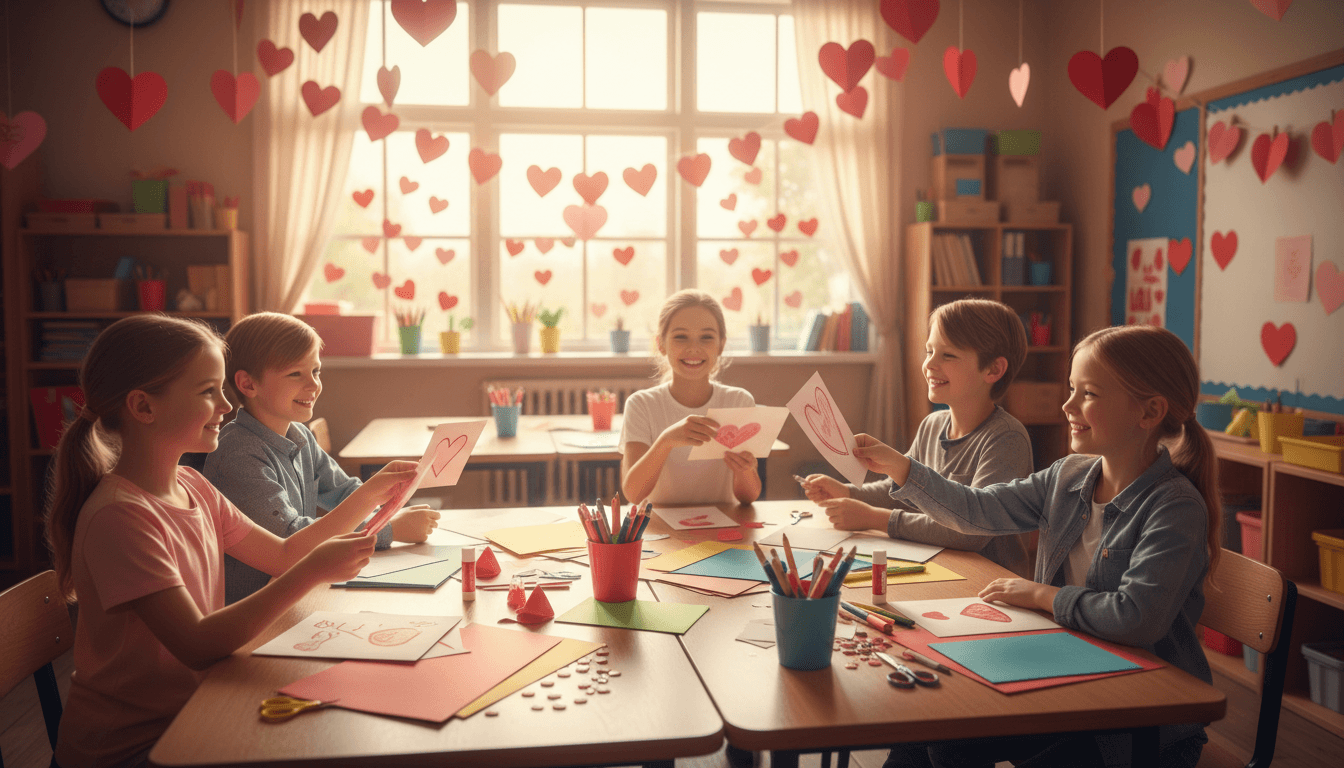
Valentine's Day School Newsletter Template

Valentine's Day in a classroom involves more logistics than people expect. Card exchanges, food allergies, party plans, and the question of how to make the day genuinely inclusive for every student all require clear communication. A well-written Valentine's Day newsletter does the organizational work in advance so the day itself can be fun without last-minute confusion.
This template covers what to include, what to clarify ahead of time, and how to write the newsletter in a way that works for your whole classroom community.
When to send
Send your Valentine's Day newsletter one to two weeks before February 14. Families need time to prepare cards, buy supplies, and plan around the party if one is happening. A newsletter that arrives five days before the holiday gives families who missed it the weekend scramble. Two weeks gives everyone time to plan at a reasonable pace.
What to include
Whether you are doing a card exchange and the ground rules. This is the most important thing to communicate. If you are doing an exchange, state clearly: all students must bring a card for every classmate, OR you are not doing a formal exchange. Include your class roster or a class list count so families know how many cards to prepare. Specify whether cards should be pre-addressed, sealed, or simply signed.
Food allergy guidelines. If families are sending in treats, include your classroom allergy information or a request to send store-packaged items with visible ingredient lists. If your school or classroom is nut-free, gluten-free, or has other specific restrictions, spell this out. A parent who has to throw out a tray of homemade cookies at drop-off is not going to have a good Valentine's Day.
Party details. Is there a class party? What time? Are parent volunteers invited to help? Is there anything families should bring? If the party is during school hours, families with flexible schedules may want to come. Give them the information.
What students should NOT bring. Flowers, stuffed animals, balloons, and individual gifts to specific friends can create social dynamics that are hard to manage in a classroom. If you have preferences here, state them clearly and early. "Cards only, please" is a complete policy.
Any curriculum connection. Are you reading a book about friendship? Doing a writing activity about appreciation? Connecting the day to a social-emotional learning unit? A sentence or two about the learning angle gives the newsletter more substance than a logistics list alone.
Inclusivity note, optional. Some families celebrate Valentine's Day; others do not. Some students find the card exchange stressful. If you have made any specific choices to make the day more inclusive, mentioning them briefly in the newsletter is worth doing.
Sample newsletter copy
Subject line: Valentine's Day is February 14. here is what you need to know
Opening: "Valentine's Day is coming up and I want to make sure families have everything they need to prepare. Here are the details for our class celebration."
Card exchange: "We will be doing a card exchange on February 14. Please have your child bring one card for each classmate. Our class has [number] students. Cards do not need to be addressed to individual students. a signed card is enough. If you have the cards pre-addressed, that is great too. Please no individually wrapped candy or small toys attached to cards."
Food allergies: "Our classroom is [nut-free / has a student with a specific allergy]. If your child is bringing a treat to share, please send store-packaged items with the ingredient list visible. I will double-check everything before distribution."
Party details: "We will celebrate from [time] to [time] on February 14. If you would like to help, please email me by [date]. We can usually accommodate two parent volunteers per session."
What to skip: "Please leave flowers, balloons, stuffed animals, and individual gifts at home. Cards are the right size for our classroom."
Inclusive framing
Valentine's Day can put students in uncomfortable spots if the card exchange feels like a popularity contest or if certain students receive significantly fewer cards than others. The "one card for every classmate" policy, clearly communicated to families in the newsletter, prevents this. It is not about eliminating the holiday. It is about making sure every student in your room has the same experience.
What to avoid
- Sending the newsletter so late that families have no time to prepare
- Leaving food allergy guidelines vague or unaddressed
- Not specifying how many cards students need to bring
- Omitting party timing information that families with flexible schedules need to decide whether to attend
- Failing to address the "no individual gifts" guideline until it becomes a problem on the day
Using Daystage for Valentine's Day communication
Daystage makes it easy to build a clean, well-formatted Valentine's Day newsletter with a clear section for party logistics, allergy information, and card exchange guidelines. The block editor lets you use a bulleted list for guidelines so families can scan quickly. If you want to follow up closer to the date with a reminder, you can schedule that second send in advance and let the platform handle the timing.
A day worth preparing for
Valentine's Day in a classroom is one of those events that can go smoothly or sideways depending entirely on how well it was communicated beforehand. A clear newsletter a week or two out answers the card count question, the allergy question, the party timing question, and the gift policy question before any of them become an email in your inbox at 7:45 on February 14. Write the newsletter once, schedule it to send, and let the day be fun.
Get one newsletter idea every week.
Free. For teachers. No spam.
Frequently asked questions
When should schools send a Valentine's Day newsletter template?
Send it one week before February 14. Families need time to prepare cards or treats, understand any classroom guidelines, and know what alternatives exist for students who do not participate. Last-minute notices create unequal participation.
What should a Valentine's Day school newsletter include?
Cover whether card exchange is happening and the guidelines for it, food allergy protocols if treats are involved, classroom party or activity plans, inclusive framing for students who do not celebrate Valentine's Day, and any specific items families should or should not send.
How should teachers customize a Valentine's Day newsletter template?
Tailor the card exchange guidelines to your classroom's actual rules. If all students must receive a card from every participating student, say so explicitly. If there is a class list for addressing cards, note where families can find it.
What makes a school newsletter template ineffective for Valentine's Day?
Vague guidance on who receives cards or what treats are allowed generates individual clarification requests from every family. Clear, specific instructions in the newsletter prevent the week-before flurry of parent emails asking whether allergies are a concern.
Where can teachers find a good Valentine's Day school newsletter template?
Daystage has Valentine's Day newsletter templates with a structure that covers party logistics, card exchange guidelines, allergy considerations, and inclusive framing in a format teachers can customize quickly.

Adi Ackerman
Author
Adi Ackerman is a former classroom teacher and curriculum writer with 8 years in K-8 schools. She writes about school communication, parent engagement, and what actually works in real classrooms.
More for Templates
End of Semester Newsletter Template for Schools
Templates · 5 min read
National School Breakfast Week Newsletter Template: How to Communicate Nutrition and Support to Families
Templates · 5 min read
School Counselor Appreciation Week Newsletter Template: How to Recognize Your Counselor and Explain Their Role to Families
Templates · 5 min read
Ready to send your first newsletter?
3 newsletters free. No credit card. First one ready in under 5 minutes.
Get started free