
November Newsletter Template for Teachers: Gratitude, Thanksgiving, and First Semester Wrap-Up
November has a natural rhythm in the school year. Parent-teacher conferences have just wrapped up, the first report cards are out or coming, and Thanksgiving break is approaching. Families are thinking about their child's first-semester progress, and most are in a reflective mood that matches perfectly with the gratitude and community themes of the month.
A good November newsletter channels that energy. It connects the classroom work to what families are already thinking about and uses the break as a natural pause point for looking back at what the class has accomplished.
What families want to know in November
Post-conference and post-report card, families want reassurance and clarity. Is my child on track? What should we be working on during the break? What is coming in December and January? Your November newsletter can answer all three questions without turning into a detailed academic report.
The month also lends itself well to gratitude content that feels genuine rather than forced. A brief note about what you appreciate about the class, or a few student observations about what they are thankful for in school, lands well in November because it matches the cultural moment without requiring much extra work.
Suggested structure for a November newsletter
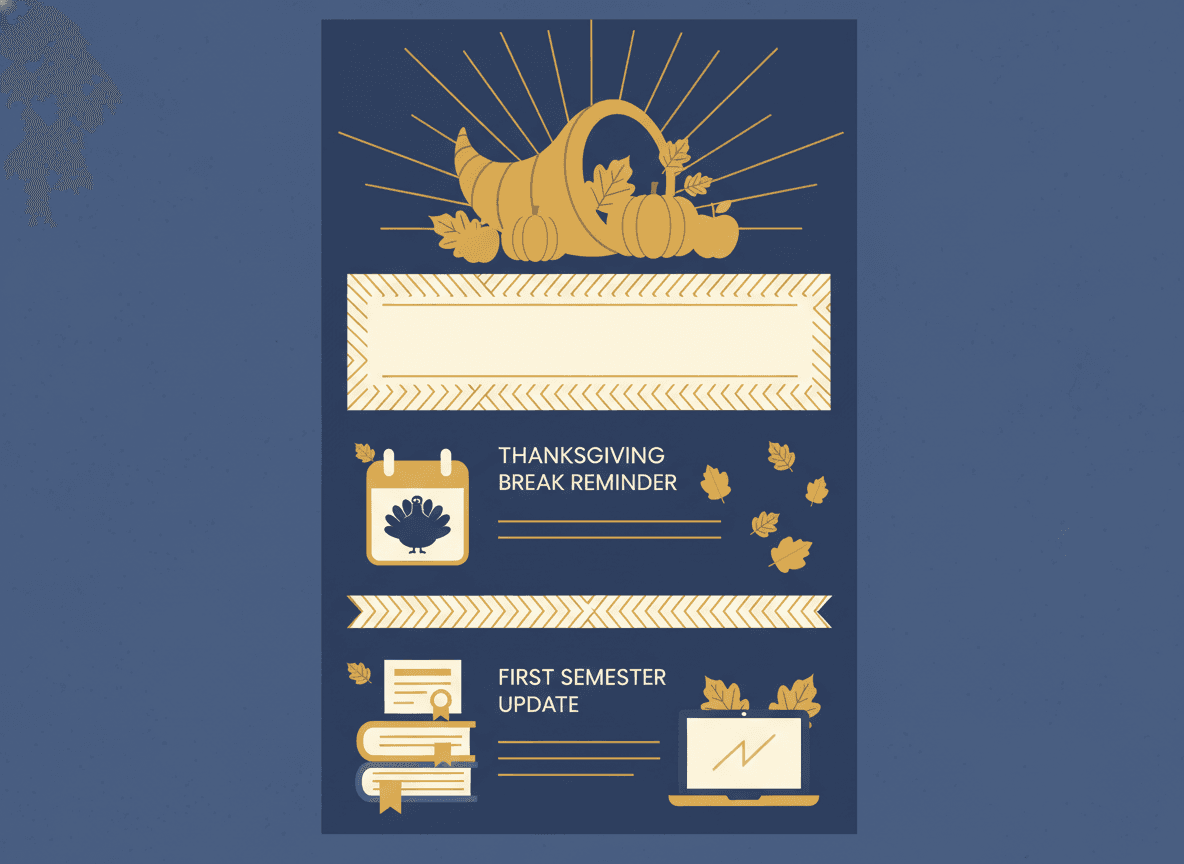
- First-semester reflection. A brief look back at September through November. What has the class accomplished? What has surprised you? What growth have you seen? Two or three sentences with specific observations are more meaningful than generic praise.
- Current learning and upcoming units. What are kids working on right now in each subject? What will the second half of the semester look like? Families who understand the curriculum trajectory feel more confident about their child's progress.
- Thanksgiving and gratitude in the classroom. Share any gratitude-themed activities, community projects, or classroom discussions planned for November. If families are unfamiliar with the activity, a brief description helps them extend the conversation at home over the break.
- Break recommendations for families. One or two specific, low-pressure suggestions for the Thanksgiving break. A book recommendation, a math game, a family discussion question. Emphasize that the break is a break, not homework season.
- What is coming in December. A preview of any major projects, events, or assessments in December so families have time to plan around school obligations.
Five November newsletter topic ideas
1. A genuine thank-you to families. November is a natural moment to acknowledge what families do that makes your classroom work better. Volunteering, reading logs, homework support, quick email responses. A direct and specific thank-you resonates more than a generic "thank you for your continued support." Tell them one specific thing that has made a difference.
2. What students said they are grateful for at school. A classroom gratitude activity or morning circle discussion often produces surprisingly heartfelt responses. Sharing a few student quotes (with context, not attributed by name unless appropriate) is the kind of content families screenshot and save.
3. First-semester academic highlights. Without turning it into a formal report, share one or two things the class has genuinely excelled at since September. A skill that took off, a project that exceeded expectations, a book unit that clicked. Specific observations give families real information.
4. How to talk to your child about school over the break. Many parents want to engage their kids in learning conversations over Thanksgiving but are not sure how to do it without it feeling like homework. Give families three to five conversation starters that relate to what the class is currently studying. Something like: "Ask your child to explain the water cycle to you using only dinner table items" is memorable and low-stakes.
5. A note on second-semester goals. With January two months away, November is a good time to preview what you hope to accomplish in the second half of the year. This gives families a roadmap and sets up a productive January newsletter when school resumes.
Thanksgiving sensitivity
Thanksgiving means different things to different families. For some, it is a purely cultural celebration of gratitude and family. For others, the historical context of the holiday is complicated or painful. In your newsletter, lead with gratitude and community rather than the holiday's historical framing. A section called "What we are grateful for in Room 14" is more inclusive than a section titled "Our Thanksgiving celebration."
If your class is doing a historically grounded Thanksgiving unit that includes Indigenous perspectives, the newsletter is a good place to briefly describe that approach. Families whose children come home asking unexpected questions about the holiday will appreciate the context.
Keeping November newsletters manageable
November tends to sneak up. Conferences, report cards, and the short week before Thanksgiving compress the calendar. If time is tight, a two-section newsletter (first-semester snapshot plus break recommendations) is enough. Send it the week before Thanksgiving break, not the day before.
Daystage's block editor makes it easy to draft a focused newsletter quickly. If you find yourself skipping newsletters in busy months, that is a sign the tool you are using takes too long. A good newsletter should take 15 to 20 minutes to write and send. If it takes longer, simplify the format.
November closes a chapter
By the time families read your November newsletter, they have been part of your classroom community for three months. They know your name, they have been to conferences, and their child has settled into the school year. A warm, reflective November newsletter honors that relationship and sets up a strong second semester. It does not need to be long. It just needs to feel like it came from someone who is paying attention.
Get one newsletter idea every week.
Free. For teachers. No spam.
Frequently asked questions
When should teachers send a November newsletter template?
Send it in the first week of November, before Thanksgiving week approaches and families shift into holiday mode. First-semester conferences and report cards often land in November, so families need a newsletter that connects those events to what they have been seeing at home.
What should a November newsletter template for teachers include?
Cover first-semester progress and what current grades reflect, Thanksgiving or gratitude-themed classroom activities with inclusive framing, any upcoming conferences or report card dates, current curriculum units, and key dates through November and into December. Families in November are watching for the first formal progress update.
How should teachers customize a November newsletter template?
Adjust the Thanksgiving section to reflect your classroom community. If you use a gratitude theme that is not explicitly tied to the holiday narrative, name the specific activities rather than using Thanksgiving as a shorthand that not all families relate to equally.
What makes a school newsletter template ineffective in November?
Sending a newsletter heavy on holiday content but light on academic update misses what families actually want to know in November. First-semester grades and conferences are the main concern. A newsletter that covers them well earns the parent's attention; one that glosses over them loses it.
Where can teachers find a good November newsletter template?
Daystage has monthly newsletter templates including November, with sections for first-semester progress updates, Thanksgiving communication, and conference preparation that teachers can customize for their class.

Adi Ackerman
Author
Adi Ackerman is a former classroom teacher and curriculum writer with 8 years in K-8 schools. She writes about school communication, parent engagement, and what actually works in real classrooms.
More for Templates
Ready to send your first newsletter?
3 newsletters free. No credit card. First one ready in under 5 minutes.
Get started free