

May Newsletter Template for Teachers: Teacher Appreciation Week, End-of-Year Prep
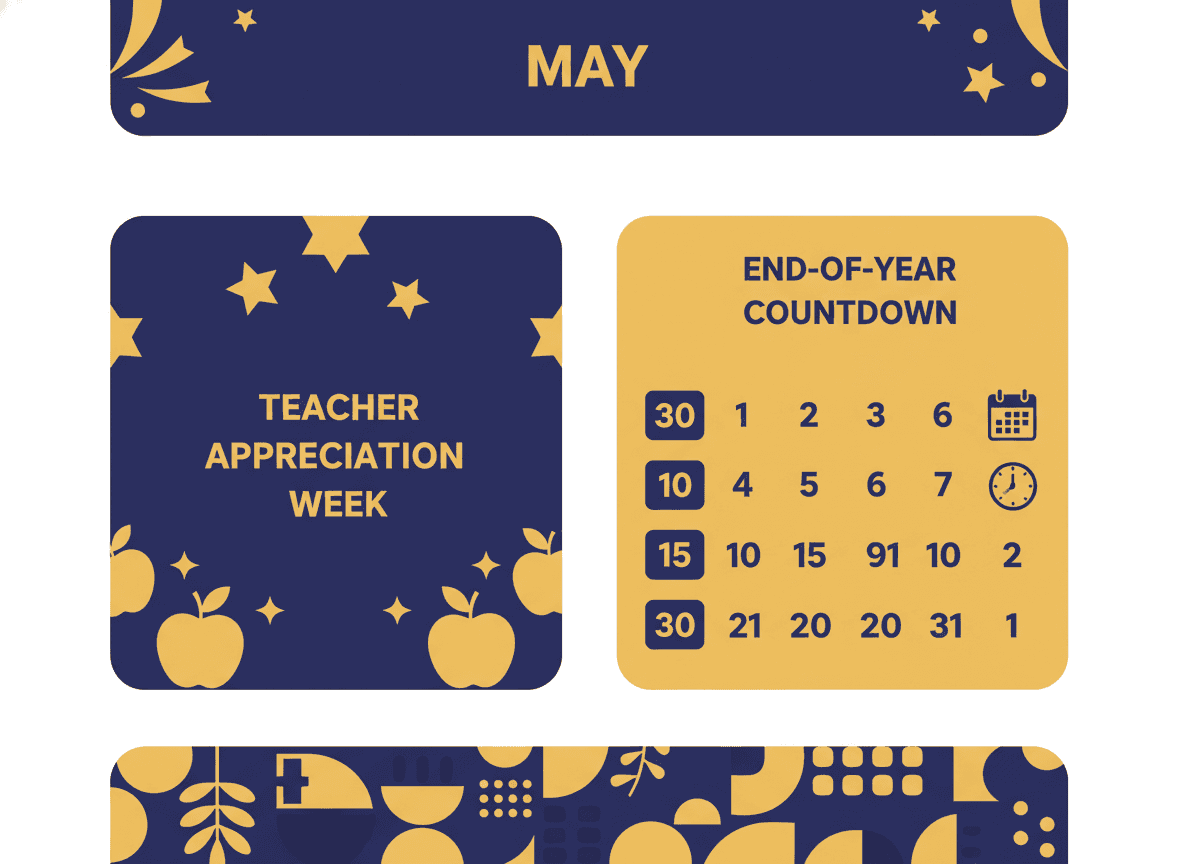
May is the final push. End-of-year projects are due, standardized test results are arriving, field trips are happening, and Teacher Appreciation Week lands in the middle of it all. Families are paying close attention in May, partly because the year is almost over and partly because the end-of-year school calendar is dense with events they need to show up for.
A May newsletter that covers the final stretch clearly and warmly keeps families engaged through the last weeks of school and sets up a strong June close-out.
What May newsletters need to accomplish
Three things. First, give families a clear picture of what is happening in the final four to six weeks of school. Second, build genuine anticipation and pride in what the class has accomplished. Third, prepare families for the transition out of the school year so the last week does not feel abrupt.
Suggested structure for a May newsletter
- End-of-year timeline and events. List every remaining school event, field trip, presentation, and assessment between now and the last day. Include dates, times, and any family attendance expectations. Families who know the full schedule in May can plan around it.
- Current learning and final projects. What are students finishing up in each subject? Are there portfolio presentations, science fair projects, or capstone assignments coming? Give families the specifics so they know what their child is working toward and how to support the final push at home.
- Teacher Appreciation Week acknowledgment. Teacher Appreciation Week typically falls in the first full week of May. A brief, genuine section acknowledging families for their support throughout the year is appropriate here. If your school is doing anything special, mention it briefly.
- Test results and what they mean. If spring standardized test results are available or coming soon, include a brief explanation of how families will receive them and what they should focus on when reviewing them. Direct families to reach out with questions rather than interpret results on their own.
- Transition preview. A brief note about what next year looks like. Grade level, key skills to maintain over the summer, or how students can preserve their learning gains before September. This section signals that you are thinking about your students' long-term success, not just checking the box on this year.
Five May newsletter topic ideas
1. The full end-of-year event calendar. May newsletters that list every remaining date are among the most appreciated of the year. Parents bookmark them, screenshot them, and refer back to them. Be specific: date, event name, time, location, and whether family attendance is expected, optional, or not applicable.
2. What we have accomplished this year. A brief, honest reflection on the class's academic journey from September through May. What skills did students come in with? Where are they now? What are you proud of? This is not about awards or formal reports. It is about helping families understand the arc of a school year through your eyes as the teacher.
3. Teacher Appreciation Week: a note on what actually helps. If families want to celebrate Teacher Appreciation Week, give them specific ideas that are genuinely useful or meaningful to you. A handwritten note from a student, a family volunteering to run a classroom supply drive, or a short video message from a child at home about what they learned this year. Specific suggestions prevent the awkward wave of generic gift cards and conflicting food deliveries.
4. How to talk to your child about moving to next year. Transitions are hard for some kids. Give families language they can use to help their child process the end of the year, especially if they are changing schools or moving out of an environment where they have felt comfortable. Simple conversation starters and a reminder that mixed feelings are normal go a long way.
5. Summer reading and learning recommendations. May is the right time to share summer learning suggestions. A reading list appropriate for your grade level, a few math skills to maintain, and one or two enrichment activities families can do without it feeling like homework. Frame it as optional and low-stakes.
Teacher Appreciation Week in the newsletter
Teacher Appreciation Week can feel performative if it is just a logistics announcement. If you include it in your May newsletter, make it genuine. Thank families for specific things they did this year: showing up to conferences, responding to your messages, sending in materials for class projects, or volunteering when you needed help. A specific thank-you is a thousand times more meaningful than "thank you for your continued support."
May newsletters and Daystage
May is when teacher fatigue hits. The newsletter rhythm that was easy in September gets harder to sustain when the to-do list is endless. Daystage helps here because the block editor makes it fast to write and the send process is simple. Your classroom profile is already saved, your subscriber list is set, and sending a formatted newsletter to every parent takes the same amount of time in May as it did in October.
If you can only write one newsletter in May, make it the full end-of-year calendar newsletter in the first week. That is the one families will return to the most.
May newsletters are the ones families remember
The end-of-year newsletters are the ones parents save. They are the ones families reference when their child is sick for a field trip, or when they are not sure if the portfolio presentation requires their attendance, or when they want to remember what their child was learning in May of second grade. Write May newsletters like they matter, because to families, they often do.
Get one newsletter idea every week.
Free. For teachers. No spam.
Frequently asked questions
When should teachers send a May newsletter template?
Send it in the first week of May, before Teacher Appreciation Week and end-of-year event planning overlaps. Families tracking field trips, portfolio presentations, and final assessments need the May calendar early to manage their schedules.
What should a May newsletter template for teachers include?
Cover Teacher Appreciation Week activities, major end-of-year projects and deadlines, field trips or special events, how families can support final-stretch learning at home, and a preview of June's end-of-year schedule. May is the month families start asking about the finish line.
How should teachers customize a May newsletter template?
Adjust the Teacher Appreciation section based on what your school is actually doing and whether families are invited to participate. If there is a specific appreciation activity families can join, describe it with logistics. Generic appreciation language without an action step feels hollow.
What makes a school newsletter template ineffective in May?
Treating May like a normal mid-year month misses what families actually need. By May, families are tracking end-of-year dates, summer plans, and their child's promotion status. A newsletter that ignores those concerns reads as disconnected from where families actually are.
Where can teachers find a good May newsletter template?
Daystage has monthly newsletter templates including May, with sections for Teacher Appreciation Week, end-of-year project deadlines, and final-stretch family engagement that teachers can customize quickly.

Adi Ackerman
Author
Adi Ackerman is a former classroom teacher and curriculum writer with 8 years in K-8 schools. She writes about school communication, parent engagement, and what actually works in real classrooms.
More for Templates
Ready to send your first newsletter?
3 newsletters free. No credit card. First one ready in under 5 minutes.
Get started free