
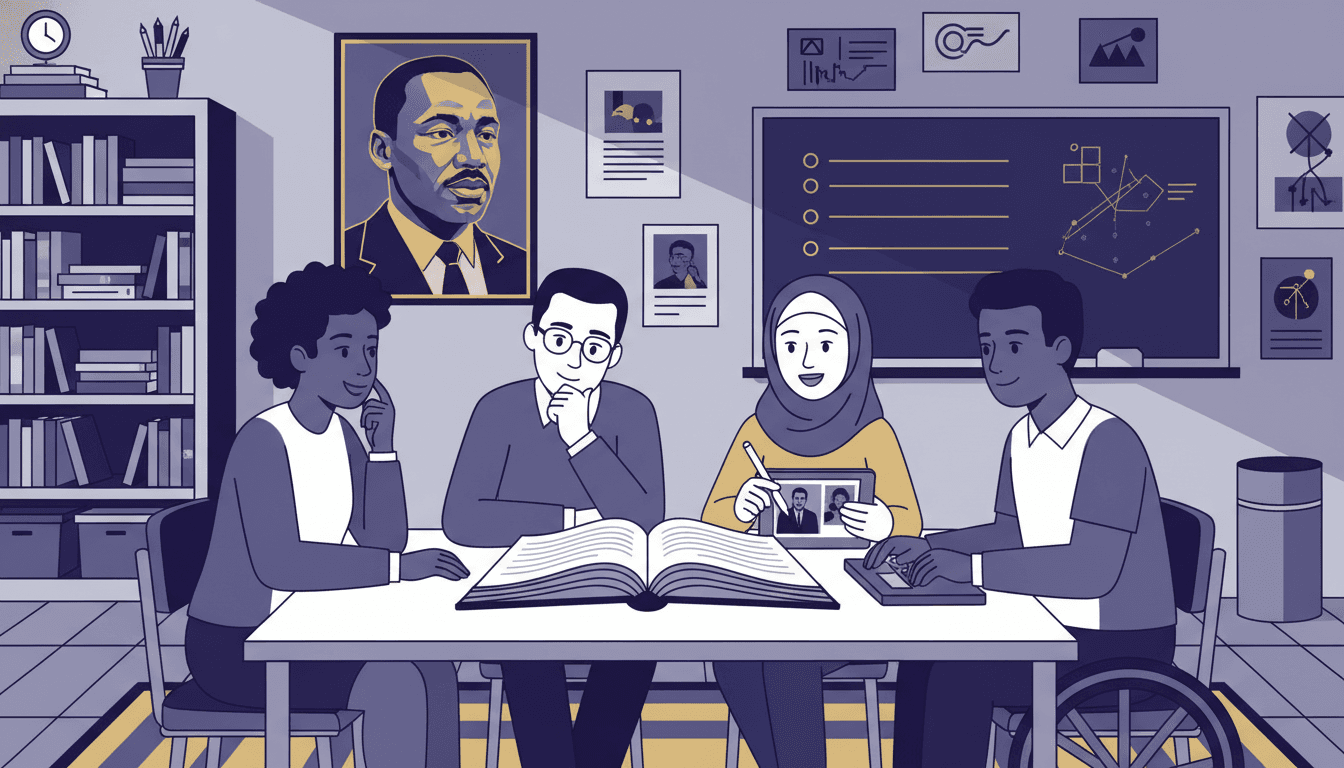
Martin Luther King Jr. Day School Newsletter: How to Address the Holiday in Your Classroom Communication
Martin Luther King Jr. Day falls in January and lands at an interesting moment in the school calendar. It is often the first major holiday of the new year, it frequently coincides with returning from winter break, and it offers a genuine educational opportunity that many classroom newsletters either skip over entirely or handle in one generic sentence.
A MLK Day classroom newsletter that treats the holiday seriously, connects it to real classroom learning, and gives families tools to extend the conversation at home does something most school newsletters fail to do: it treats a national civil rights holiday with the depth it deserves.
When to send it
Send the MLK Day newsletter the week before the holiday, not the morning of the day off. Families who get the newsletter a week out can plan conversations with their child, find books or films to explore together, and arrive at the holiday itself with some context. A same-day or day-before newsletter gets lost in the logistics of a long weekend.
If MLK Day falls in the week you return from winter break, include the MLK Day content in your January welcome-back newsletter rather than creating a separate send.
Suggested structure for an MLK Day newsletter
- What we are learning about MLK and the civil rights movement. A specific description of what your class is studying in connection with MLK Day. Not "we are honoring MLK Day" but "we are reading The Story of Ruby Bridges and discussing what it means to do the right thing when it is hard." Specificity signals that this is real learning, not a checkbox.
- The bigger themes we are exploring. Connect the historical content to the concepts your class is working with: justice, courage, community, equality, speaking up. Naming the themes helps families discuss them with their child in language the class is using.
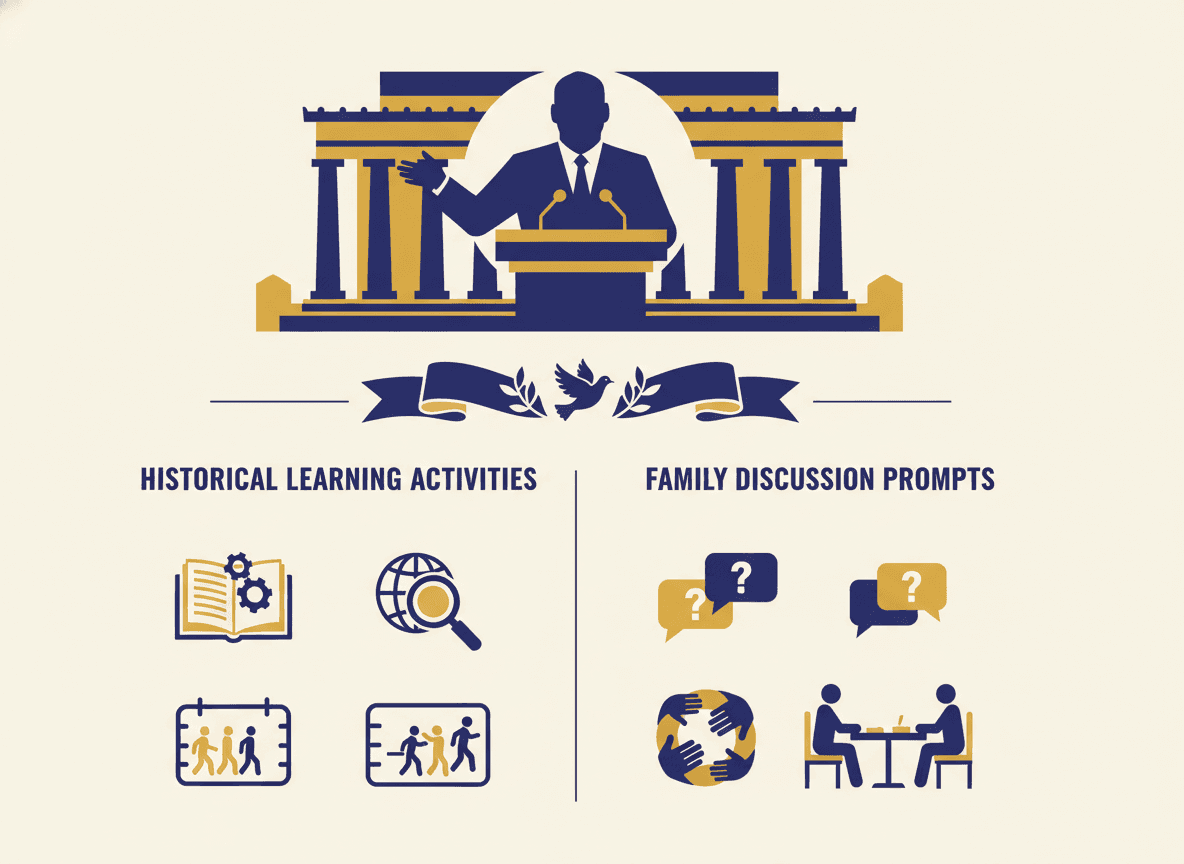
- How families can extend this learning at home. A book recommendation appropriate for your grade level, a film or documentary suggestion for older students, a conversation prompt families can use at dinner, or a simple activity. One or two suggestions, framed as optional.
- MLK Day schedule logistics. Is there no school on MLK Day? Is the day used for professional development? Is your school doing anything to observe the holiday? Keep this practical and brief.
- Connection to current events or community. Optional but powerful. If your school or community has any MLK Day service events, marches, or celebrations that are appropriate for families to attend, mention them. MLK Day is a federal holiday that emphasizes service. Connecting families to local observances extends the learning beyond the classroom.
Five MLK Day newsletter topic ideas
1. The books and materials we are using. Share the specific books, biographies, primary sources, or media your class is engaging with around MLK Day. If you are reading excerpts from Dr. King's speeches, say so. If you are reading picture books about the civil rights movement for younger students, list them. Families who know what their child is reading can have more informed conversations at home.
2. A discussion question for the dinner table. Offer families one or two age-appropriate discussion prompts connected to the civil rights movement. For younger students: "What would you do if you saw someone being treated unfairly?" For older students: "Dr. King said 'the arc of the moral universe is long, but it bends toward justice.' What do you think he meant by that?" Conversation prompts that connect to real classroom content are among the most useful things a school newsletter can offer families.
3. What Dr. King's legacy means in today's context. Depending on your grade level, you may be discussing how the civil rights movement connects to current events, local history, or the community your students live in. A brief description of how you are framing this conversation in the classroom helps families understand the curriculum intent and gives them language to use at home.
4. Service and community on MLK Day. MLK Day is designated as a national day of service. If your school or classroom is doing any community service in connection with the holiday, describe it in the newsletter. If you are simply encouraging families to find a service opportunity over the long weekend, make the suggestion concrete: volunteer at a food bank, participate in a community clean-up, write letters to older neighbors.
5. Student reflections on courage and justice. If your class did any writing, discussion, or creative work around the themes of MLK Day, share a few student observations or quotes in the newsletter. Hearing how children articulate concepts like fairness, courage, and standing up for others is genuinely moving to families and reinforces the depth of your classroom learning.
What to avoid in MLK Day newsletters
Avoid surface-level treatment. A single sentence that says "we celebrated MLK Day in our classroom" communicates that it was a token observance rather than meaningful learning. Go specific. What did students do? What did they say? What did you read? What were you trying to help them understand?
Also avoid framing the holiday purely as a "dream" narrative. Dr. King's legacy includes significant political organizing, economic justice advocacy, and opposition to the Vietnam War, not just the "I Have a Dream" speech. Age-appropriate depth on the breadth of his work shows students and families that you are teaching history honestly.
Using Daystage for the MLK Day newsletter
The MLK Day newsletter is a content-forward send, not a logistics-heavy one. Daystage's block editor works well for this kind of newsletter because you can organize the content into clearly labeled sections that families can move through at their own pace. Write the classroom learning section first, add the family conversation tools, and end with the schedule logistics. Families who are in a hurry get the logistics at the end. Families who want the full context read everything.
MLK Day deserves a real newsletter
Martin Luther King Jr. Day is one of the few federal holidays with an explicit educational mandate. A classroom newsletter that treats it seriously, connects it to real learning, and gives families tools to continue the conversation at home makes the holiday more than a day off. It makes it a genuine teachable moment that extends beyond the classroom walls.
Get one newsletter idea every week.
Free. For teachers. No spam.
Frequently asked questions
When should schools send a Martin Luther King Jr. Day newsletter?
Send it the week before the holiday, typically the week before the third Monday in January. Families benefit from knowing how the school is engaging with the day and what students will be learning before the holiday weekend.
What should a Martin Luther King Jr. Day school newsletter include?
Describe the specific aspects of Dr. King's legacy your class is studying beyond the 'I Have a Dream' speech, the books and resources you are using, any classroom activities or projects, and how families can continue the conversation at home. Depth matters more than coverage.
How should teachers customize an MLK Day newsletter template?
Replace generic references to civil rights with the specific content from your curriculum. If students are reading a particular biography, studying the Montgomery Bus Boycott, or discussing economic justice, name those things in the newsletter so families know the depth of the engagement.
What makes a school newsletter template ineffective for MLK Day?
Reducing Dr. King's legacy to one speech and one quote is the most common failure. Families notice when the recognition is surface-level. A newsletter that engages with the complexity of his work and legacy signals that the school takes the day seriously.
Where can teachers find a good Martin Luther King Day newsletter template?
Daystage has newsletter templates for MLK Day and other significant holidays, with a structure that guides teachers toward substantive content rather than generic holiday messaging.

Adi Ackerman
Author
Adi Ackerman is a former classroom teacher and curriculum writer with 8 years in K-8 schools. She writes about school communication, parent engagement, and what actually works in real classrooms.
More for Templates
Winter Break School Newsletter Template: What to Send Before the Holiday Break
Templates · 7 min read
Earth Month Newsletter Template for Schools: How to Build an April Environmental Learning Newsletter
Templates · 6 min read
Mental Health Awareness Month Newsletter Template for Schools: What to Include in May
Templates · 6 min read
Ready to send your first newsletter?
3 newsletters free. No credit card. First one ready in under 5 minutes.
Get started free