

June End-of-Year Newsletter Template: How to Close Out the School Year With Families
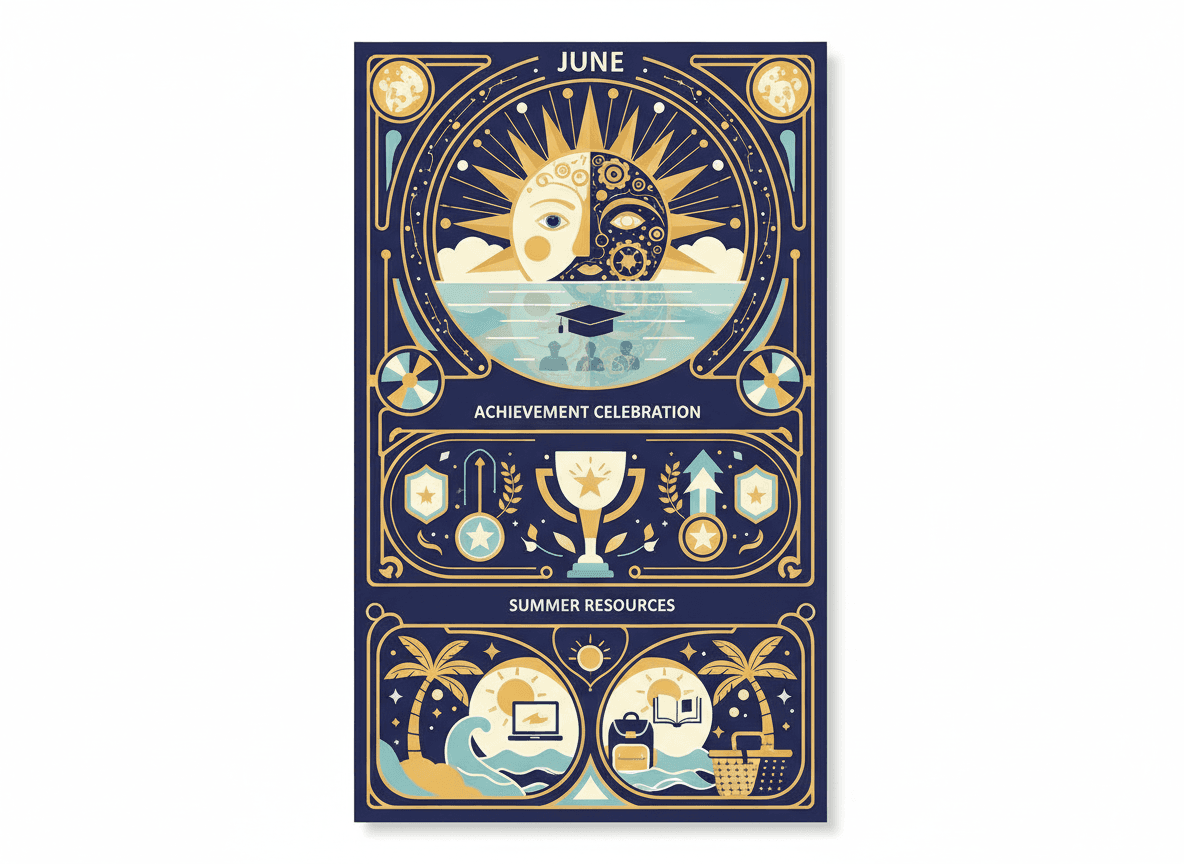
The last newsletter of the school year is the one that lingers. Families save it. They reference it over the summer. Some parents keep it for years. A June end-of-year newsletter that closes the year thoughtfully does more than logistics. It honors the relationship you have built with your class community since September and sets families up for a strong summer and smooth transition to next year.
Here is a template and five topic ideas for a June newsletter that does the close-out right.
When to send the June newsletter
Send it in the last week of school, not the last day. The last-day-of-school newsletter gets lost in the chaos of goodbyes and lost items and celebration logistics. Send it three to five days before the last day so families can read it, respond if they want to, and arrive on the last day feeling good about the year.
If you have a separate newsletter for the last day logistics (pickup time, what to do with supplies, the end-of-year celebration schedule), send that one two to three days before the last day and keep it purely practical. The reflective year-end newsletter should come first.
Suggested structure for a June end-of-year newsletter
- A year-in-review reflection. The heart of the June newsletter. Look back at September and trace what the class has accomplished, grown through, and experienced together. Be specific. Name projects, books, skills, challenges, and moments. Families want to see the year through your eyes.
- What you are most proud of about this class. Different from a curriculum recap. This section is about the people your students have become over the year. Social growth, effort, kindness, resilience. Families love hearing that the teacher saw their child as more than an academic record.
- Last-day logistics. Pickup time, what to do with classroom materials, the end-of-year celebration plan, yearbook signing, whatever applies to your school. Be specific and practical.
- Summer learning recommendations. A reading list, one or two math skill suggestions, and an optional enrichment idea. Frame it as fuel for next year, not homework. Three to five recommendations is enough. Families do not need a 20-point summer curriculum.
- A personal send-off. A short, genuine note from you. Not "have a great summer." Something more specific: what teaching this class has meant to you, what you hope they carry with them, or one wish you have for each student over the break. This is the paragraph families quote to other parents at the park in July.
Five June newsletter topic ideas
1. The year-in-review: from September to June. Walk families through the arc of the year. What did students come in able to do? What can they do now? What was the hardest month? What was the most fun unit? A narrative review is more meaningful than a list of completed standards. Write it like a letter, not a report.
2. One thing I will remember about this class. Pick one specific thing about your students this year that is genuinely memorable to you. A class inside joke, a moment of unexpected kindness, a day when everything clicked. Families treasure these glimpses into classroom life that they would never otherwise see.
3. Summer reading list for your grade level. Recommend five to ten books appropriate for incoming next-graders. Include a sentence on why you chose each one. A reading list from a teacher who knows their students carries more weight than any generic summer reading program. Families will actually use it.
4. Skills to keep practicing over summer. What are the two or three skills from this year that students should use over the summer to avoid the typical summer slide? Be specific. "Practice multiplication facts for 10 minutes, three times a week" is more actionable than "keep up with math." Give families the exactly-what-to-do version.
5. How to set your child up for next year. A brief note on what next year's teacher will expect students to arrive knowing. Not to create anxiety, but to help families understand what matters most to maintain over the summer. Even a one-paragraph description of next-grade readiness is enormously useful to parents who want to support their child.
The tone of the June newsletter
June newsletters should feel like the end of something meaningful, because they are. The tone should be warm, specific, and personal without being sentimental to the point of losing usefulness. Families want to feel that their child's year mattered, that the teacher saw their child, and that the school is set up to support them next year.
Avoid generic send-offs. "Have a wonderful summer and I will miss you all" is fine, but "this class taught me something new about teaching, and I will carry it into next year" is better. Let the families feel that the year was real for you too.
Daystage and the year-end newsletter
If you have been using Daystage all year, the June newsletter sends in the same amount of time as any other newsletter. Your classroom profile is already set, your subscriber list is current, and the block editor makes it easy to write each section cleanly. If June is the first newsletter you are sending, you can still set up your classroom profile and send to your parent list in under 30 minutes.
The June newsletter is worth the time. It is one of the most remembered things you will do all year.
Close the year like it mattered
The teachers whose June newsletters families remember for years are the ones who wrote honestly and specifically. They named what the class achieved, what it was like to teach them, and what they hope students carry forward. That is not hard to write. It just requires sitting down and thinking about the year for 30 minutes before putting it into words. Your families will notice the difference.
Get one newsletter idea every week.
Free. For teachers. No spam.
Frequently asked questions
When should teachers send a June end-of-year newsletter template?
Send it one to two weeks before the last day so families have time to prepare for end-of-year events, volunteer opportunities, and any items students need to bring home. A newsletter sent on the last day has no actionable value.
What should a June end-of-year newsletter template include?
Cover the final week schedule, any class celebrations or presentations, what students will bring home and when, summer reading or learning suggestions, and a genuine reflection on the year. Families reading the last newsletter remember it.
How should teachers customize a June newsletter template?
Write the year-reflection section in your own voice, with specific memories or moments from the class rather than generic gratitude language. The June newsletter is one of the few families save and re-read, so personal details matter more here than anywhere else.
What makes a school newsletter template ineffective at the end of the year?
Sending a newsletter that is mostly logistics and missing any warmth is a missed moment. By June, families have read a year's worth of newsletters and they are paying close attention to the final one. A newsletter that feels like a checklist leaves the year on a flat note.
Where can teachers find a good June end-of-year newsletter template?
Daystage has year-end newsletter templates that include sections for final-week logistics, class reflections, and summer transition guidance so teachers can close the year with both substance and heart.

Adi Ackerman
Author
Adi Ackerman is a former classroom teacher and curriculum writer with 8 years in K-8 schools. She writes about school communication, parent engagement, and what actually works in real classrooms.
More for Templates
Ready to send your first newsletter?
3 newsletters free. No credit card. First one ready in under 5 minutes.
Get started free