
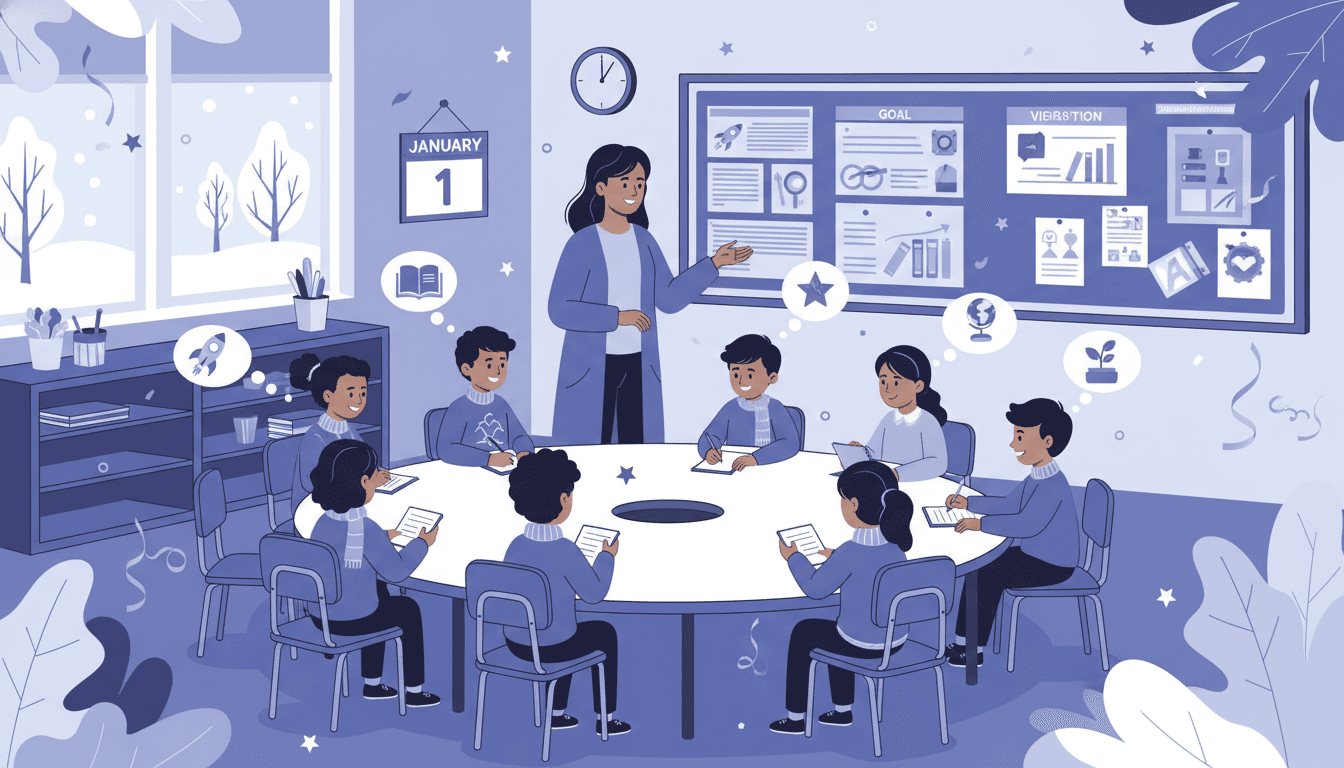
January Newsletter Template for Teachers: New Year, New Semester, Fresh Goals

January is a second chance. Families are back from winter break feeling rested (or at least ready). Kids are starting fresh with new supplies and new energy. And you have a clear view of exactly where each student is and what they need to do in the next five months.
The January newsletter is one of the most important of the year because it resets the communication relationship with families after a two-week pause. How you open the second semester in your newsletter tells families whether this half of the year will be more of the same or something more intentional.
What the January newsletter should accomplish
Three things. First, it should reconnect families to the classroom after the break. Second, it should preview the second semester so families know what is coming. Third, it should give families something specific to do to support the new semester goals. That is the whole job of a January newsletter.
Suggested structure for a January newsletter
- Welcome back. A brief, genuine note about how you are feeling coming back from break and what you are looking forward to in the second half. One or two sentences. Do not overdo the "new year, new you" energy. Just be honest.
- Second-semester overview. What are the major units, projects, and assessments between now and June? Families who understand the arc of the semester can plan around big deadlines and support their child more effectively. You do not need to detail every lesson. A high-level roadmap by subject is enough.
- Current goals for the class. What do you most want the class to achieve this semester? One to three specific academic or social goals. This is where the newsletter becomes a partnership tool. Families who know what you are working toward can reinforce it at home.
- How families can support January goals. One or two concrete actions. Read together for 15 minutes each night. Practice multiplication facts with the attached table. Ask your child to explain what they are learning in science at dinner. Specific beats general every time.
- Key dates in January and February. Any assessments, events, or deadlines coming up in the next six weeks. Families appreciate knowing about standardized testing windows and major projects before they sneak up on them.
Five January newsletter topic ideas
1. The second-semester roadmap. Walk families through what the class will cover from January through June. Break it down by subject. Even a simple list like "Math: fractions, then geometry. Reading: informational text unit, then historical fiction" gives families a useful frame. This is the kind of transparency that builds long-term trust.
2. Your teaching goals for the semester. Not just academic content goals, but personal teaching intentions. Maybe you want to give more choice in writing topics. Maybe you are trying a new system for small-group reading. Sharing your own goals for the semester shows families you are reflective and growing. They appreciate seeing you as a professional, not just a person who runs the class.
3. Student goal-setting in the classroom. If your class did a goal-setting activity coming back from break, share what that process looked like and what themes came up. Without attributing goals to specific students, you can describe what the class is collectively working toward, which helps families connect with their child about it at home.
4. What the first semester told you. A brief, honest reflection on what you learned about this class in the first half of the year. What works for them? What do they find hard? What surprised you? This kind of observation makes families feel like the teacher truly knows their child's class as a community.
5. Standardized testing preview. If your grade level has standardized testing in the spring, January is a good time to introduce the topic calmly. Explain what the test measures, when it happens, how you prepare for it, and most importantly, what you want families to know so their child is not stressed about it. Families appreciate transparency here.
Tone for January newsletters
Avoid over-promising. "This semester is going to be amazing" sounds hollow. Instead, be specific: "We are starting fractions next week, and I know some students found this tricky last year. We are going to take it slowly, and I have a few strategies I am excited to try." That kind of specificity signals competence and preparation.
January is also a good month to re-invite families who may have disengaged in the fall. A simple line like "If you have not connected with me yet and want to, my email is always open" goes a long way for families who felt intimidated to reach out earlier.
Keeping the January newsletter focused
January newsletters have a tendency to become long because there is a lot to say about the new semester. Resist the urge to cover everything in one newsletter. A five-section newsletter with one to two paragraphs per section is the right length. Save detailed unit descriptions for the newsletters you send once those units are underway.
Daystage's block editor makes it easy to write a focused January newsletter in one sitting. Use headers for each section so families can scan for what they need. A clearly structured newsletter gets read. A wall of text does not.
January is where the second semester is won or lost
The families who enter the second semester informed and engaged tend to stay that way through May and June. The families who disconnect in January often do not reconnect until spring parent conferences, which leaves a big gap in the home-school relationship. A strong January newsletter is one of the simplest ways to close that gap before it opens.
Get one newsletter idea every week.
Free. For teachers. No spam.
Frequently asked questions
When should teachers send a January newsletter template?
Send it in the first two days back from winter break. Families returning from the holidays need a clear signal that school is back in gear, what the second semester looks like, and any new routines or goals the class is setting.
What should a January newsletter template for teachers include?
Cover the second-semester calendar overview, any curriculum shifts or new units starting in January, class or individual goal-setting activities, key dates for the coming months, and a brief reflection on where the class is heading. Families in January want momentum after the break.
How should teachers customize a January newsletter template?
Replace the generic new-year framing with specific curriculum content and one or two concrete goals the class is working toward. A January newsletter that mentions the actual book being read or the math unit starting is more useful than one that talks generally about fresh starts.
What makes a school newsletter template ineffective in January?
Being too vague about what the second semester holds is the main problem. Families who have been off schedule for two weeks need concrete information to re-anchor to the school routine. Inspirational language without logistics does not do that.
Where can teachers find a good January newsletter template?
Daystage has monthly newsletter templates including January, with a structure designed for second-semester kickoff communication that covers goals, calendar, and curriculum in a scannable format.

Adi Ackerman
Author
Adi Ackerman is a former classroom teacher and curriculum writer with 8 years in K-8 schools. She writes about school communication, parent engagement, and what actually works in real classrooms.
More for Templates
Ready to send your first newsletter?
3 newsletters free. No credit card. First one ready in under 5 minutes.
Get started free