
December Newsletter Template for Teachers: Holiday Season, Winter Break, and Year Reflections
December is the most emotionally loaded month in the school year. Kids are excited and distracted. Families are busy. The calendar shrinks. And every teacher is trying to wrap up meaningful learning while managing holiday celebrations, concerts, parties, and a hundred one-off requests from parents and administrators.
Your December newsletter has one job: give families the information they need to navigate the month with their child, and send them into winter break feeling good about the year so far. Here is how to structure it and what to include.
When to send the December newsletter
Send it in the first week of December, not the last. December fills up fast, and families need lead time to plan around holiday parties, concerts, and early dismissal days. A newsletter sent the week before winter break is mostly useless because the month has already happened.
If you typically send two newsletters a month, send the second one three to four days before winter break with just the break logistics and a warm send-off. Keep that second one short.
How to navigate holiday inclusivity
December celebrations in your classroom likely include families who celebrate Christmas, Hanukkah, Kwanzaa, Eid, the winter solstice, or nothing at all. A newsletter that treats December as exclusively a Christmas month excludes a portion of your families before they have even read paragraph two.
Use language like "holiday season" and "winter break" rather than Christmas-specific language. If you are doing specific holiday-themed activities for multiple traditions, name them. If your classroom party is a "winter celebration" rather than a Christmas party, say so. Families who do not share the majority tradition notice and appreciate the language choice.
Suggested structure for a December newsletter
- What is happening in December before break. Key events, dates, and schedule changes. Winter concert, classroom party, early dismissal days, last day before break. Put this section near the top because it is the most time-sensitive.
- Year-to-date academic reflection. A brief look at what the class has accomplished from September through December. Specific skills, completed units, projects, or milestones. This section gives families a real sense of progress and sets up January well.
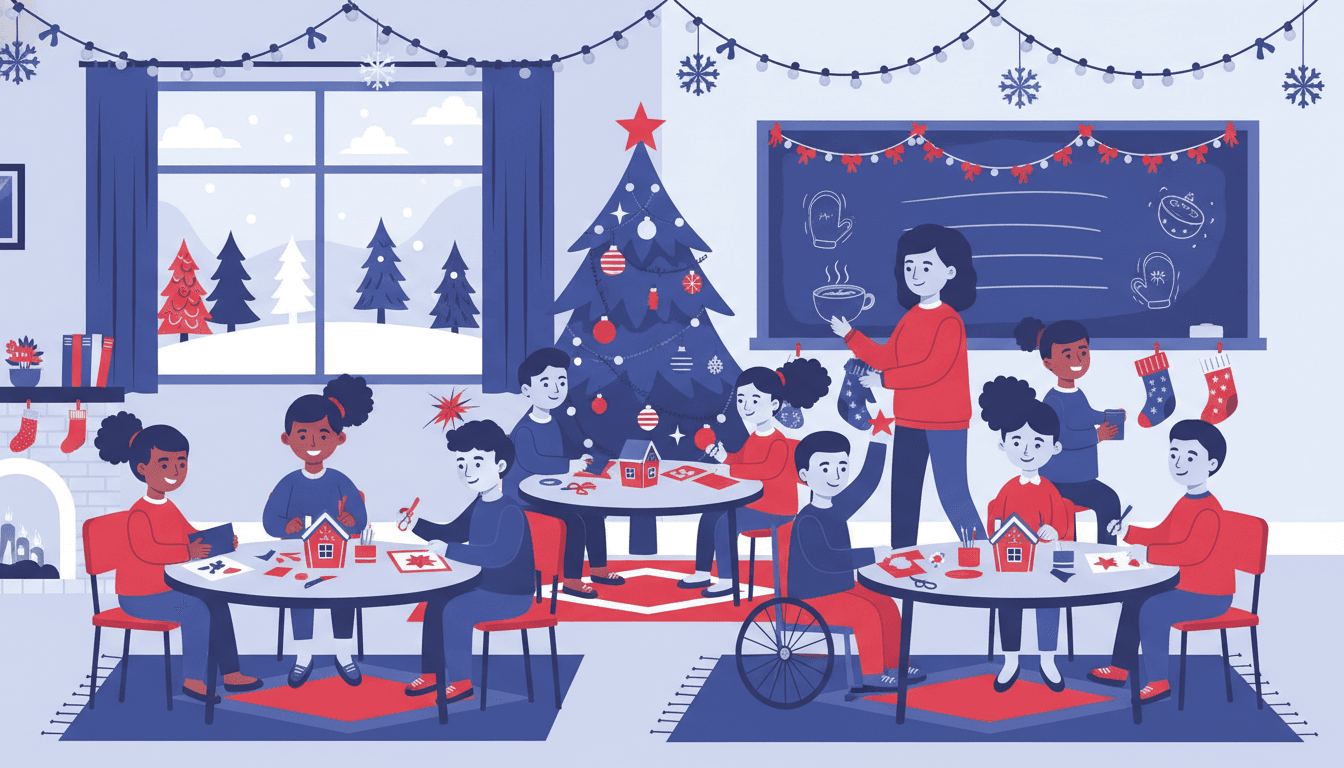
- Holiday and winter activities in the classroom. If you are doing any seasonal art projects, writing activities, or classroom celebrations, describe them briefly. Include any gift exchange or party details so families know what to expect and can opt out if needed.
- Winter break recommendations. One or two low-key suggestions for keeping kids engaged during the break. Reading, a family game, a conversation prompt. Be clear that this is optional. The break is a break.
- What January looks like when we return. A brief preview of second-semester goals or upcoming units. This gives families something to look forward to and helps kids ease back into school mode.
Five December newsletter topic ideas
1. The year-in-review moment. Look back at September and trace the arc of what the class has done together. What did you start with? Where are you now? A brief narrative of the class's academic and social journey from fall to winter is often the most read section of any December newsletter.
2. What kids are most proud of this semester. If you asked students in a morning meeting or journal prompt what they are most proud of from this year, share a few of their responses. It is the kind of content that makes parents feel the teacher truly knows their child.
3. Classroom party and gift logistics. Be specific about the classroom celebration. Is there a gift exchange? What is the spending limit? Are allergies being considered for snacks? Can families send in food? Getting ahead of these questions in the newsletter saves you from a hundred individual emails in the week before the party.
4. A book or activity recommendation for break. Pick one book appropriate for your grade level and one simple family activity related to something you have been studying. Frame it as "if you are looking for something to do over break" rather than a homework assignment.
5. A genuine thank-you to the class community. December is the right time to acknowledge what makes your classroom work. Thank families for their engagement, name one or two specific things that made your year better, and tell them you are looking forward to the second half. A personal, specific thank-you lands differently than a holiday sign-off.
Sending the winter break newsletter with Daystage
December is the month most teachers let their newsletter rhythm slip. Too much going on, not enough time. Daystage makes it faster. Write your newsletter in the block editor, use your saved classroom profile so the branding is already done, and hit send. Families get a formatted, professional-looking newsletter in their inbox without you spending an hour on layout.
If you set up your subscriber list in September, sending in December takes as long as writing the content. The platform handles the rest.
December newsletters set up January
The families who read a warm, clear December newsletter come back to school in January with a different energy than families who spent break disconnected from the classroom. They know what to expect, they feel good about the first semester, and their child has had some context for what is coming next. That head start is worth the 20 minutes it takes to write and send.
Get one newsletter idea every week.
Free. For teachers. No spam.
Frequently asked questions
When should teachers send a December newsletter template?
Send it in the first week of December, before the schedule fills with events and performances. Families need the winter break dates, any classroom celebrations, and holiday party logistics well before the final week of school.
What should a December newsletter template for teachers include?
Cover winter break dates and return date, any classroom celebrations with inclusive framing, the curriculum you are finishing before break, a reflection on first-semester progress, and how families can support learning over the break without making it feel like homework.
How should teachers customize a December newsletter template?
Adjust the holiday framing to reflect your actual classroom community. If you have families who do not celebrate Christmas, use winter-themed language and describe classroom events as celebrations of learning and community rather than holiday parties.
What makes a school newsletter template ineffective in December?
Assuming all families celebrate the same holidays is the most common mistake. A newsletter that centers Christmas exclusively can alienate a significant portion of the class. Inclusive language costs nothing and signals that every family belongs.
Where can teachers find a good December newsletter template?
Daystage has monthly newsletter templates including December, with a structure for winter break communication that accounts for holiday inclusivity and end-of-semester reflection.

Adi Ackerman
Author
Adi Ackerman is a former classroom teacher and curriculum writer with 8 years in K-8 schools. She writes about school communication, parent engagement, and what actually works in real classrooms.
More for Templates
Ready to send your first newsletter?
3 newsletters free. No credit card. First one ready in under 5 minutes.
Get started free