
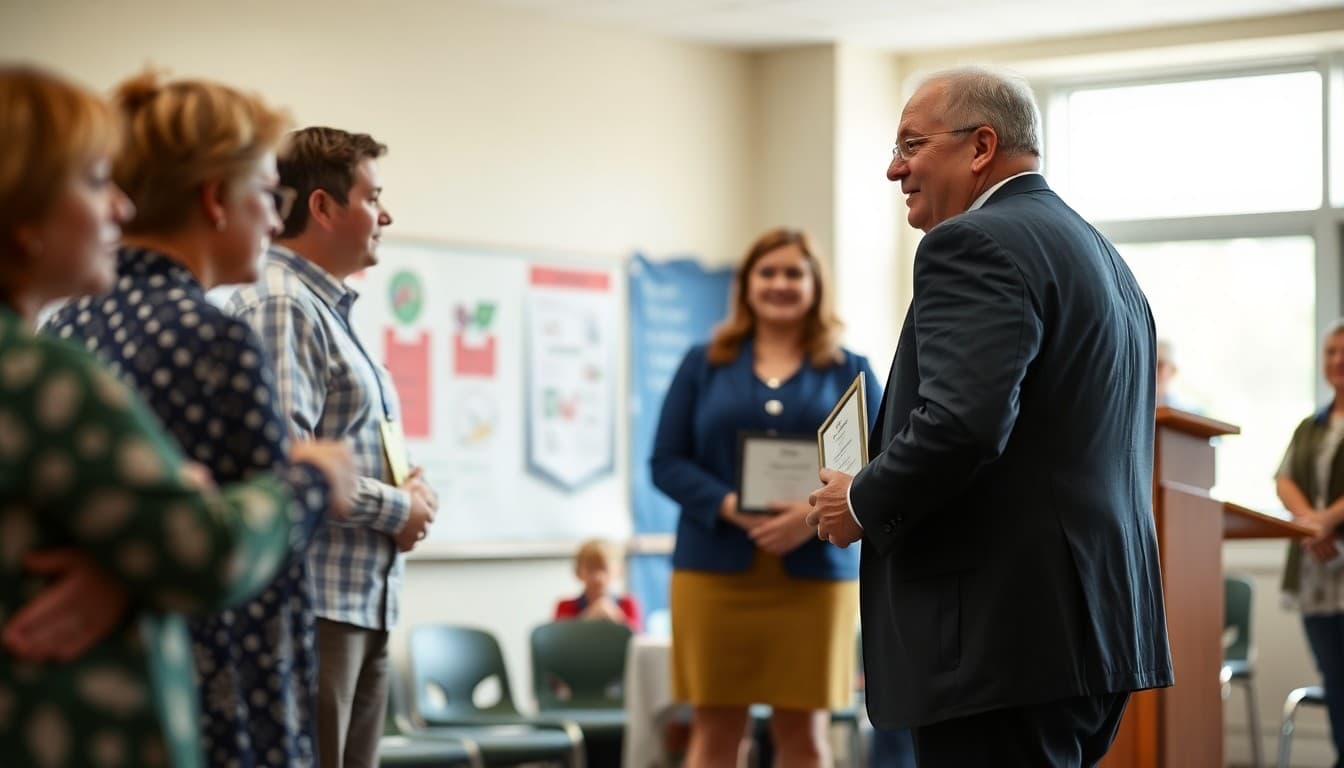
Superintendent Teacher Appreciation Newsletter: Honoring Educators

Teacher Appreciation Week is the easiest newsletter in the superintendent calendar to get wrong. A generic message that could have been written by anyone in any district, full of words like "dedicated" and "inspired," tells teachers the superintendent is fulfilling an obligation, not actually thinking about them. A specific, honest message is not harder to write. It just requires paying attention throughout the year.
Start with Something Real from This Year
Open with a specific, concrete thing that happened in your district this school year that deserves recognition. "This year, our teachers implemented a new literacy curriculum while managing the highest chronic absenteeism rate we have seen in a decade. They adapted, they covered for each other, and they kept students learning. I have visited classrooms in all 14 of our schools this year, and I want to tell you what I saw."
That opening says: the superintendent was present. The superintendent saw what happened. This is not a form letter.
Name Specific Teachers and Programs
Include a short list of teachers being recognized at the district level this year, along with one sentence about what each did. "Marcus Johnson at Roosevelt Elementary, who mentored four first-year teachers this year while maintaining the highest student growth scores in his grade level." "Sofia Alvarez at Lincoln High, who built a community garden project that connected 180 students to local businesses." Specific recognition is meaningful in a way that general appreciation is not.
Acknowledge What Was Hard This Year
A thank-you that does not acknowledge difficulty sounds like it came from someone who was not watching. Name the specific challenges of this year, whatever they were in your district: curriculum transitions, staffing shortages, community tensions, student mental health needs. "This year was not easy. The challenges you faced were real and significant." Then say what you saw teachers do in response.
Connect Appreciation to Conditions
Appreciation that exists separately from any commitment to improving conditions is noise. If the district is working on something that will improve teachers' professional lives, mention it here. "Because of what I have seen this year, I am committed to [specific action]: reducing non-instructional duties, adding planning time, increasing the supply budget for every classroom." Even one specific commitment turns appreciation into something teachers can trust.
Give Families a Way to Participate
Teacher Appreciation Week is an opportunity to mobilize families. "This week, we invite families to write a note to a teacher who made a difference for your child this year. You can drop a handwritten note at the school office or send an email directly to your child's teacher. Cards and supplies are available in the front office of every school." A specific, easy action is better than a general invitation to "show appreciation."
Sample Closing Language
"To every teacher, counselor, nurse, librarian, and classroom support staff member in our district: I see you. What you do is real work. It matters. Thank you for this year."
Short. Specific in its list. No hyperbole. No hero language. Just a direct acknowledgment from a superintendent who was paying attention.
Follow Teacher Appreciation Week with Action
One week of recognition followed by silence is easy to dismiss. The newsletters and communications that come after Teacher Appreciation Week, the ones about budget, staffing, and workload, are where appreciation is tested. A superintendent who returns to those topics with the same directness builds the credibility that a single recognition newsletter alone cannot.
Get one newsletter idea every week.
Free. For teachers. No spam.
Frequently asked questions
What makes a teacher appreciation newsletter meaningful to educators?
Specificity. Teachers can tell the difference between a generic message that could have been written for any district and one that references actual things happening in their classrooms, their grade level, and their school. Name teachers by name. Reference specific programs, accomplishments, and challenges the staff overcame this year. A personalized acknowledgment is worth ten generic ones.
Should a superintendent send the teacher appreciation newsletter to families, staff, or both?
Both, ideally with different versions or separate sections. Staff deserve a direct message that speaks to their experience. Families benefit from hearing the superintendent express genuine appreciation for the educators their children work with. A single newsletter can serve both audiences if the sections are clearly separated.
How do you write a teacher appreciation message that does not feel performative?
Name something specific and real. 'This year, our teachers led our district through a major curriculum transition while managing a 12% increase in chronic absenteeism, all without a drop in academic performance. That is not easy and it did not happen by accident.' Specificity signals that you were paying attention, not just writing a generic acknowledgment for a calendar event.
What should a superintendent avoid in a teacher appreciation message?
Avoid language that thanks teachers while implicitly asking more of them. 'Your dedication inspires us to do more' is praise that lands as a request. Also avoid the word 'heroes.' Most teachers find the hero framing uncomfortable and disconnected from the professional respect they actually want. Acknowledge their work as skilled, professional labor.
What platform makes it easy to send a teacher appreciation newsletter district-wide?
Daystage handles district-wide sends to staff, families, or both, with professional formatting and reliable delivery. For Teacher Appreciation Week, a well-formatted newsletter that arrives directly in staff inboxes on Monday morning sets the right tone for the week.

Adi Ackerman
Author
Adi Ackerman is a former classroom teacher and curriculum writer with 8 years in K-8 schools. She writes about school communication, parent engagement, and what actually works in real classrooms.
More for Superintendent
Ready to send your first newsletter?
3 newsletters free. No credit card. First one ready in under 5 minutes.
Get started free