
Superintendent Newsletter Launching a District STEM Initiative

A district-wide STEM initiative is a significant investment: in professional development, in equipment, in curriculum, and in staff time. When a superintendent announces that investment to the community, the communication needs to do more than generate enthusiasm. It needs to explain what the district is actually doing, why it is doing it now, and what families can realistically expect.
Here is how to write that communication well.
Set up the problem before you introduce the solution
Families are more receptive to a new initiative when they understand what problem it is designed to solve. Before you describe the STEM program, give families the context that makes the investment make sense.
That context might be labor market data: the fastest-growing careers in your region require technical skills that the current curriculum does not fully develop. It might be student outcome data: your district's math and science proficiency rates have not improved in four years, and the instructional model needs to change. It might be post-secondary data: students from your district are arriving at community college and four-year universities under-prepared for quantitative coursework. Whatever the honest driver is, share it.
Describe what STEM instruction actually looks like
"STEM education" means different things to different families. Some picture robotics clubs. Some picture coding classes. Some picture science fairs. Some worry it means less time on reading and writing.
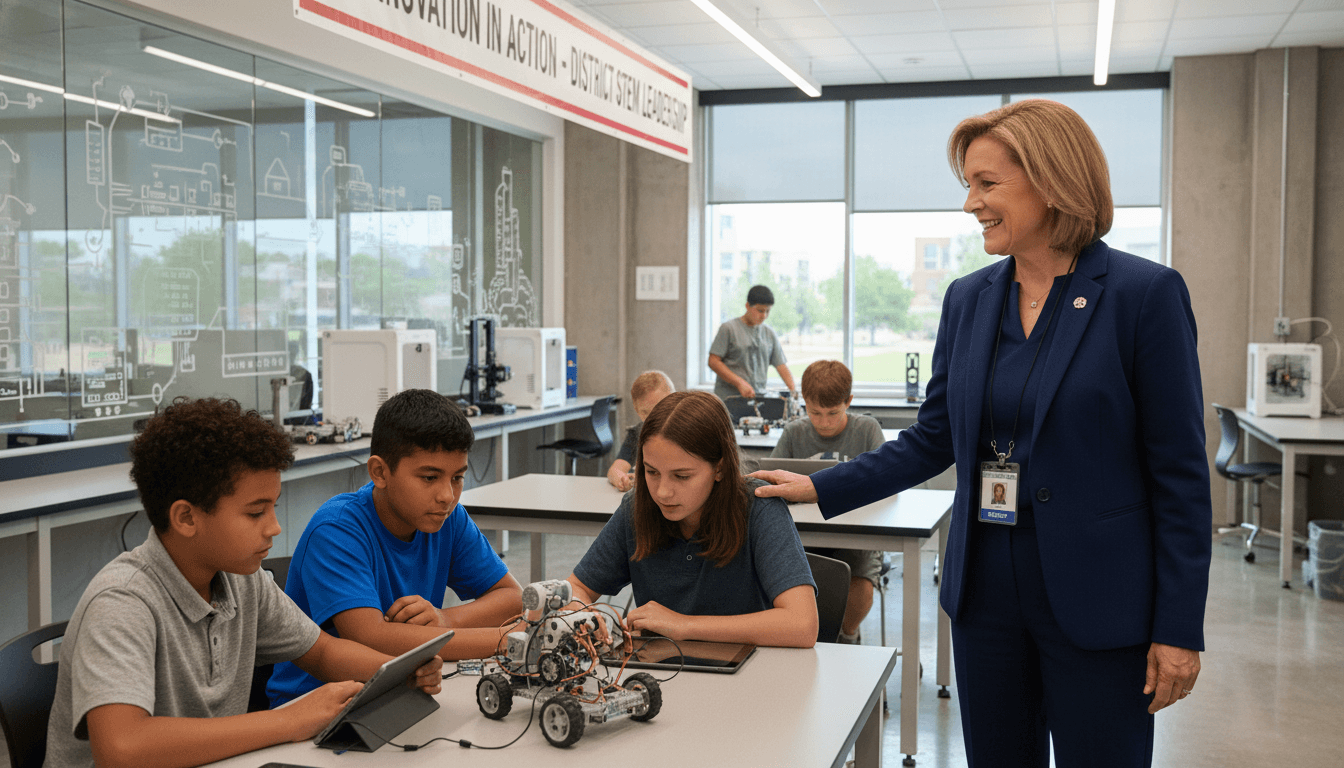
Describe it concretely. What does a third-grade STEM lesson look like in this district? What does a seventh-grade project look like? What subjects are integrated, and how? Giving families a specific picture of the classroom experience is more persuasive than any description of the initiative's philosophy.
Also address directly what STEM instruction does not replace. Families who worry about reading and writing need to hear clearly that integrated STEM instruction supplements, not replaces, foundational literacy and numeracy work.
Explain the rollout timeline clearly
If the initiative is rolling out in phases across schools and grade levels, be specific about the sequence and the timeline. Families whose children are not in the first cohort will notice that other schools are getting the program before theirs. Explain why, and commit to when full district implementation will be complete.
If there are equity implications in the rollout order, address them. Schools with more grant funding or newer facilities may be logical first sites, but families in underserved schools who watch those schools get new resources first need to hear a clear commitment and a specific date.
Acknowledge the investment and its source
Families and community members are often curious about where the money for a major initiative comes from. If the funding source is a federal grant, a state program, a local bond measure, or district budget reallocation, say so. Transparency about funding builds trust and helps families understand the scope and sustainability of the initiative.
If the initiative depends on grant funding that may not be renewed, acknowledge that and describe what the district's plan is if funding changes.
Commit to real outcomes, not vague promises
The launch newsletter should include a section on how the district will measure the success of the initiative over time. Name the metrics: student participation rates in STEM coursework, changes in math and science assessment scores, increases in STEM elective enrollment at the secondary level.
Commit to reporting these results in your annual communication. Families who know they will hear how the initiative is performing are more willing to give it the time it needs to show results.
An example excerpt
Here is how to describe the initiative in the body of the newsletter:
"Starting this fall, every student in grades 3 through 8 in Westfield Unified will participate in at least one STEM project unit per quarter. These units are not a separate class. They are structured into existing math, science, and language arts time. In a third-grade unit, students might design a water filtration system using materials from the classroom, writing about their process and presenting their results. In seventh grade, students might analyze real air quality data from their neighborhood and propose a data-supported response for the city council. The work is hands-on, it connects to real problems, and it is rigorous. We piloted this at two schools last year. The results in student engagement and in problem-solving assessment scores were strong enough that we made the decision to bring it district-wide."
Sustaining the communication after launch
A STEM initiative newsletter is the beginning of a communication commitment, not the end. Plan for updates that share early results, showcase student projects, and report honestly on the rollout. Daystage makes it straightforward to keep that communication consistent and direct, reaching families in their inboxes throughout the school year as the initiative takes root.
Get one newsletter idea every week.
Free. For teachers. No spam.
Frequently asked questions
What should a superintendent include in a STEM initiative launch newsletter?
Cover four things: what the initiative is and which grades it affects, what will look different in classrooms when it is fully implemented, why the district is making this investment now, and what the timeline for rollout looks like. Families do not need a curriculum deep-dive. They need to understand what their child's school day will look like differently and what the district expects this to produce over time.
How do you explain STEM education to families who are skeptical of a shift away from core subjects?
Be direct about what STEM instruction means in practice. It does not replace reading, writing, or mathematics. In most implementations, it is a way of teaching those subjects through applied, hands-on projects that connect learning to real problems. Give a concrete example of what a STEM lesson looks like in a third-grade or seventh-grade class. Abstract descriptions of 'integrated learning' do not reassure families. A specific description of what happens in a classroom does.
How do you address equity concerns in a district STEM initiative announcement?
Address it directly, especially if the initiative is rolling out at some schools before others. Families at schools that are not in the first cohort will notice. Explain the rollout sequence and the rationale, commit to a timeline for full district implementation, and describe how the district is ensuring all students, not just those at schools with more resources, will have access to the program.
What outcomes should a superintendent commit to when launching a STEM initiative?
Commit to outcomes you can actually measure and report on. Student participation rates in STEM coursework, changes in math and science assessment scores over two to three years, increases in students pursuing STEM electives at the secondary level, and career pathway data for older students. Avoid promising transformational outcomes in year one. Promise transparency: you will share the data, positive or mixed, in your annual reporting.
What newsletter tool do superintendents use?
Daystage makes it straightforward to launch a multi-phase communication campaign around a major initiative like STEM, with district-wide announcements followed by school-specific updates as the rollout reaches each building. Communications go directly to family inboxes in Gmail and Outlook, where families actually read their email.

Adi Ackerman
Author
Adi Ackerman is a former classroom teacher and curriculum writer with 8 years in K-8 schools. She writes about school communication, parent engagement, and what actually works in real classrooms.
More for Superintendent
Ready to send your first newsletter?
3 newsletters free. No credit card. First one ready in under 5 minutes.
Get started free