
Superintendent Newsletter: Redistricting and Attendance Zone Changes

Redistricting touches something deeply personal for families. It is not just about bus routes and enrollment numbers. It is about the school their child was promised, the friends they expected their kid to grow up with, and the neighborhood identity tied to a building. The superintendent who treats redistricting as a technical planning exercise and communicates it as such will face a level of community backlash that no amount of data can defuse. The superintendent who communicates it with honesty and genuine process will build trust even through disagreement.
Start With Why Before You Explain What
Before showing a map, explain the problem the redistricting is designed to solve. If one school is at 120 percent capacity while another nearby is at 65 percent, share those numbers. If demographic shifts have left some schools deeply underresourced while others are overcrowded, say that. Families who understand the problem first can evaluate a proposed solution with more fairness than families who are only shown a map of boundary changes with no context for why it is happening.
Show the Map and Make It Accessible
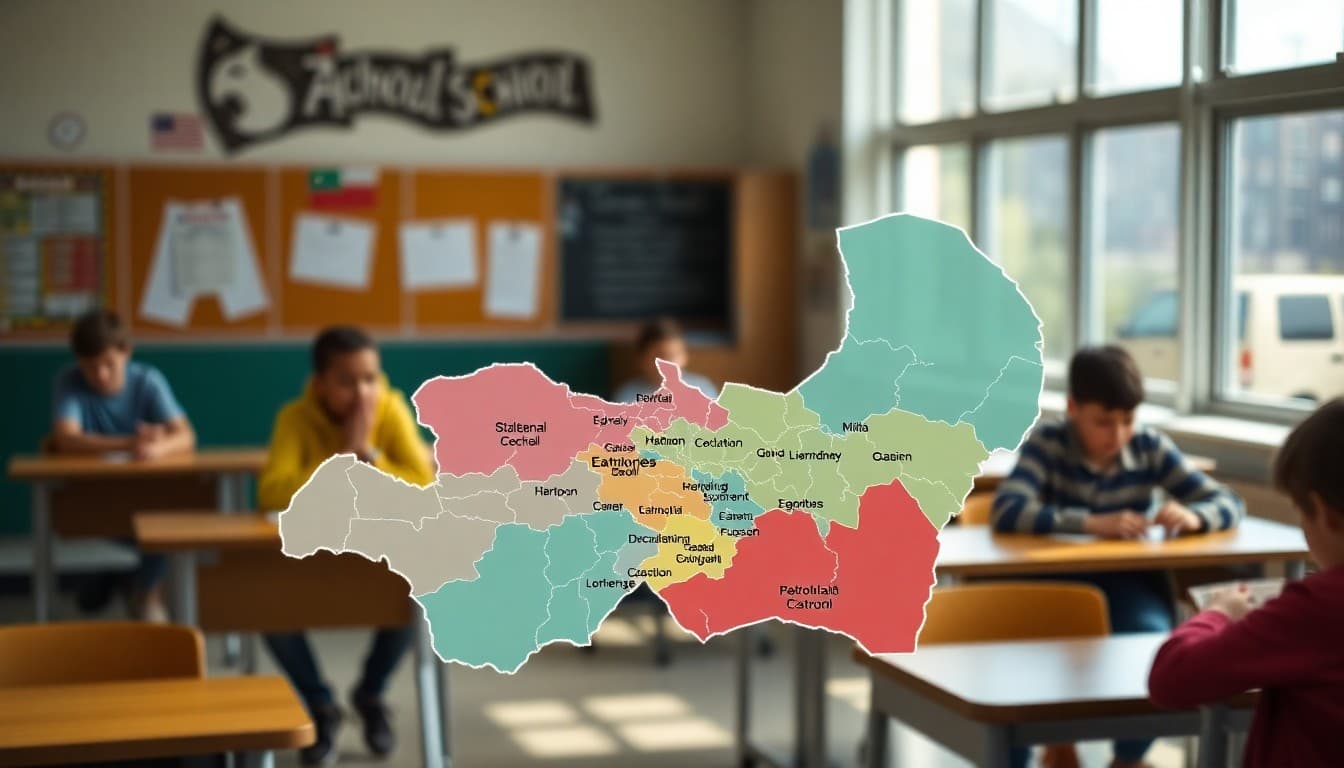
Include a direct link to an interactive attendance zone map in every redistricting communication. Families need to be able to type in their address and immediately see which school they would be assigned to under each proposal. A map that requires downloading, printing, or calling the district office for clarification creates frustration that turns into opposition. Accessibility of the map is not a technical detail. It is a community trust decision.
Present the Options Neutrally
If the district is evaluating multiple boundary proposals, present each option with equal clarity and equal acknowledgment of its tradeoffs. A table comparing impact on each school's enrollment, transportation costs, and affected neighborhoods under each scenario lets families evaluate the proposals themselves. Presenting one option with more detail or more favorable framing signals a predetermined conclusion and the community will notice.
Address the Sibling and Program Questions Head-On
The two questions that generate the most individual anxiety in redistricting are: Will my younger child be able to attend the same school as my older child? And will my child lose access to their current specialty program? Answer these in the newsletter body, not just in an FAQ buried at the bottom. If the answer is "sibling preference policies will apply" or "specialty program enrollment will follow the student," say that plainly and prominently.
A Sample Redistricting Explanation Paragraph
Here is a paragraph that explains the situation without losing families in technical language:
Our district has grown unevenly over the past eight years. Jefferson Elementary is currently serving 672 students in a building designed for 500, while Lincoln Elementary, just 1.7 miles away, has 310 students enrolled in a building with capacity for 480. This imbalance affects educational quality at both schools. Students at Jefferson are in larger classes and sharing resource spaces. Students at Lincoln are losing elective offerings that require minimum enrollment numbers to sustain. We are proposing three boundary options that would rebalance enrollment. All three would keep siblings together under our existing sibling preference policy.
Create a Clear Input Process and Honor It
If you say community input will shape the final decision, create a structure that makes that true. Publish a survey, schedule town halls, and give families a real deadline for feedback with a commitment to share how input was incorporated into the final recommendation. Families who give feedback and see it acknowledged develop more trust in district decision-making even when their specific preference was not the one chosen.
Communicate the Timeline in Every Update
Redistricting anxiety peaks during periods of silence. In every newsletter update, remind families of the key upcoming dates: when community input closes, when the proposal will be presented to the board, when the board will vote, and when the new boundaries will take effect. A published timeline gives families a structure for their uncertainty. When families know there is a process with predictable steps, they engage more constructively.
Follow Up After the Decision
After the board votes, send a final redistricting newsletter that explains what was decided, acknowledges any changes made in response to community feedback, and outlines what happens next for families who will be moving to a new school. That follow-up is not optional. It is the moment families learn whether the input process was real or performative, and their conclusion will shape how they engage with the district for years.
Get one newsletter idea every week.
Free. For teachers. No spam.
Frequently asked questions
When should a superintendent communicate about redistricting?
As early as the process begins, typically 12 to 18 months before the changes take effect. Families need time to understand the proposal, ask questions, and participate in the process. Starting communication after the boundaries are finalized eliminates any real community input and damages trust significantly.
What are the key elements of a redistricting newsletter?
The reason for the redistricting, the specific proposed changes and which streets or neighborhoods are affected, a link to the interactive map, the process for providing feedback, the timeline for when a decision will be made, and answers to the most common family concerns such as sibling preferences and program access.
How do you address family anxiety about a child being moved to a different school?
Acknowledge the disruption directly. Explain what stays the same for their child: access to specialty programs, extracurricular eligibility, any applicable sibling preference policies. If possible, commit to a transition support plan for students moving to new schools so families feel the change is being managed with their child's experience in mind.
How do you present multiple redistricting options fairly?
Present each option with a clear table of tradeoffs: enrollment balance impact, transportation cost changes, demographic effects, and which neighborhoods are affected. Avoid signaling a preferred option before community input is collected. Families who believe the outcome is predetermined disengage from the process quickly.
What communication tools help manage redistricting updates across a large district?
Daystage allows you to send district-wide redistricting updates while also targeting specific neighborhoods or schools whose families are most directly affected. Segmenting your audience during a redistricting process ensures families get the information most relevant to them without being overwhelmed by every detail.

Adi Ackerman
Author
Adi Ackerman is a former classroom teacher and curriculum writer with 8 years in K-8 schools. She writes about school communication, parent engagement, and what actually works in real classrooms.
More for Superintendent
Ready to send your first newsletter?
3 newsletters free. No credit card. First one ready in under 5 minutes.
Get started free