
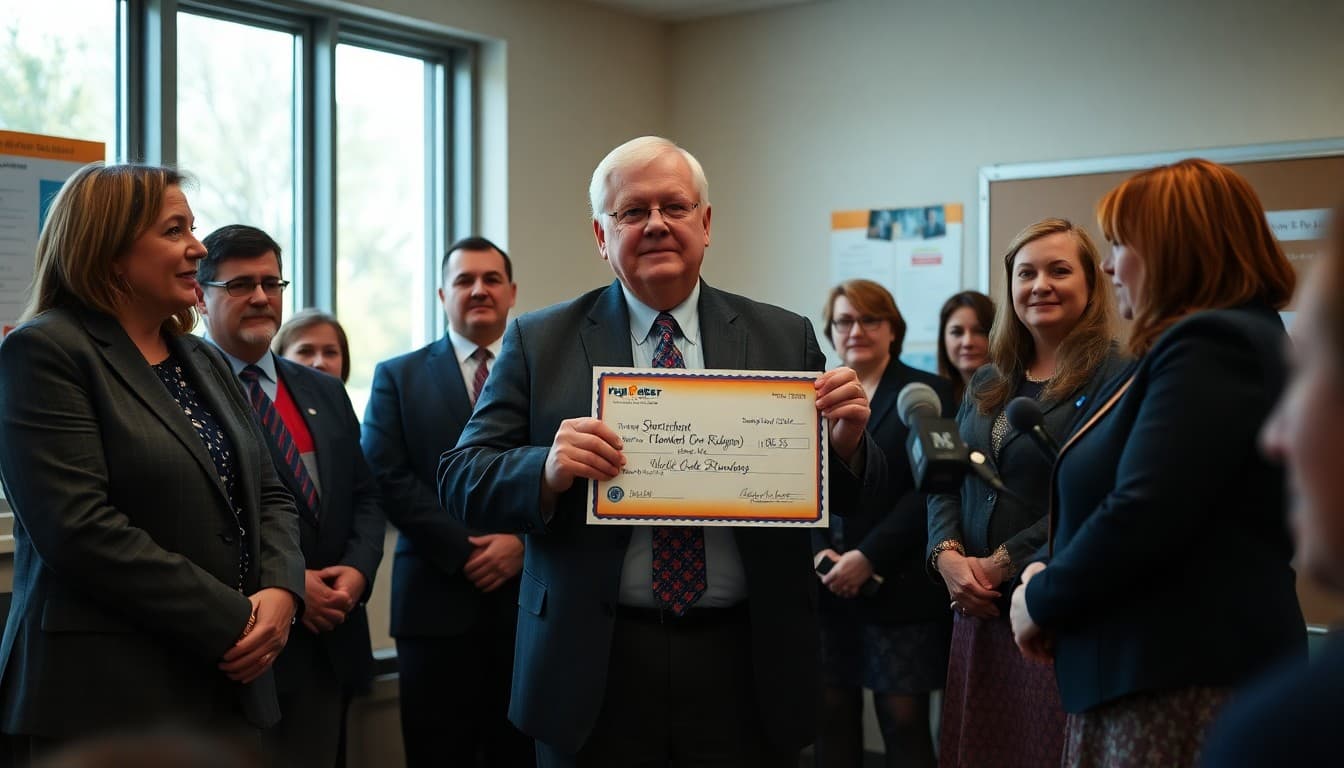
Superintendent Newsletter: Our District Innovation Grant Award

A significant grant award is a meaningful moment for a school district. It represents external validation of a problem the district identified, a plan it developed, and a case it made compellingly enough to receive competitive funding.
Communicating the award well to families turns a fiscal event into a community investment story.
Lead with what it means for students
Open by describing what the grant will make possible for students, not the size of the award or who funded it. "Starting this fall, every student at Lincoln, Roosevelt, and Washington Elementary will have access to expanded after-school coding instruction through a new grant we received" is more compelling than "We are pleased to announce a $450,000 grant from the XYZ Foundation."
Lead with the student impact, then move to the funding details.
Explain the problem the grant addresses
What gap or need did the district identify that this grant is designed to address? Families who understand the problem before hearing about the solution are more invested in the outcome. The problem statement also validates the work that went into developing the proposal.
Describe the program in concrete terms
What will the grant fund specifically? New staff positions, curriculum materials, equipment, training, family programs? Which schools will be involved? Which student populations will benefit? How long will the grant last? Concrete descriptions prevent families from having to guess at what the announcement actually means.
Acknowledge who made it happen
Name the team that wrote the grant proposal. A grant application is a significant amount of work. The teachers, counselors, or administrators who identified the need and developed the proposal deserve recognition. Naming them also signals to the broader staff that grant work is visible and valued.
Commit to reporting back
State explicitly that the district will report on the grant-funded program's results at the end of the grant period. This creates accountability and tells families that the grant is not just a one-time announcement but a real commitment to a specific outcome.
Sample excerpt
"Our district has been awarded a $380,000 grant from the State Department of Education's Innovation in Learning fund. The grant will fund a two-year expansion of our early literacy intervention program to three additional elementary schools, adding three full-time reading interventionists and an updated assessment and materials system. This grant was proposed by our literacy director and a team of three teacher leaders who spent six months documenting where our early intervention capacity was insufficient and what a more comprehensive model would require. We expect to have the new positions filled and in classrooms by October. We will report full-year outcomes to the community in June."
Daystage delivers this announcement to every family inbox in the district at once, so the community understands the investment being made in their children's education.
Get one newsletter idea every week.
Free. For teachers. No spam.
Frequently asked questions
Why should a superintendent communicate a grant award to all district families?
Grant awards represent new investment in programs and students. Families deserve to know what new resources are coming, which students will benefit, and what the district plans to do with them. It is also an opportunity to recognize the work that went into securing the funding.
What should a grant announcement newsletter include?
The name and size of the grant, who funded it, what it will be used for, which schools or student populations will benefit, the implementation timeline, and how the district will measure whether the grant-funded program is working. Families need the full picture to understand the significance of the investment.
How do you communicate a grant announcement without making it sound like the district is asking for community credit?
Focus on students first. Lead with what the grant will enable for students before describing how it was won. Name the teachers or administrators whose proposal made the case, but frame their work in terms of the student need they identified and addressed.
What happens if a grant-funded program does not produce the intended results?
You report that honestly at the end of the grant period. Families who received the original announcement deserve an honest accounting of outcomes. A grant that did not fully deliver its goals is still a learning opportunity, and reporting on it transparently builds more credibility than claiming success that did not materialize.
How does Daystage help communicate grant announcements across the district?
Daystage delivers the grant announcement to every family inbox in the district at once. For grant-funded programs that will affect specific schools or student populations, this district-wide announcement ensures that every family hears about the investment before the program launches.

Adi Ackerman
Author
Adi Ackerman is a former classroom teacher and curriculum writer with 8 years in K-8 schools. She writes about school communication, parent engagement, and what actually works in real classrooms.
More for Superintendent
Ready to send your first newsletter?
3 newsletters free. No credit card. First one ready in under 5 minutes.
Get started free