
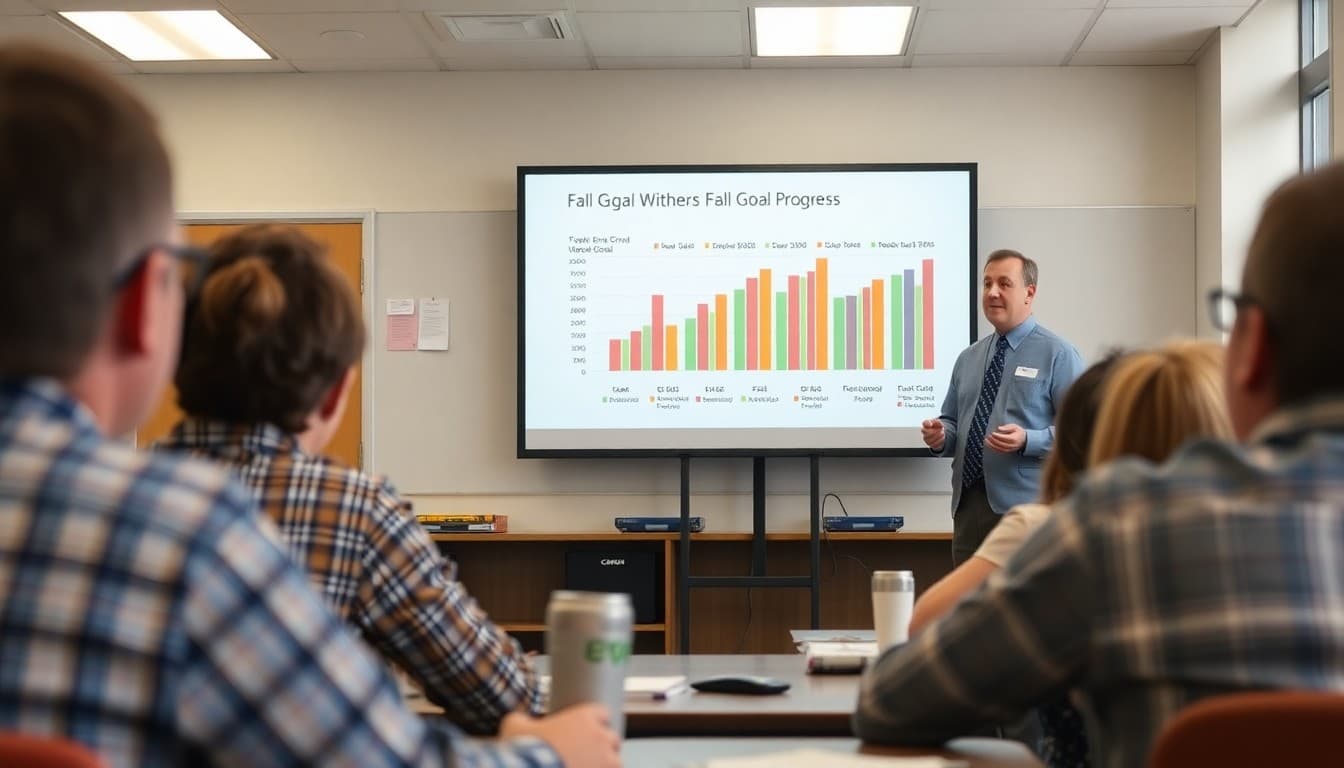
Superintendent Newsletter: Fall Goal Update to Our Community
Setting goals at the start of the year means nothing if the district does not report on them throughout the year. A fall goal update newsletter closes the loop between the September kickoff and the end-of-year accountability report, giving families an honest look at where the district stands early in the year.
Remind families of the district's annual goals
A brief restatement of the one or two priority goals the district named in the fall kickoff. Not the full strategic plan, just the headline goals that this update is measuring progress against. Families who have not been following every communication need this reminder to contextualize the data that follows.
Report what the early data shows
What does the first benchmark assessment window show? Reading proficiency rates in the early grades. Chronic absenteeism rates through October. Ninth-grade course passage rates at the quarter mark. Whatever the district committed to measuring at the start of the year, report the current reading for each measure. Be specific: percentages, counts, changes from the same point last year.
Identify which goals are on track and which are not
Which goals have early data that suggests the district is on pace? Which goals have early data that suggests the district is behind where it needs to be? Both are worth naming plainly. A fall update that only celebrates positive early trends is not a real update. A fall update that honestly reports where the district is behind, and names what it is doing about it, demonstrates real accountability.
Describe any early adjustments
If early data has prompted a change in approach, describe the change. More intensive coaching at schools showing flat benchmark results. Additional outreach to families of chronically absent students. Program adjustments based on early implementation data. Adjustments made in October are more likely to affect the full year than adjustments made in March.
Give families a preview of what comes next
When will the next goal update arrive? What will the district know by that point that it does not know yet? Previewing the next accountability communication builds the expectation that updates will keep coming, which is itself a form of commitment to families.
Sample excerpt
"Our fall benchmark results are in. For our reading goal, 62% of K-3 students scored at grade level in October, compared to 57% at this point last year. We are ahead of our pace toward our 70% target. For our attendance goal, our chronic absenteeism rate through October is 14.2%, which is slightly higher than last year's 13.8% at this point. We are deploying additional family outreach resources to the 12 schools where absenteeism is highest. Our next goal update will come in January with the first-semester data."
Daystage delivers this fall goal update to every family inbox in the district, making the district's early progress visible to the community that is investing in it.
Get one newsletter idea every week.
Free. For teachers. No spam.
Frequently asked questions
When should a superintendent send a fall goal update newsletter?
After the first benchmark data window, typically in October or November. This is when the district has enough early data to report meaningfully on goal progress without making it too early to say anything real. An October or November fall update anchors the year's accountability communication between the fall kickoff and the mid-year update.
What should a fall goal update include?
A brief reminder of the district's annual goals, the early data available for each goal, what the data says about whether the district is on track, and any early adjustments being made based on what the data shows. The fall update should be honest about both early wins and early concerns.
Is it too early in the year to report on goal progress in the fall?
No. Early benchmark data is a legitimate leading indicator of where the year is heading. Reporting it in November tells families that the district is monitoring progress continuously, not just at the end of the year. It also gives the district an opportunity to name course corrections while there is still time to make them.
How do you frame early data that is not encouraging?
Report it honestly, name the specific adjustment the district is making in response, and give families a realistic picture of what to expect. Families who receive honest early news and a credible response plan are more supportive during a difficult period than families who were not told anything until the end-of-year results arrived.
How can Daystage support fall goal update communication to all district families?
Daystage delivers the fall goal update to every family inbox in the district, building the continuous accountability communication rhythm that makes the annual report meaningful when it arrives. Regular progress updates train families to expect data-based communication from their superintendent.

Adi Ackerman
Author
Adi Ackerman is a former classroom teacher and curriculum writer with 8 years in K-8 schools. She writes about school communication, parent engagement, and what actually works in real classrooms.
More for Superintendent
Ready to send your first newsletter?
3 newsletters free. No credit card. First one ready in under 5 minutes.
Get started free