
Superintendent Newsletter: Communicating a Districtwide Cell Phone Policy
A districtwide cell phone policy is one of those decisions that can go smoothly or create months of friction, and the difference usually comes down to how it was communicated before it was implemented.
Families are not opposed to reasonable rules. What they resist is feeling blindsided by a policy that affects their child's daily routine without adequate explanation or advance notice. A well-written superintendent newsletter solves this before the backlash starts.
Lead with the reason, not the rule
Open the newsletter by explaining why the district is changing the policy. Students deserve an environment where they can focus without constant notification pulls. Research on phone-free classrooms shows consistent gains in engagement and reductions in social anxiety among middle schoolers. That is the case you are making.
State the new policy rule clearly in the second paragraph, after the rationale. When you reverse that order, the rule feels arbitrary and the reasoning feels like an afterthought.
Address the emergency contact question directly
This is the concern that drives the most pushback. Do not wait for families to ask; put the answer in the newsletter. Explain how the school office works: families can call the main office number at any time to reach their child or leave a message. Schools will contact families through the existing emergency contact system in any genuine urgent situation.
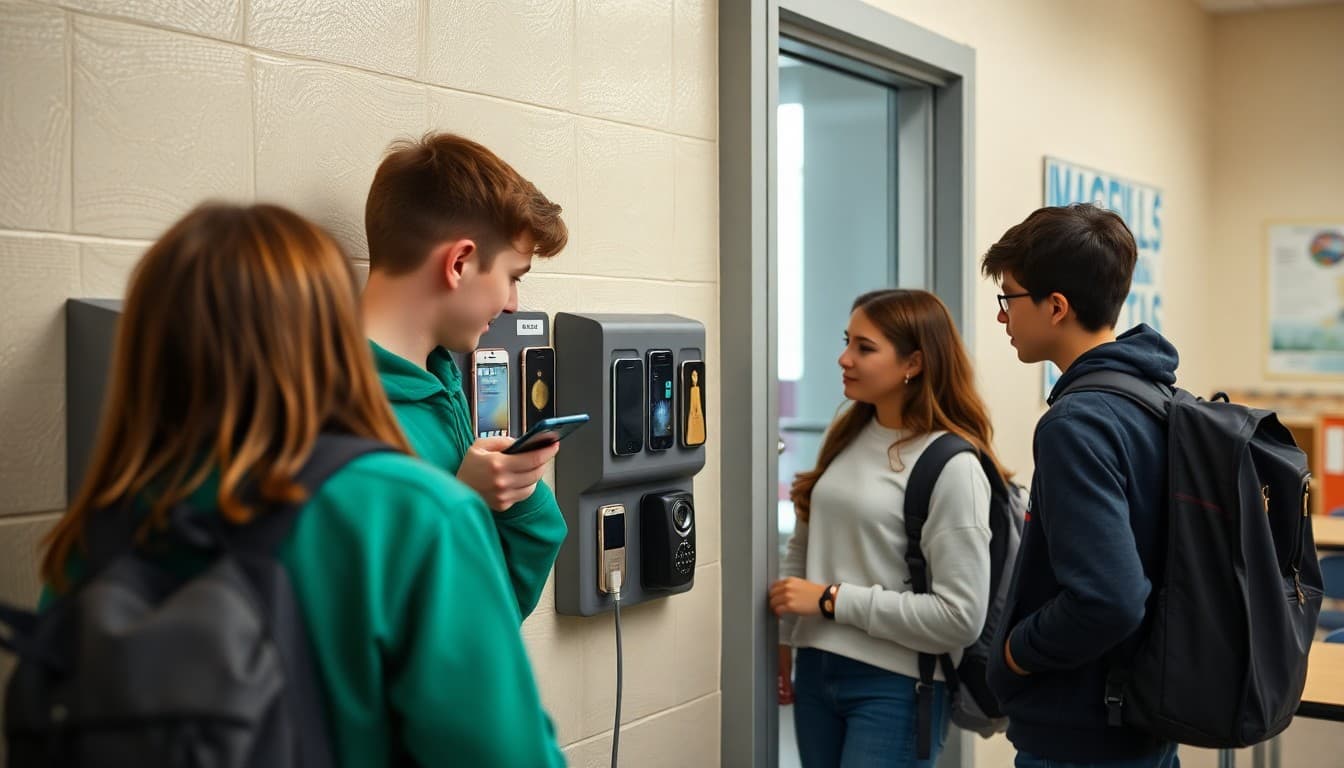
If your district is providing pouches, lockboxes, or designated storage during the day, describe the logistics briefly. Specificity reduces anxiety better than reassurance.
Explain what happens when students do not follow the policy
Families want to know the consequences before their child faces them. Describe the progressive response: first violation is a reminder and the phone goes to the office until end of day. Second violation requires a parent pickup. Do not leave enforcement ambiguous; ambiguity generates more concern than a clear, proportionate consequence policy.
Acknowledge the adjustment
Recognize that students and families will need time to adapt. If your district is in a region where this change is new, note that most schools that have implemented phone-free days report that students adjust within two to three weeks. Families want to know you have thought through the transition, not just the rule.
Name the effective date and tell them where to ask questions
The newsletter should state clearly when the policy begins and give families a specific way to ask questions. A FAQ link, a building principal contact, or a short town hall event all work. The goal is to make families feel like they have a path to more information rather than a policy handed down without recourse.
Sample excerpt
"Starting September 9, students in all district middle and high schools will store their phones in their backpacks from first bell to dismissal. We made this decision because the evidence on phone-free learning environments is consistent: students focus better, engage more in class, and report lower levels of social stress when phones are out of reach during the school day. We know this is an adjustment for families, particularly for those who have relied on texting during the day for coordination. The school office remains available by phone at any time to pass a message to your child or address an urgent need. More details on site-specific storage procedures will come from your child's principal this week."
Daystage makes it straightforward to deliver this kind of policy communication to every family in the district at once, with consistent formatting and no requirement for families to log into a portal to read it.
Get one newsletter idea every week.
Free. For teachers. No spam.
Frequently asked questions
How far in advance should a superintendent communicate a new cell phone policy?
Send the initial newsletter at least three to four weeks before the policy takes effect. Families need time to adjust pickup routines, talk with their children, and ask questions. A policy that appears one week before launch signals poor planning and generates unnecessary backlash.
How do you address parent concerns about emergency contact in the newsletter?
Address it directly and early. Explain the school office procedures: how families can reach their child during the day, how the school will contact families in an emergency, and what the protocol is for genuine medical or safety needs. Do not make parents hunt for this information on the district website.
Should the cell phone policy newsletter include the research behind the decision?
Yes, but keep it brief. Two or three sentences on what the evidence shows about phones and learning focus is enough. You do not need to write a literature review. Families want the reasoning, not the footnotes. Then move to what this means specifically for their child.
What tone works best when announcing a restrictive policy change?
Confident and matter-of-fact, with genuine acknowledgment that the change requires adjustment. Avoid being defensive or over-explaining. Families pick up on the difference between a superintendent who believes in the policy and one who is apologizing for it while announcing it.
How can Daystage help communicate a policy change like this to all district families?
Daystage delivers the newsletter directly to every family inbox across all district schools, formatted to look professional on any device. No portal login. No app download. The message reaches parents where they already are, which matters most when you need high read rates before a major change goes live.

Adi Ackerman
Author
Adi Ackerman is a former classroom teacher and curriculum writer with 8 years in K-8 schools. She writes about school communication, parent engagement, and what actually works in real classrooms.
More for Superintendent
Ready to send your first newsletter?
3 newsletters free. No credit card. First one ready in under 5 minutes.
Get started free