
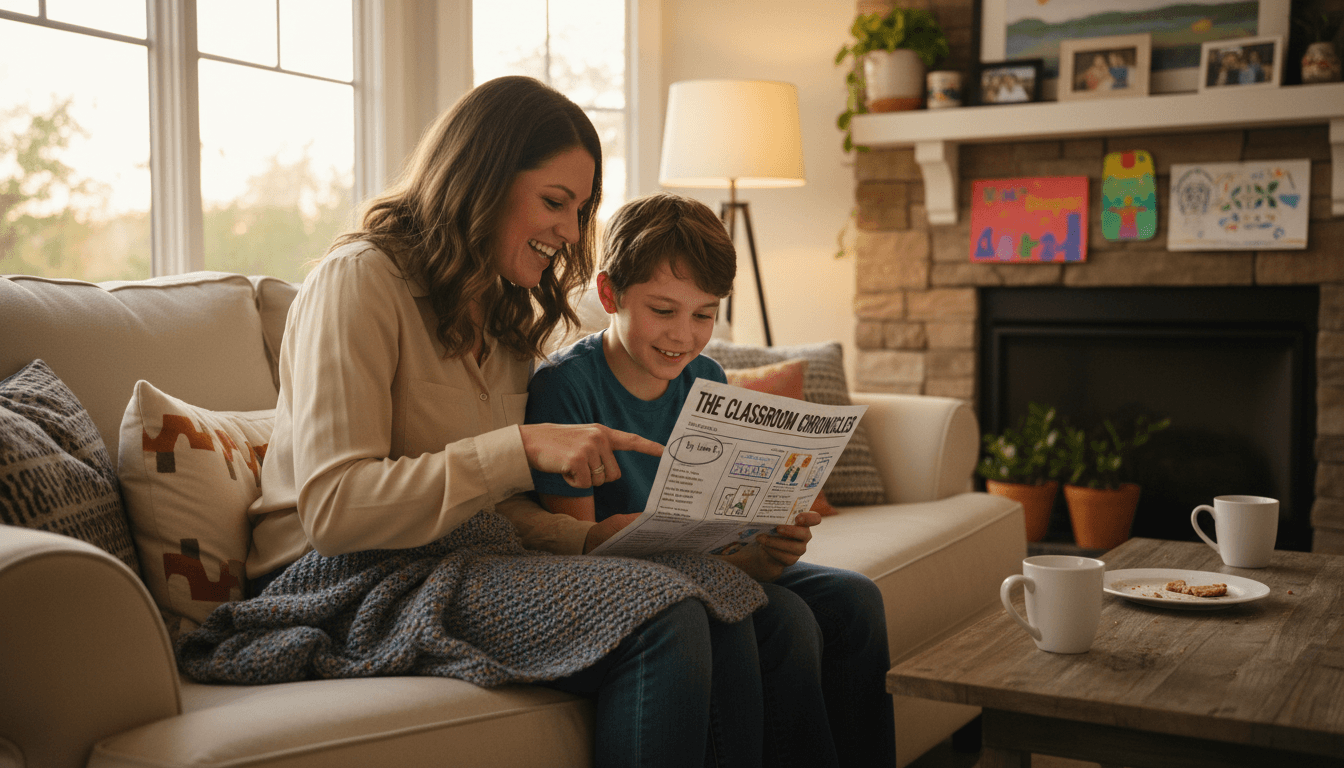
Why Student-Produced Newsletters Drive Better Family Engagement Than Teacher Newsletters
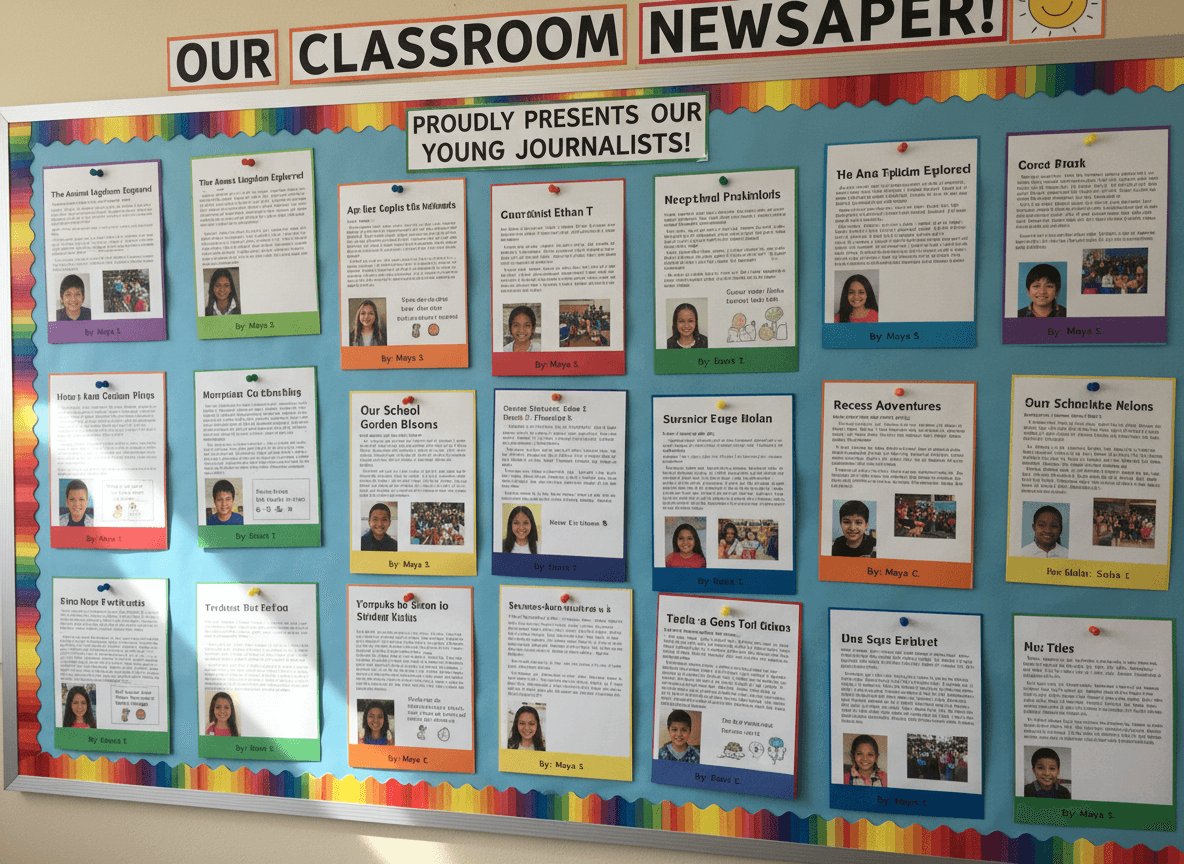
Teachers who switch from writing the class newsletter themselves to having students produce it notice something immediately: family open rates go up. Parents read more carefully. They respond more often. They bring it up at pickup.
This is not anecdotal. There are structural reasons why student-produced newsletters drive higher family engagement than teacher newsletters, and understanding them helps teachers design student newsletter projects for maximum impact.
The Social Stakes Are Different
When a family receives a teacher newsletter, they are reading communication from a professional. They may find it informative, they may appreciate it, but it does not trigger the same social drive as a newsletter produced by their child's class.
A student-produced newsletter creates what you might call social stakes. The parent knows their child may have contributed. They look for the byline. Other parents in the school are reading the same thing. Conversation happens around it. "Did you see what [child's name] wrote in the newsletter?" is a conversation that never happens with a teacher newsletter.
Students Tell Different Stories Than Teachers
Teacher newsletters describe classroom activities from a professional educational perspective. Student newsletters describe classroom activities from a child's perspective, which is the perspective families are most curious about.
A teacher writes: "This week we completed our unit on ecosystems, focusing on food chain dynamics and interdependence."
A fourth-grader writes: "On Tuesday we found out what would happen if all the frogs disappeared. It turns out the mosquitoes would take over. Ms. Chen said one scientist thinks there would be so many mosquitoes they would block out the sun. We're not sure if that's true but it was scary to think about."
The second version is what the parent shares at the dinner table. The first version is what gets filed with the other school communications. Both are accurate. Only one creates a family conversation.
The Pride Effect
Families are proud of students who do real things. A student who produces a published newsletter is not doing homework, they are doing something that professionals do. Parents who receive a newsletter where their child has a byline show it to grandparents, colleagues, and friends.
This pride effect has an important secondary benefit: it raises the student's sense of the work's value. Students who know their parents are proud of what they published invest more in the next issue. The engagement loop is self-reinforcing.
Student Newsletters Create Conversation Prompts
One of the most consistent barriers to family-school connection is the parent who cannot get a useful answer to "How was school today?" and gets "Fine." The student newsletter solves this structurally.
When a parent has read the newsletter and knows that their child's class did a food chain simulation Tuesday, they can ask: "Tell me about the frog experiment." That question gets a very different answer than "How was school?"
The newsletter creates a shared reference between parent and child that the parent-written newsletter cannot, because the parent does not know what the child observed, thought, or wrote. The student newsletter closes that loop.
Building the Habit
Student newsletter engagement builds over time. After a few issues, families start looking for the newsletter. They tell other parents about it. They mention specific articles to the teacher. This growing readership creates real accountability and real motivation for student reporters.
Schools that have sustained student newsletter programs for multiple years find that incoming families hear about the newsletter before they even enroll. "Oh, you're going to be in Ms. Torres's class, she does the newspaper" is the kind of community reputation that is hard to build through any other single classroom project.
Designing for Engagement
A few design choices that maximize family engagement with a student newsletter:
- Publish bylines on every piece. The byline is what families look for. Every contributor should be named on every piece they write.
- Include a "family response" section. Invite families to submit a brief response to the newsletter each issue, a question, a comment, a correction. This creates interaction rather than one-way communication and gives students real audience feedback to work with.
- Send as email, not as a link or attachment. The newsletter should open directly in the parent's inbox. Every additional click between the email and the content costs readers. Student-produced content deserves to be seen.
Get one newsletter idea every week.
Free. For teachers. No spam.
Frequently asked questions
Why do student-produced newsletters drive higher family engagement than teacher newsletters?
Family members open newsletters to see what their child is doing and saying. When a student writes the newsletter, there is a social reason to read every word: their child might be mentioned, quoted, or even the author.
What should student newsletters include to maximize family engagement?
Include student bylines, student photos with captions written by the students themselves, and direct quotes from student interviews. Any content that makes a family member wonder 'did my child write this section' drives re-reads and shares.
How should schools build a habit of reading student newsletters?
Send on the same day every week. Families build reading habits around predictability. A student newsletter that arrives every Friday morning will eventually become a Friday ritual for families who look forward to it.
What mistakes reduce family engagement with student newsletters?
Making the newsletter look like it was produced by an adult removes the reason families open it. Students should have visible ownership: their names on stories, their photos chosen, their voice in the writing. The newsletter should feel like something students made.
How does Daystage help student newsletters reach families consistently?
Student newsletter teams use Daystage to publish on a consistent schedule with professional delivery, so families receive the newsletter reliably in their inbox rather than missing it when a paper copy gets lost in a backpack.

Adi Ackerman
Author
Adi Ackerman is a former classroom teacher and curriculum writer with 8 years in K-8 schools. She writes about school communication, parent engagement, and what actually works in real classrooms.
More for Student-Led
Teaching Journalism Ethics in the Student Newsletter Program
Student-Led · 6 min read
Student Press Freedom Newsletter: How Advisors and Principals Communicate Press Protections
Student-Led · 5 min read
Student Journalist Orientation Newsletter: How Advisors Prepare New Student Reporters
Student-Led · 5 min read
Ready to send your first newsletter?
3 newsletters free. No credit card. First one ready in under 5 minutes.
Get started free