
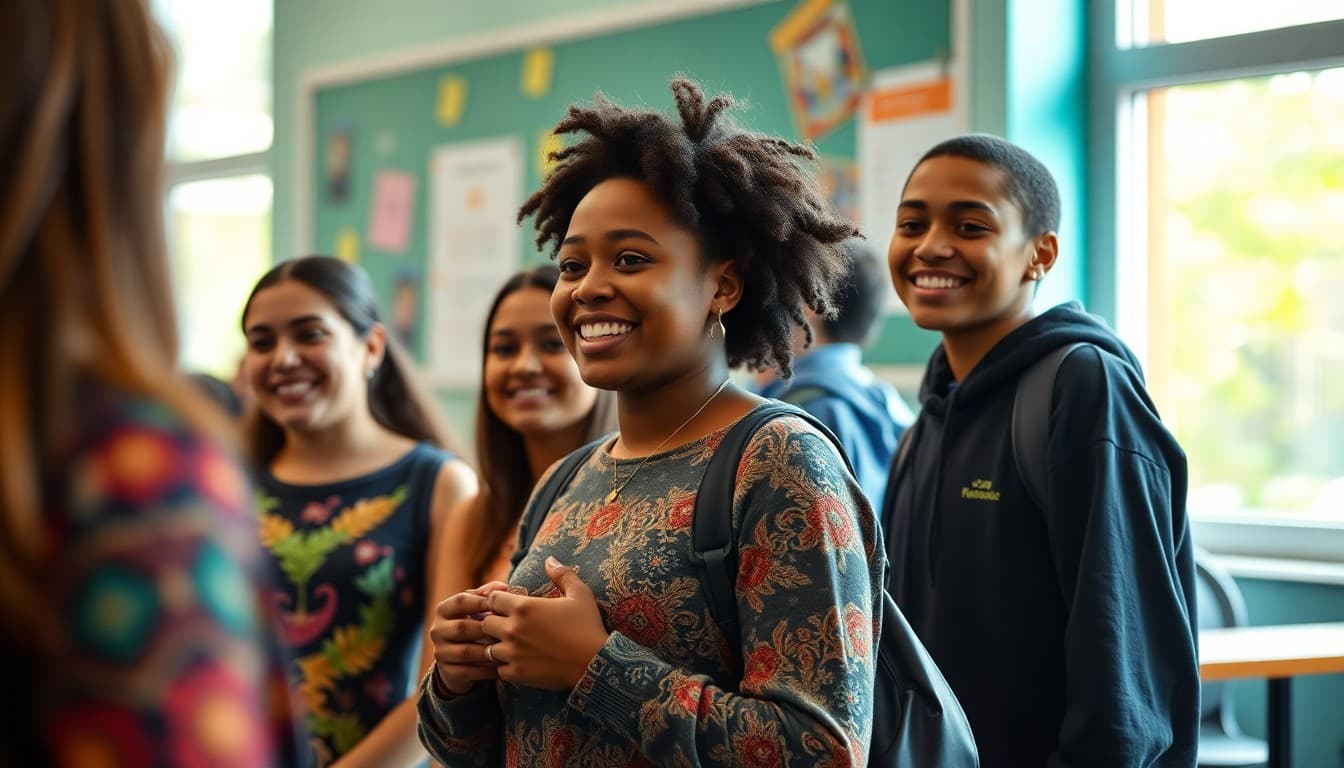
Student Diversity Club Newsletter: Celebrating All Cultures at School

A diversity club newsletter fails when it treats cultural celebration as decoration. A photo of food from many countries, a list of heritage months, a generic statement about valuing differences: these are the moves that produce newsletters no one reads twice. The newsletter that builds genuine inclusion goes deeper. It lets students speak for themselves, covers difficult topics honestly, and gives readers something they could not find anywhere else on campus.
Center Student Voices, Not Club Descriptions
The most common mistake in diversity newsletters is writing about communities rather than inviting those communities to write for themselves. Every issue should include at least one first-person contribution from a student whose cultural background or identity is being covered. The club editor frames the section and provides context. The student provides the content. That division of labor produces more authentic, more interesting, and more trustworthy journalism than any well-meaning summary.
Go Deep on One Cultural Topic Per Issue
Breadth is the enemy of depth in cultural coverage. A newsletter that spends two sentences on each of eight cultural events teaches readers nothing. Pick one topic per issue and cover it thoroughly. If October's issue focuses on Indigenous cultures ahead of Indigenous Peoples Day, dedicate 300 words to one specific nation or community represented in your school, written or reviewed by a student from that community. That approach builds real understanding rather than a checklist of cultures acknowledged.
Use a Template for Cultural Spotlights
Here is a template your contributors can use:
Cultural Spotlight: [Community or Tradition]
Written by: [Student name, optional]
What it is: [Brief context in 2-3 sentences]
What it looks like in my family or community: [Student's first-person account, 100-150 words]
What I wish my classmates understood: [Student's honest answer, 50-75 words]
How to learn more: [1-2 specific resources, not just "Google it"]
That template gives students a clear structure and gives readers a consistent format that builds familiarity over time.
Report on Club Activities With Specificity
A diversity club does more than celebrate. It plans events, advocates for curriculum changes, responds to campus incidents, and builds relationships between different student communities. Your newsletter should report on all of it. "The club hosted a 90-minute workshop on bystander intervention in late September attended by 34 students. Three students reported using the techniques the following week" is a more honest and useful report than "we had a great workshop last month."
Address Bias and Discrimination Incidents When They Occur
When something happens on campus that involves bias, discrimination, or exclusion, the diversity club newsletter is an appropriate place to address it. Speak to the incident directly without naming individuals unless they have been publicly identified. Describe the impact on affected students. Share what the club is doing in response. Silence in the face of a known campus incident damages the club's credibility with the students it most needs to reach.
Highlight Upcoming Events With Clear Details
Promote every event the club sponsors or co-sponsors with a full set of logistics. Date, time, location, cost (should be free or very low), and whether the event is open to the whole school or only club members. Include one sentence explaining why someone who is not in the club should attend. "You do not need to be a club member to attend. This event is for anyone who wants to understand how redlining shaped our city's neighborhoods and how that affects our school community today."
Build a Resource Section for Students Who Need Support
Each issue should include a small resource section with information relevant to students from underrepresented groups. This might be a scholarship specific to a community your school serves, a mental health resource in a language other than English, or a community organization offering support to a particular student population. Resources that are specific and actionable get used. Generic lists of hotlines do not.
Get one newsletter idea every week.
Free. For teachers. No spam.
Frequently asked questions
How do we cover cultural events without reducing them to stereotypes?
Let students from the relevant cultural community write the content or review it before publication. Avoid summarizing an entire culture through a single holiday or food. If you cover Lunar New Year, go deeper than 'it involves fireworks and dumplings.' Ask a student whose family celebrates it to describe what it means in their home, what the week looks like, and what they wish classmates understood about it. That specificity prevents the newsletter from flattening complex traditions into tourist brochure copy.
How do we handle controversial topics like discrimination or microaggressions in the newsletter?
Report on them directly when they are relevant to your school community, using specific language rather than vague references to 'challenges.' If your school had a documented incident of bias, the diversity club newsletter is an appropriate place to address it with context, resources, and the club's response. Silence on real issues makes the newsletter seem like a PR document rather than a genuine community resource.
How do we get students from underrepresented groups to contribute to the newsletter?
Ask directly and personally rather than issuing a general call for submissions. A personal invitation from a club member who shares a student's background carries more weight than a poster in the hallway. Make clear that the newsletter will publish their words as written, with minimal editing, and that they control what they share. Students who have been edited out of their own voice in other school publications are understandably cautious.
What should we do when club members disagree on how to cover a cultural topic?
Surface the disagreement in your editorial process before publication, not after. Hold a brief review session where the writer reads the piece aloud and anyone with a concern raises it. That 20-minute step catches most cultural missteps before they reach readers. When the disagreement is substantive, the most conservative interpretation usually serves the community better than the boldest one.
Can Daystage help a diversity club publish a newsletter that centers student voices?
Yes. Daystage lets multiple student contributors write and format content without needing technical skills. An editor can set up the newsletter structure, and different student writers can draft their own sections independently. The finished product comes together without requiring one student to do all the work, which is especially important for a club where the editorial team should reflect the diversity it represents.

Adi Ackerman
Author
Adi Ackerman is a former classroom teacher and curriculum writer with 8 years in K-8 schools. She writes about school communication, parent engagement, and what actually works in real classrooms.
More for Student-Led
Ready to send your first newsletter?
3 newsletters free. No credit card. First one ready in under 5 minutes.
Get started free