

Florida School District Grades Newsletter: Communicating Florida School Grades to Your District Community
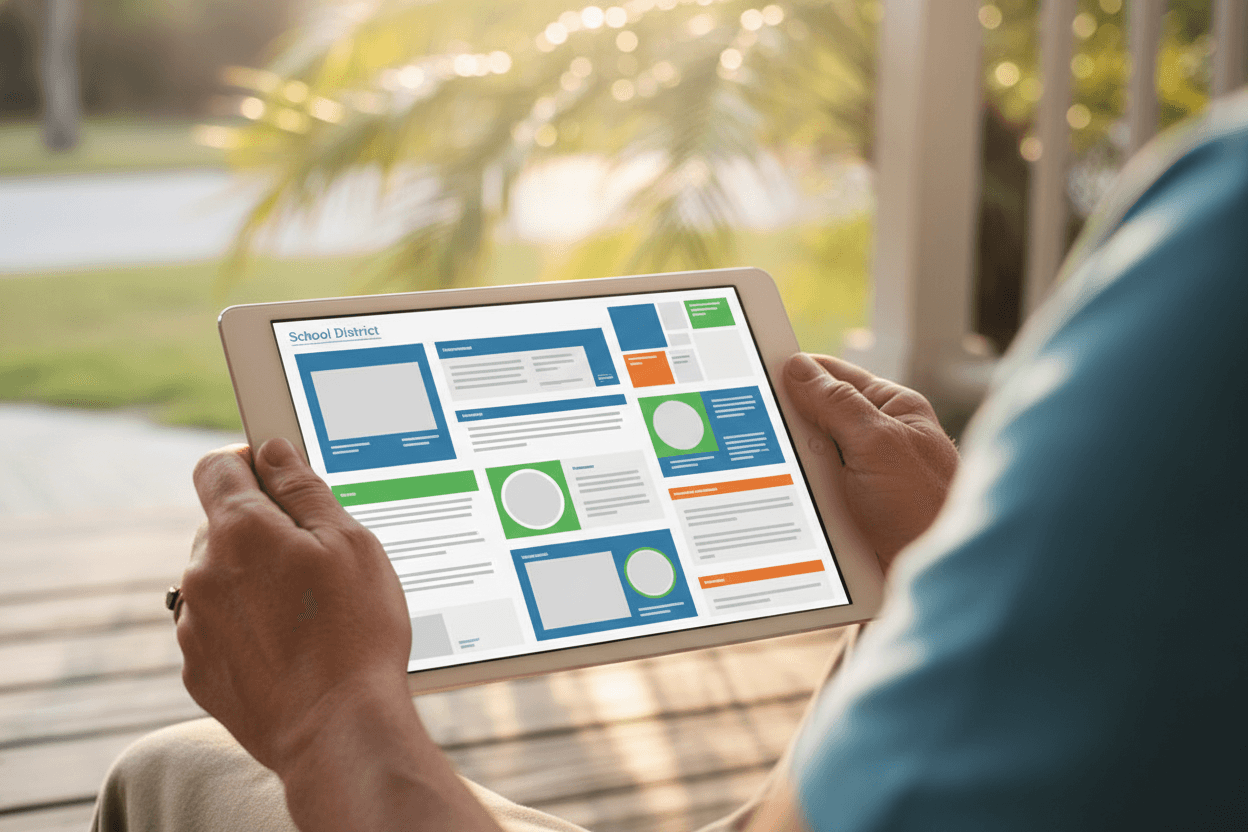
Florida's A through F school grades are the single most visible accountability measure in the state. They show up on real estate listings, in news headlines, on FLDOE's public dashboard, and in the conversations parents have at soccer practice the week the grades come out. A superintendent who lets that conversation happen without a clear district communication is letting someone else write the narrative.
Here is what makes a Florida school grades newsletter actually work.
Send within 48 hours of the FLDOE preliminary release
The preliminary grades are the news. Final grades come later, after the appeals window, but by then the story is two news cycles old. Plan to send your district's school grades newsletter within 48 hours of the preliminary release.
Have the structure pre-built. Have the principal letters drafted in template form. The only thing missing on release day should be the letter grades themselves, which you slot in and send.
Show the full district picture in one table
The most useful thing the newsletter can do is give families a single table with every school in the district and its current grade and prior year grade. Two columns next to the school name. That is the answer to the question every family actually has.
Districts that bury this in a link send a signal that they are uncomfortable with the data. Districts that put it in the body of the newsletter signal confidence and transparency, regardless of what the grades actually are.
Address the schools whose grades changed
After the table, add two or three sentences for each school whose grade changed from last year, up or down. For grade increases, name what drove it. For grade drops, name what drove it and what the response is.
"Lakeside Elementary moved from a B to a C this year. The decline came from lower-than-expected learning gains in math at grades 4 and 5. Principal Garcia is adding a math intervention block at those grade levels starting in August and has shifted Title I tutoring to math from reading for the upcoming year."
Explain how Florida calculates the grade, briefly
Florida's school grade formula combines achievement, learning gains, and graduation rate (for high schools), with extra weight on the lowest-performing 25% of students. Most families do not know this. A short paragraph explaining the formula gives context without turning the newsletter into a policy briefing.
Two or three sentences is enough. Link to FLDOE's public methodology for families who want the full version.
Talk about subgroup performance
The school grade itself does not show subgroup gaps, but the underlying data does. If your district has significant gaps for English learners, students with disabilities, or economically disadvantaged students, name those gaps in the newsletter even though they do not appear in the headline grade.
Florida law and federal civil rights law both create real obligations around subgroup performance. Communicating about the headline grade without mentioning subgroups is the kind of omission that ends up in legal review later. Better to address it now.
Connect to the district's strategic goals
Families want to see the grades inside a bigger picture. If the district has a five-year strategic plan that lists academic targets, reference where the current results sit relative to those targets. "Our 2030 goal is to have every elementary school at a B or higher. We are at 7 of 11 schools at B or higher today, up from 4 of 11 three years ago."
That kind of framing helps families see motion, not just a snapshot.
Pair with campus-level principal communications
The district newsletter handles the district-level picture. Principals send campus-specific communications the same week, ideally within 72 hours of the district send, with detail about their school's grade, the underlying components, and the campus response plan.
Daystage keeps district and campus newsletters under one branded system, so families do not feel like they are getting five different versions of the same news. The superintendent's voice and the principal's voice fit inside the same conversation.
What to do next
Build the school grades newsletter template before July. Pre-write the principal follow-up template. Set up your distribution list. When FLDOE drops preliminary grades, you will be sending within hours, and the community's first impression of the results will be the district's framing, not a TV station's.
Get one newsletter idea every week.
Free. For teachers. No spam.
Frequently asked questions
When does Florida release annual school grades?
FLDOE typically releases preliminary school grades in early July, with final grades following after appeals. The newsletter should go out within 48 hours of the preliminary release, not the final. Waiting for finals means waiting through three weeks of news coverage that is shaping the narrative without your district's voice in it. Address the preliminary results, then send a brief follow-up if final grades change anything material.
How do you communicate a school grade drop without sounding defensive?
Name the drop in the first sentence. State the new grade and the prior year's grade. Then give the specific reason your data team identified, then the response. The temptation to lead with how the grading formula changed or why the metric is flawed is strong. Resist it. Families read defensiveness as denial. They read directness as competence.
Should the newsletter cover all schools or just the ones whose grades changed?
Cover all schools at the district level, with grades listed clearly. Families have students at multiple campuses, and they want one place that shows the full picture. Then highlight the schools whose grades moved (up or down) with two or three sentences each. Sending separate newsletters per campus on grade results creates fragmentation right when families need clarity.
How do we handle a district where results vary widely by school?
Acknowledge the variance directly in the introduction. Florida districts often have A schools and D schools in the same zip code. Pretending the district-wide picture is uniform is the kind of thing families notice immediately. Name the disparity, name what the district is doing about it, and link to school-specific principal communications for campus-level detail.
What is the right newsletter tool for a Florida district during grade release week?
Daystage handles district-wide sends to thousands of families and renders cleanly in Gmail and Outlook, where Florida parents actually open email. It also lets the superintendent send the district-level grade communication and have each principal send a campus-specific follow-up the same week without breaking branding consistency. During grade release week, the speed and the consistency are what families remember.

Adi Ackerman
Author
Adi Ackerman is a former classroom teacher and curriculum writer with 8 years in K-8 schools. She writes about school communication, parent engagement, and what actually works in real classrooms.
More for State Guides
Ready to send your first newsletter?
3 newsletters free. No credit card. First one ready in under 5 minutes.
Get started free