

Seventh Grade SEL Newsletter: Sections That Work Each Week
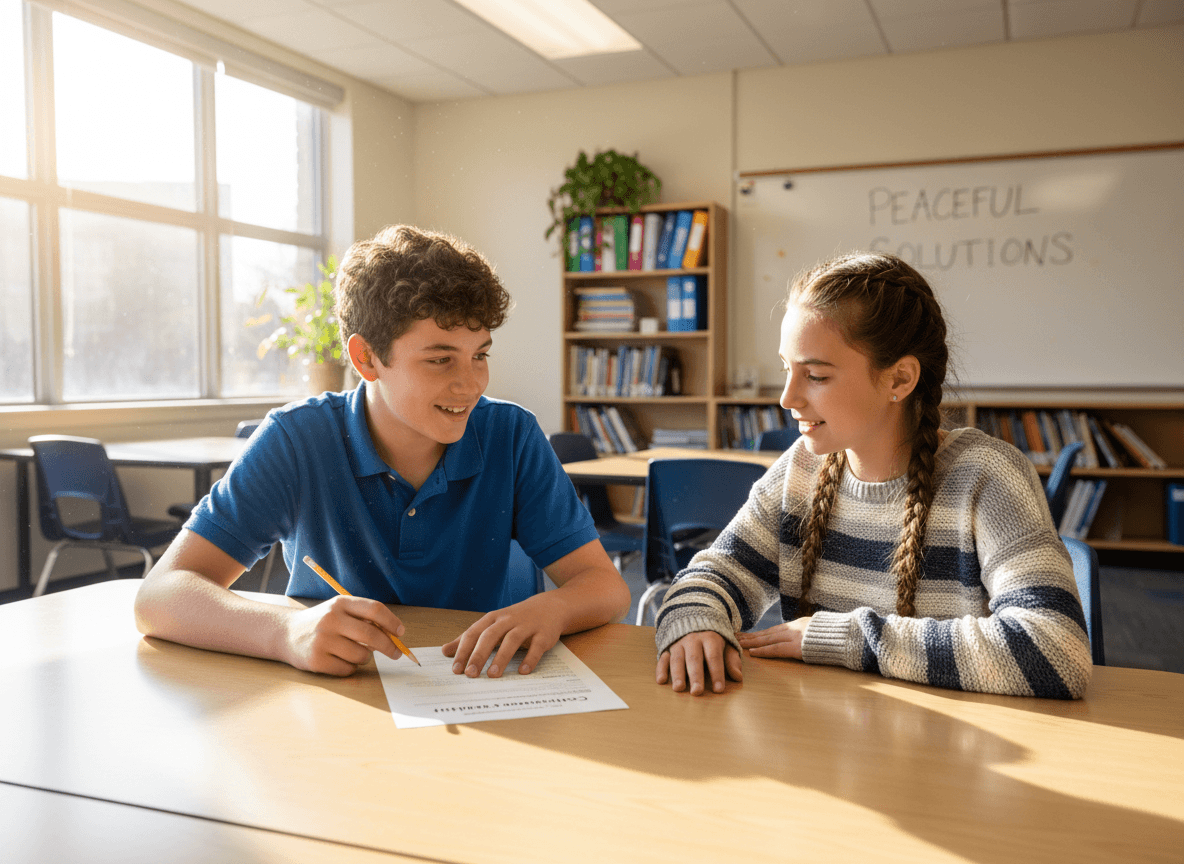
Seventh grade is the year peer mediation actually works, social media starts running the emotional life of the class, and a slice of the kids start treating every grade like a verdict. A seventh grade SEL newsletter has to hold all three without flinching. Parents of seventh graders are watching closely again because their kid has stopped narrating the day. The newsletter is often the only window they have into what their child is actually navigating.
Lead with the peer mediation routine
Seventh graders can sit across from each other, take turns speaking, paraphrase what they heard, and arrive at something close to a resolution. The routine is worth describing in detail in your first newsletter of the year. "When two students have a real conflict, they sit with a third student trained as a mediator. They each say what happened. They paraphrase what they heard. They name what they need. Most conflicts resolve in 20 minutes."
Name the social media pattern of the month
Most seventh grade conflicts now start in a group chat over the weekend and arrive at school as a fight on Monday. Describe the pattern. "Three of the conflicts we mediated this month started in group chats. The chat blew up Friday night. The kids walked in Monday already upset. We worked backward to figure out what happened." Parents read that and understand what their kid's phone is doing without being told.
Flag perfectionism early
Some seventh graders start tying their self-worth to grades in a way that is new this year. One short section names it. "If your child is suddenly distraught about a single grade, crying over a 92, you are not the only family. We are talking about it in advisory. The line we are practicing is 'a grade is information, not a verdict.'" That sentence gives parents the language they did not know they needed.
The 'are you OK' question
Seventh graders stop answering 'how was your day' honestly. They have other phrasings that work better. "Is there anything on your mind?" "Anything weird happen today?" "Who did you sit with at lunch?" One section of the newsletter can offer parents a different question. Specific. Used once. That is enough.
One example: a 200-word section
The mediation pattern this month was the group-chat fallout. Two cases were resolved in advisory within 20 minutes each. One case took two sessions because the chat involved students outside the class. In each case, we used the same routine. Each student said what happened. Each paraphrased what they heard. Each named what they needed. The hard part was the paraphrasing. Seventh graders are not used to repeating back what someone just said. That is the skill we kept practicing.
At home, you can build this skill by paraphrasing what your child says when they tell you about their day. "So you are saying your friend was the one who started the rumor, and now no one is sure who to believe?" That kind of mirror tells your kid you actually heard them.
Subject lines that earn the open
"What we mediated this month and what it taught us" beats "Seventh Grade Update" every time. Specific subject lines more than double the open rate at this age. Parents are skeptical of generic communication by seventh grade. Give them a reason to click.
How Daystage helps with seventh grade SEL newsletters
Daystage has a seventh grade advisory template with mediation routine, social media pattern, perfectionism flag, and home prompt as preset sections. You type five or six lines of notes. Daystage drafts the newsletter in plain language with a subject line that earns the open. The advisory roster lives in one place. One click sends. Most advisory teachers spend 15 minutes per issue.
Get one newsletter idea every week.
Free. For teachers. No spam.
Frequently asked questions
Does peer mediation actually work in seventh grade?
Yes, better than at any other age. Seventh graders have enough verbal skill to articulate a conflict and enough remaining willingness to listen. By eighth grade, they get more guarded. By sixth, they are not quite there yet. Seventh is the sweet spot. A newsletter that names the peer mediation routine in plain language helps parents understand why their kid is suddenly using words like 'paraphrase' at the dinner table.
How do you write about social media without lecturing parents?
Describe what you see at school, not what you think parents should do at home. 'We had three group-chat issues come into school this month. In each, the chat blew up over the weekend and arrived at school as a fight on Monday.' Parents read that and draw their own conclusions about the phone in the hallway. The lecture pushes them away. The pattern does not.
What is the perfectionism flag in seventh grade?
Some seventh graders, especially high-achieving girls, start tying their self-worth to grades in a way that did not exist in sixth. A 92 on a test feels like a failure. They study to the point of not sleeping. The newsletter can name this once. 'If your child is suddenly distraught over a single grade, you are not the only family seeing this. We are talking about it in advisory.' That sentence does more than any handout.
What length works for a seventh grade SEL newsletter?
500 to 600 words. Parents of seventh graders are paying attention again because their kids stopped telling them things. They will read a longer newsletter if the content is real. Keep it tight, keep it specific, and do not pad.
Can Daystage handle a weekly seventh grade SEL newsletter?
Daystage has a seventh grade advisory template with the sections preset. You type five or six lines of notes. Daystage drafts the newsletter. Most advisory teachers send weekly or biweekly. Sending to the advisory roster takes one click. Spend 15 minutes per issue.

Adi Ackerman
Author
Adi Ackerman is a former classroom teacher and curriculum writer with 8 years in K-8 schools. She writes about school communication, parent engagement, and what actually works in real classrooms.
More for Social-Emotional Learning
Ready to send your first newsletter?
3 newsletters free. No credit card. First one ready in under 5 minutes.
Get started free