

SEL Newsletter for Suicide Prevention Week: A Careful Template
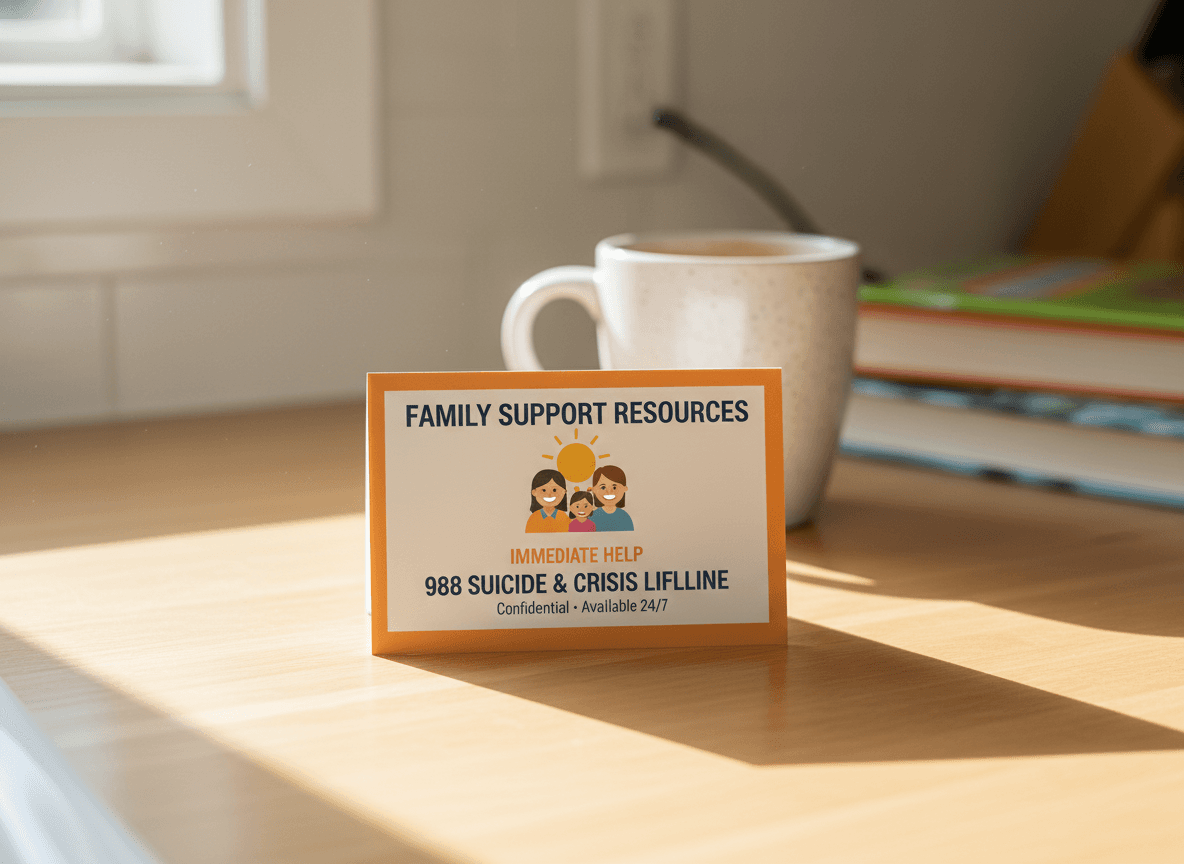
This is the hardest newsletter to write. The temptation is to skip it or to soften it so much that it says nothing. Both are mistakes. National Suicide Prevention Week is one of the few times each year that schools can send a careful, plain note to families that names the topic, shares the lifeline, and tells parents how to talk with their kids. Done right, it saves lives. Done wrong, it causes harm. The difference is care and language.
Coordinate before you send
Before you draft this newsletter, talk with your school counselor and your administration. They may already have approved language, a district policy, or a community resource list. Use it. This is not the newsletter to write alone on a Sunday night. It goes through review.
Lead with the lifeline
Put the 988 Suicide and Crisis Lifeline in the first paragraph. Not at the bottom. A parent who is reading this newsletter because their family is in a hard place needs the number now, not after four paragraphs of context. The line reads: "If you or someone in your family is having thoughts of suicide, call or text 988. It is free, confidential, and available all day, every day."
Use safe language
Use "died by suicide," not "committed suicide." The word committed dates back to when suicide was a crime, and it still carries blame. Skip method descriptions entirely. Skip phrases that frame suicide as a choice or a solution. Skip dramatic statistics. These are the Reporting on Suicide guidelines, written by researchers who have studied how language affects outcomes. Schools follow them too.
What the school is doing
Tell parents the specific supports the school has in place. A counselor on site. A clear referral path for any student a teacher or family is worried about. A check-in system for any student who has been through a loss. A staff training on recognizing warning signs. Naming the supports tells parents the adults around their child are paying attention.
Warning signs, briefly
Keep this section short and plain. Tell parents to pay attention to a child who talks about wanting to die, says they are a burden to others, gives away things that matter to them, withdraws from friends or activities, has big mood changes including a sudden calm after a long hard stretch, changes sleep or appetite, or seems newly hopeless. Any one of these is a reason to ask, listen, and reach out. Do not list every possible sign. The point is to give parents enough to notice the pattern, not to turn them into diagnosticians.
How to talk at home
Tell parents the most useful thing they can do is ask directly. Research shows that asking does not plant the idea. The honest question is the right one. "Are you having thoughts of suicide?" If the answer is yes, the next move is to listen, stay calm, and call 988 together or reach out to the school counselor. If the answer is no, the conversation is still useful, because the kid now knows it is a question their parent can ask without falling apart. That alone changes the home.
Tell parents to avoid two reactions: panic and minimizing. Panic teaches the kid that the topic is too big for the adults around them. Minimizing teaches them not to bring it up again. The right response is calm presence and the next step, which is a phone call.
A short example, for parents
Here is what a real conversation can sound like:
A parent in our community shared this last year. Her ninth grader had been quieter than usual. One night at dinner she asked, plainly, "are you having thoughts of hurting yourself?" He said yes. She did not panic. She said, "thank you for telling me." They called the school counselor the next morning and 988 that same night. He is now in regular care. She said the asking is the part she almost did not do.
If your family has lost someone
Include one short line for families who are grieving. "If your family has lost someone to suicide, our counselor is available to talk with you and your child. You are not alone in our school community." That line tells grieving families that the school knows they exist. It is small. It matters.
Resources
List three: the 988 Suicide and Crisis Lifeline, the Crisis Text Line (text HOME to 741741), and the school counselor's name and email. Three resources are enough. A long list of links sends the message that the parent is on their own. Three contacts tell them where to start.
How Daystage helps with Suicide Prevention Week newsletters
Daystage has a Suicide Prevention Week template that follows safe messaging guidelines, leads with 988, includes the warning signs list, the how-to-talk-at-home section, and a short resource block. The template was reviewed for language before it went into the product. You add the school counselor's name and any local resources. The draft is ready for review by your administration in under ten minutes.
Get one newsletter idea every week.
Free. For teachers. No spam.
Frequently asked questions
When should this newsletter go home?
Send it the first day of National Suicide Prevention Week in September. Send a parallel version to families during the school year if a community event makes it relevant, but always coordinate with the school counselor and administration before sending.
Is it safe to send this newsletter to elementary families?
Yes, with care. The goal is to give parents the language and the resources, not to introduce the topic to young children. The newsletter goes to parents. It is not classroom content. Frame it as a family resource and skip details that would be inappropriate for a child to read over a parent's shoulder.
What language should we avoid?
Do not use 'committed suicide.' Use 'died by suicide.' Do not describe methods. Do not romanticize. Do not present suicide as a solution to a problem. These are the Reporting on Suicide guidelines, written by researchers, and they apply to school communications too.
What are the warning signs parents should know?
Talking about wanting to die or feeling like a burden. Withdrawing from friends and activities. Giving away belongings that matter to them. Big mood changes, especially a sudden calm after a hard stretch. Changes in sleep or appetite. Increased anger or hopelessness. Tell parents that any one of these is a reason to ask directly, listen, and reach out to the school counselor or 988.
Can Daystage help draft this newsletter?
Daystage has a Suicide Prevention Week template built from safe messaging guidelines, with the 988 line, the warning signs list, and the how-to-talk-at-home section already in place. You add the counselor's name and any school-specific resources. The template is reviewed for safe language before it goes into the product.

Adi Ackerman
Author
Adi Ackerman is a former classroom teacher and curriculum writer with 8 years in K-8 schools. She writes about school communication, parent engagement, and what actually works in real classrooms.
More for Social-Emotional Learning
Ready to send your first newsletter?
3 newsletters free. No credit card. First one ready in under 5 minutes.
Get started free