

SEL Newsletter Before State Testing: A Working Template
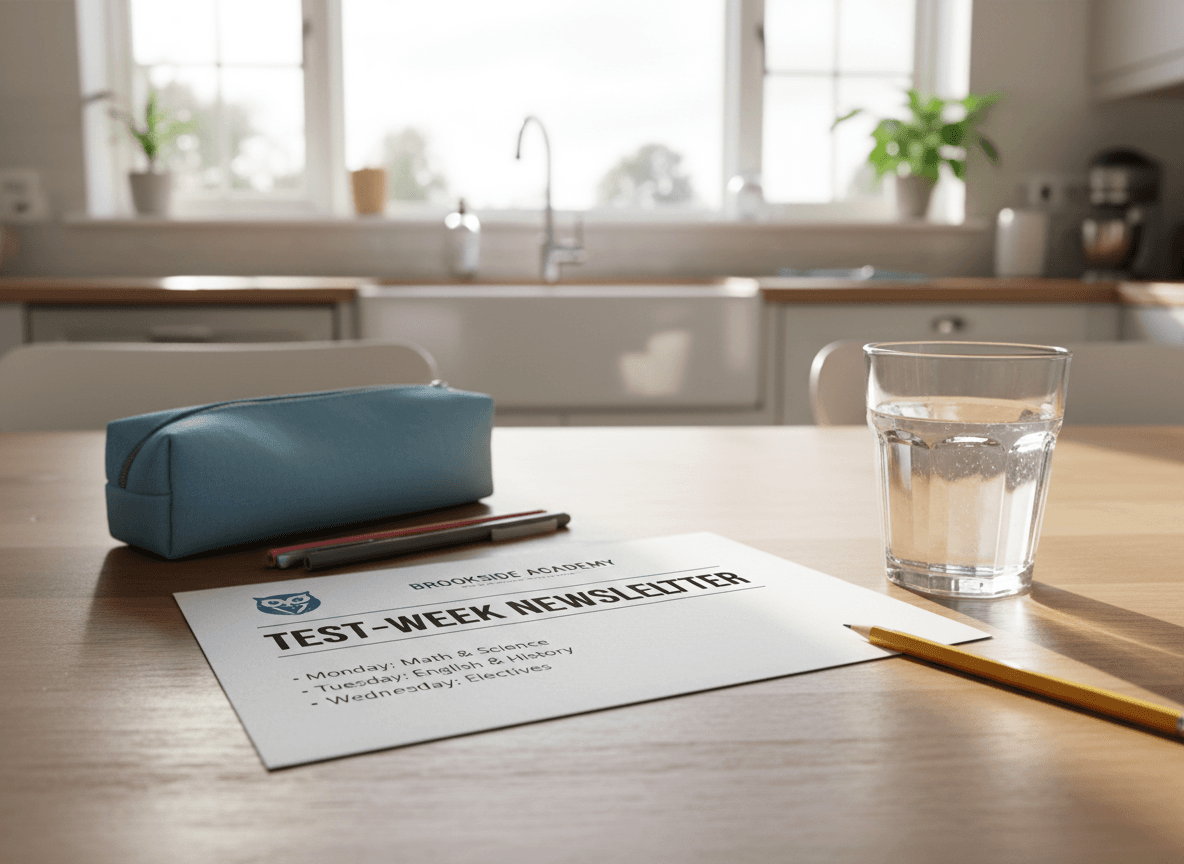
The week before state testing is the week parents need the most from a teacher and usually get the least. Schools go quiet on communication because everyone is busy prepping. Meanwhile families are guessing whether to push extra study, pull back, or pretend nothing is happening. A short SEL newsletter solves that. It tells parents what the test is, what the school is doing about anxiety, and what to do at home for three nights.
Lead with the calendar, not the curriculum
Open with the dates. "State testing in our class runs Tuesday through Thursday next week. Tuesday is reading. Wednesday is math. Thursday is a make-up day for anyone absent." That is it for the logistics. Parents will read three sentences carefully. They will skim thirty. Get the practical information into the first paragraph.
The three-day countdown
The body of the newsletter is a simple three-day plan parents can follow. Sunday night: lights out thirty minutes earlier than usual, screens off the hour before bed, water bottle and a sweater set out by the door. Monday night: same bedtime, a normal dinner with protein, and a five-minute walk after dinner if the weather holds. Tuesday morning: breakfast with protein, no rushed phone scrolling in the car, a calm goodbye at the door. Repeat the pattern through the week.
Parents follow specific instructions. They do not follow "make sure your child is rested and ready." Give them the actual bedtime.
The breathing exercise we have been practicing
Teach parents the same breathing pattern the class has been using so the language at home matches the language at school. The simplest version is box breathing: in for four counts, hold for four, out for four, hold for four. Two rounds. Tell parents the kids already know it. Their job is to ask their child to teach it to them on Sunday night. That puts the child in charge of a calming tool, which is the whole point.
The line that matters: you are more than this test
Give parents the exact sentence to say at drop-off on testing mornings. "You are more than this test. Try your best. I will see you after school." Three short lines. No pep talk. No reminder about showing what they know. The pep talk raises pressure. The simple line lowers it.
What not to say this week
Include a short block on phrases that backfire, even when parents mean well. Skip "this test decides your future." Skip "I always struggled with math too, so do not worry if you do." Skip "if you do well, we will get ice cream." Tying reward to score teaches kids that the number is what matters. The school is teaching that effort is what matters. Keep the messaging consistent.
A short example
Here is what a parent section looks like in practice:
Maya came in yesterday morning with her water bottle and her breathing card already in her pocket. She said her dad asked her to teach him the four-count breath on Sunday. He learned it. They did one round together before school. That is exactly what we hoped families would do this week, and it is why she walked in calm.
What the school is doing on test days
Tell parents the specific supports already in place. A two-minute breathing exercise before each session. Water on every desk. A quiet signal a student can use to step out for one minute with the counselor if needed. Snacks between sessions. Naming the supports out loud makes parents trust that the adults have thought it through, which is half the calming work.
How Daystage helps with test-week newsletters
Daystage has a test-week template that fills in around the same three-day countdown structure. You add the test name, the dates, and a sentence or two about your class. Daystage drafts the rest in plain language, including the breathing exercise block and the what not to say list. You read it, edit one or two sentences, and send it home Friday afternoon. The whole process takes under ten minutes.
Get one newsletter idea every week.
Free. For teachers. No spam.
Frequently asked questions
When should the test-week SEL newsletter go home?
Send it the Friday before testing week or the Monday morning of testing week. Friday is better. It gives parents the weekend to talk through sleep, breakfast, and breathing without it feeling rushed on a Monday morning.
Should the newsletter mention the test itself?
Yes, in plain terms, and once. Name the test, name the days, name the subjects being tested. Then move on. The rest of the newsletter is about how to help the child stay rested, fed, and calm. Parents do not need the standards list. They need to know when to put their kid to bed.
What if a parent is worried their child will fall apart on test day?
Acknowledge that test anxiety is common and real. Name two things the school is doing about it: breathing breaks before each session and a quiet check-in with the teacher for any student who needs one. Then give the parent one thing they can do at home, like a five-minute walk after dinner the night before.
Is it okay to say the test does not matter?
No. Kids hear that and translate it as 'the adults around me are nervous and pretending it is fine.' The honest line is closer to: this test is one part of your year, your teachers already know what you can do, and your job is to show up rested and try your best. That is true and steady.
Can Daystage help draft the test-week newsletter?
Daystage has a test-week template with the three-day countdown, the what-not-to-say block, and the breathing exercise built in. You add the test name, the dates, and any classroom-specific notes. It drafts the full newsletter in your voice in under ten minutes.

Adi Ackerman
Author
Adi Ackerman is a former classroom teacher and curriculum writer with 8 years in K-8 schools. She writes about school communication, parent engagement, and what actually works in real classrooms.
More for Social-Emotional Learning
Ready to send your first newsletter?
3 newsletters free. No credit card. First one ready in under 5 minutes.
Get started free