

Weekly Science Newsletter: A Five-Minute Template
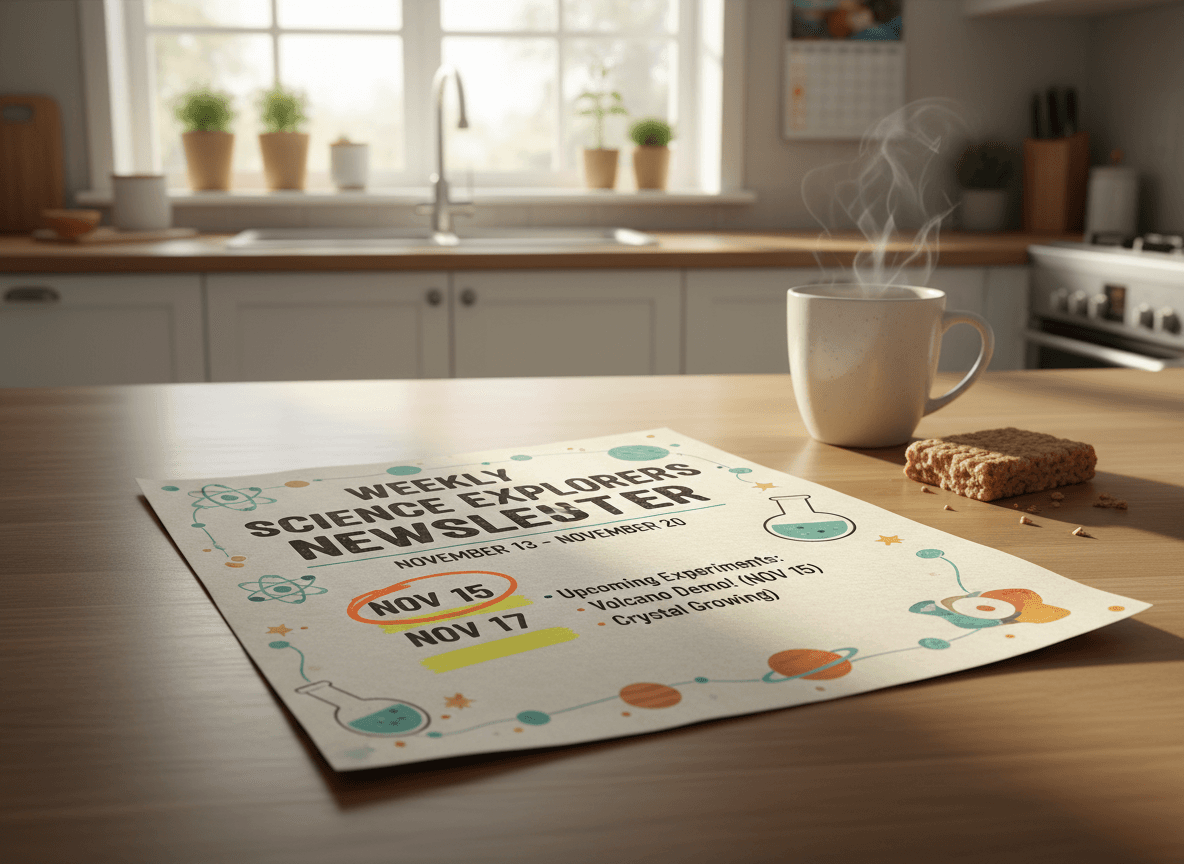
A weekly science newsletter only works if you can write it in five minutes. Any longer and you will skip a week, the streak breaks, and parents stop expecting to hear from you. This template is built for the Sunday evening when you have a glass of wine and ten minutes between dinner and a movie. Four sections, fill in, send. That is the whole system.
Section 1: What we did this week
Two sentences. Name the topic and one specific thing students did. "We started the ecosystems unit. Students built food web diagrams using cards for ten local species and figured out what happens when one species disappears." Plain. Specific. Parents now know what to ask about at dinner.
Section 2: What is coming next week
Two or three lines. Name the topic and any dates. "Next week we move into population dynamics. Lab on Wednesday looking at predator-prey data from Isle Royale. Quiz on food web vocabulary on Friday." Parents who see dates put them on the calendar. Parents who do not, do not.
Section 3: The heads-up line
One sentence, bold. "Heads up: lab permission slip due Monday morning if it has not come back yet." Or "Heads up: no action needed from parents this week." Always include this line, even when there is nothing to flag. Parents scan for it. The week you skip it is the week half of them call.
Section 4: One thing parents can do at home
One short line, optional but valuable. "Take a walk in the backyard and count how many different living things you can see in five minutes. Bring the number to school on Monday." Ten minutes, no supplies, doable on a weeknight. Skip this section in weeks when you have nothing good.
Sample paragraph: a full weekly newsletter
Here is what a full weekly newsletter looks like, start to finish:
This week: We started the ecosystems unit. Students built food web diagrams using cards for ten local species.
Next week: Population dynamics. Lab on Wednesday using Isle Royale predator-prey data. Quiz on food web vocabulary on Friday.
Heads up: Lab permission slip due Monday morning if it has not come back yet.
Try at home: Take a 5-minute walk and count how many different living things you see. Bring the number Monday.
What to leave out
Everything that does not fit in those four sections. Long unit philosophy. Anecdotes that need setup. Detailed reading recommendations. Save those for the once-a-month longer newsletter or the parent conference. The weekly is a quick scan that respects the parent's inbox. If it stretches past eight lines, cut.
How Daystage helps with weekly science newsletters
Daystage lets you save the four-section weekly template as a draft, duplicate it every Sunday in two clicks, fill in the four short sections in five minutes, and schedule the send for Monday morning. The streak holds because the friction is zero. Track open rates to see which weeks landed and which got buried. Reuse the shell all year.
Get one newsletter idea every week.
Free. For teachers. No spam.
Frequently asked questions
How long should a weekly science newsletter take to write?
Five minutes. Anything longer and you will skip a week, then two, then drop it. The template forces a five-minute version because all four sections are short and you wrote three of them in your head already. Sunday evening, five minutes, send.
When should it go out?
Sunday evening so it lands at the top of the parent inbox Monday morning. Mid-week sends get buried. Friday sends get ignored over the weekend. Sunday at 6pm or Monday at 6am are the only two times that work. Pick one and stick to it.
What is the heads-up line?
One sentence flagging anything that needs parent action this week. 'Permission slip for the Tuesday lab is due Monday morning.' Or 'No heads-up this week, all set.' Parents scan for this line. Without it they re-read the whole newsletter looking for what they missed.
What should be left out?
Everything that does not fit in four sections. Long unit explainers, philosophy of teaching, anecdotes that need three paragraphs of setup. Save those for the once-a-month newsletter. The weekly is a quick scan, not a magazine.
Can Daystage automate a weekly science newsletter?
Yes. Daystage lets you save the four-section weekly template as a draft, duplicate it every Sunday, fill in the four short sections in five minutes, and schedule the send for Monday at 6am. Track open rates so you know which weeks landed and which got buried.

Adi Ackerman
Author
Adi Ackerman is a former classroom teacher and curriculum writer with 8 years in K-8 schools. She writes about school communication, parent engagement, and what actually works in real classrooms.
More for Science Newsletter
Ready to send your first newsletter?
3 newsletters free. No credit card. First one ready in under 5 minutes.
Get started free