

Science Newsletter for STEM Week: Sections to Send
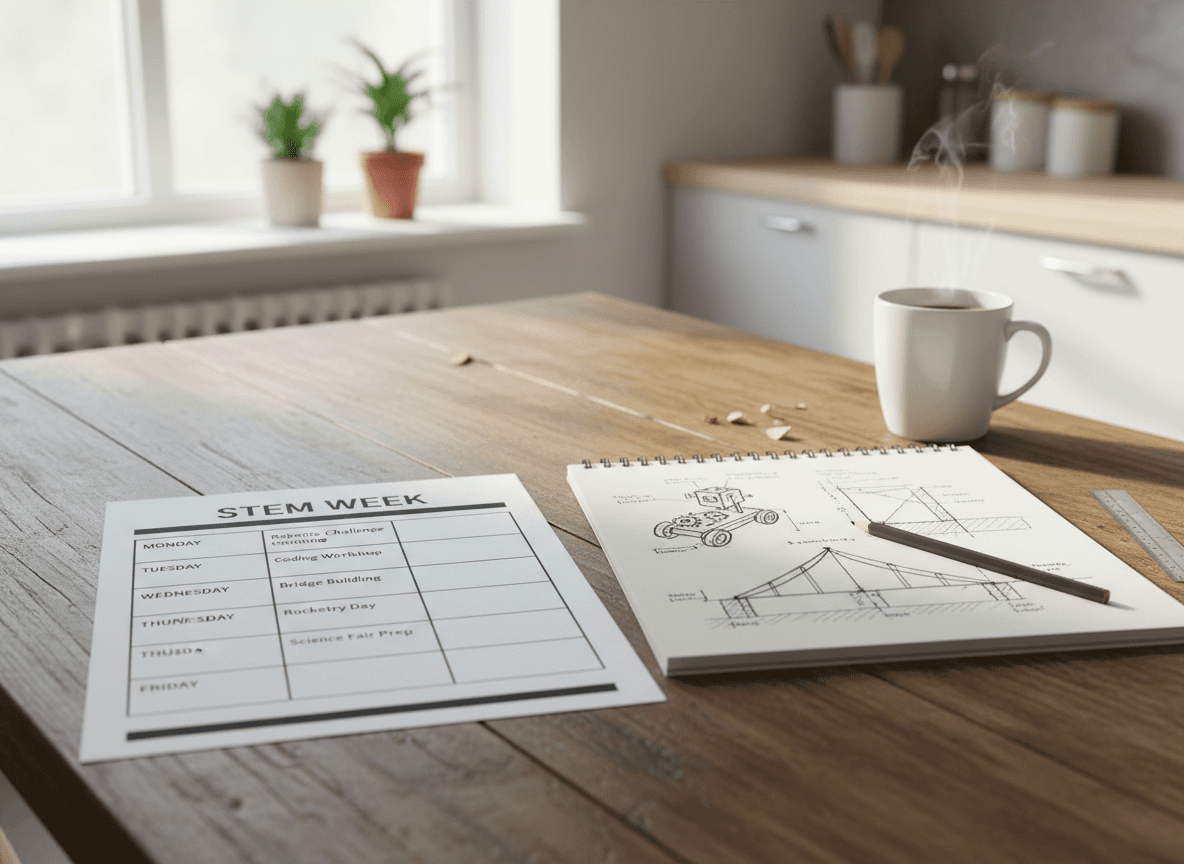
STEM Week works best when parents see it coming, know what their kid will build each day, and have a clear way to participate. The newsletter that delivers all of that is not one long email. It is a sequence of short ones, starting two weeks out. This template walks through the kickoff, the daily recaps, and the final showcase invitation so families stay engaged from Monday through Friday.
Send the kickoff two weeks out
Three sections. The dates. The five-day theme structure. The volunteer ask. "STEM Week runs April 21 to 25. Monday is structures, Tuesday motion, Wednesday water, Thursday code, Friday showcase. We need parent volunteers for the showcase. Reply if you can take a 30-minute slot." Three short sections beat one long paragraph every time.
Name the engineering challenge for each day
One line per day. "Monday: build the tallest free-standing spaghetti tower in 20 minutes. Tuesday: design a ramp-powered car that travels farthest. Wednesday: design a filter that cleans muddy water. Thursday: code a sprite to navigate a maze. Friday: present your favorite build from the week to families." Now parents know what their kid is making and can ask about it at dinner.
Set the volunteer slate clearly
Three asks, specific. "We need eight volunteers to judge the Friday showcase from 1:30 to 2:30. We need four parents to bring in 10 minutes of show-and-tell about their STEM job (engineer, nurse, coder, anything counts). We need donated materials from this list: dry spaghetti, marshmallows, masking tape, paper cups, coffee filters." Specific lists get filled. Vague ones get ignored.
Send a short daily recap
Three to four lines per day, sent at end of day or the next morning. "Monday wrap: the winning spaghetti tower was 47cm. Every team got a build standing for at least 5 seconds. Tomorrow is motion day. Bring closed shoes for the ramp testing." Parents who see daily recaps feel like they are part of the week. Parents who only see the kickoff forget by Wednesday.
Sample paragraph: the kickoff body
Here is what a tight kickoff body looks like in practice:
STEM Week is two weeks away, April 21 to 25. Every day has a theme and an engineering challenge: structures (spaghetti tower), motion (ramp car), water (filter design), code (maze sprite), and showcase. Students work in teams of three. Every team builds, every team tests, every team presents on Friday. Families are invited to the showcase from 1:30 to 2:30 on Friday April 25 in the gym. Light snacks served.
Close the week with the Friday showcase
Send the showcase invitation as a standalone email on the Monday of STEM Week. Date, time, location, what to expect. "Walk through the gym, see every team's build, vote for the people's choice award." Parents who get a separate showcase email RSVP at twice the rate of those who only saw the kickoff two weeks earlier.
How Daystage helps with STEM Week newsletters
Daystage handles the full STEM Week sequence: a two-week-out kickoff, daily recaps with photos pulled from your phone, and a Friday showcase invite that you can schedule to land Monday morning. Build the shell once, reuse it next year by swapping the themes and dates. The whole sequence takes 30 minutes to set up and lifts attendance at the showcase from a quarter to most of the class.
Get one newsletter idea every week.
Free. For teachers. No spam.
Frequently asked questions
When should the STEM Week newsletter go out?
Two weeks before STEM Week starts. Parents need lead time to volunteer for a day, and the kickoff theme works better when families have time to talk about it at dinner. Two weeks out gives you the response rate you need without people forgetting by Monday.
Should each day have a theme?
Yes. Five themes are easier to communicate than five generic days. 'Monday: structures. Tuesday: motion. Wednesday: water. Thursday: code. Friday: showcase.' Parents remember themes. Parents do not remember 'engaging cross-disciplinary STEM activities throughout the week.'
How long should each engineering challenge be?
30 to 45 minutes for elementary, 60 to 90 for middle school. Long enough to design, build, and test. Short enough that every student finishes. The newsletter should name the challenge for each day so families know what their kid is making.
What can parent volunteers actually do?
Run a station for a 30-minute shift, judge the Friday showcase, donate materials from a specific list (no vague 'recyclables'), or come in to talk about their STEM job for 15 minutes. Specific asks get filled. Vague ones do not.
Can Daystage help with STEM Week newsletters?
Yes. Daystage lets you send the kickoff two weeks out, send a daily recap during the week with photos from the day, and send a final Friday email with the showcase invitation. Five emails, reused next year by swapping the themes and dates.

Adi Ackerman
Author
Adi Ackerman is a former classroom teacher and curriculum writer with 8 years in K-8 schools. She writes about school communication, parent engagement, and what actually works in real classrooms.
More for Science Newsletter
Ready to send your first newsletter?
3 newsletters free. No credit card. First one ready in under 5 minutes.
Get started free