

Science Newsletter for a Simple Machines Unit: What to Include
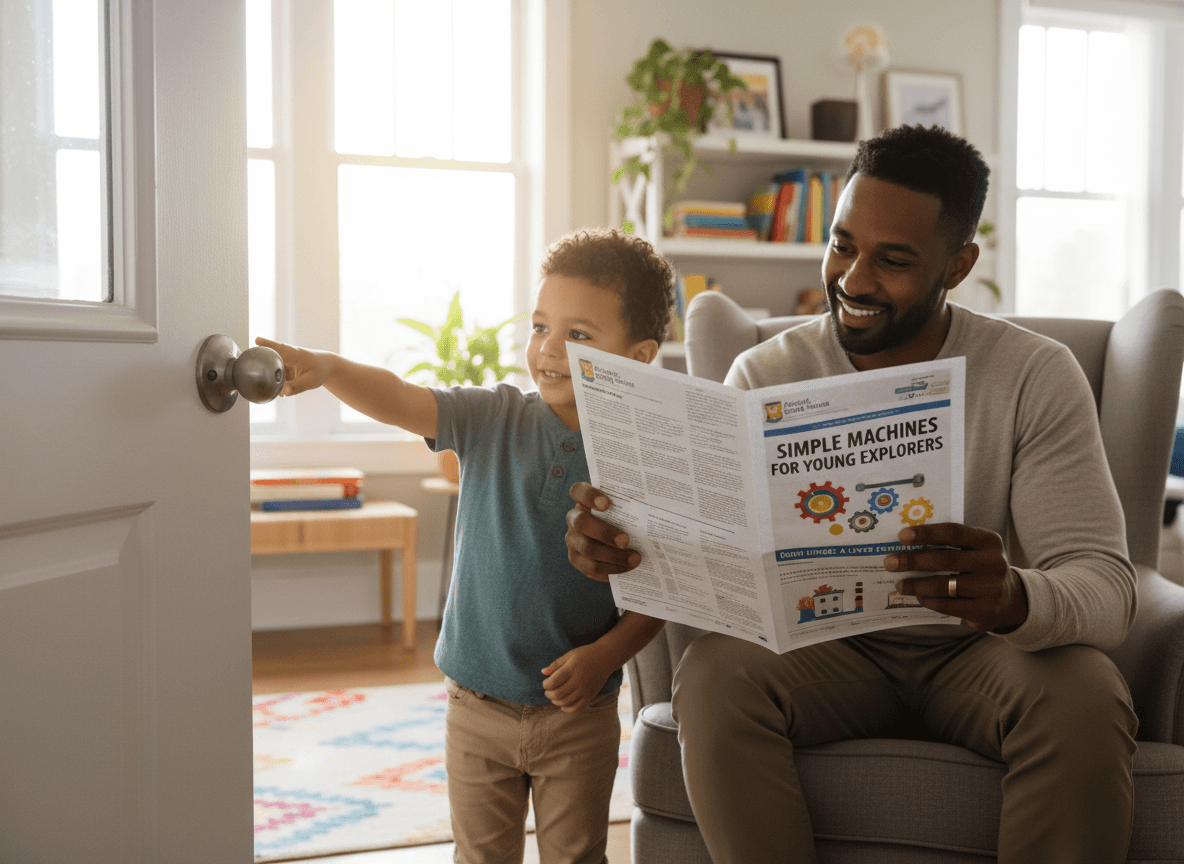
Simple machines is a unit kids genuinely enjoy because it turns the whole house into a science lab. A door hinge, a pair of scissors, a wagon, a ramp. The newsletter just has to name what students are building in class and send them home with a hunt. Five short sections, under 300 words, and parents will read it because the unit is in front of them every time they open the silverware drawer.
Open with what students built
Lead with the activity. "Our fourth graders built three different pulley systems this week and lifted a one-pound weight with each one. The single fixed pulley needed the same effort as lifting the weight directly. The two-pulley system needed about half." A parent reads that and now has the unit in their head.
List the six simple machines with one example each
Lever (seesaw), inclined plane (ramp), wedge (axe head), pulley (flagpole rope), screw (jar lid), wheel-and-axle (wagon). That list is the entire vocabulary section. Parents who read it can ask the kid to find one of each in the kitchen.
Translate mechanical advantage in two sentences
Simple machines do not give you energy for free. They let you trade force for distance. Pushing a box up a ramp means a longer push with less force. Pulling a flag up with a pulley means a longer pull with less force. That is the whole concept fourth graders need.
Send the household hunt home
One activity, 15 minutes. "Walk around the house and find one example of each of the six simple machines. Bring the list to school on Friday." Most homes have more than 20 once you start counting. The activity turns the unit on in a way no worksheet manages.
Template excerpt: a fourth grade pulley week
Here is what a clean issue looks like:
What we did: Built three pulley systems and lifted a one-pound weight with each. The single fixed pulley needed the same effort as lifting by hand. The two-pulley system needed about half.
Vocabulary: The six simple machines: lever (seesaw), inclined plane (ramp), wedge (axe head), pulley (flagpole rope), screw (jar lid), wheel-and-axle (wagon).
At home: Walk around the house. Find one example of each of the six. Bring the list to school Friday.
Coming up: Inclined plane investigation Tuesday. We push the same weight up ramps of different angles.
Mention the scissors-as-two-machines fact
Slip it in once. "Did you know scissors are actually two simple machines combined? Two wedges joined by a lever." Parents repeat it. Kids tell siblings. The unit becomes the conversation at dinner for a week.
How Daystage helps with a simple machines newsletter
Daystage gives you the five-section template ready to fill each week. Drop in the recap, the vocabulary, the household hunt, and what is next. It sends as a real email to your full class list. You can write the next issue from your phone during prep, and it lands clean on every parent's screen.
Get one newsletter idea every week.
Free. For teachers. No spam.
Frequently asked questions
What are the six simple machines and how do I list them for parents?
Lever, inclined plane, wedge, pulley, screw, and wheel-and-axle. List them with one familiar example each. Lever (seesaw), inclined plane (ramp), wedge (axe head), pulley (flagpole rope), screw (jar lid), wheel-and-axle (wagon). That list does more for understanding than any diagram. Parents glance at it and the unit makes sense.
What is the household simple machines hunt?
Send kids around the house looking for one example of each of the six. Door hinge for a lever, scissors for two wedges, kitchen ramp or stairs for an inclined plane. Most homes have at least 20. The activity makes the unit click in a way no worksheet does. Allow 15 minutes and a notebook.
How do I explain mechanical advantage without losing parents?
Simple machines do not give you free energy. They let you trade force for distance. A ramp means you push a heavy box a longer way with less force. A pulley means you pull more rope with less force. That is the whole concept. Skip the math at the fourth grade level.
Are scissors really two simple machines?
Yes. Two wedges joined by a lever. That single fact delights every fourth grader who reads it. Include it in one newsletter. Parents who learn it usually mention it at dinner, which is the whole point of the family communication.
Can Daystage help me build a simple machines newsletter?
Yes. Daystage gives you a five-section template ready to fill with the recap, vocabulary, the family hunt activity, and what is coming. It sends as a real email to your full class list. You can write the next issue from your phone during prep period.

Adi Ackerman
Author
Adi Ackerman is a former classroom teacher and curriculum writer with 8 years in K-8 schools. She writes about school communication, parent engagement, and what actually works in real classrooms.
More for Science Newsletter
Ready to send your first newsletter?
3 newsletters free. No credit card. First one ready in under 5 minutes.
Get started free