
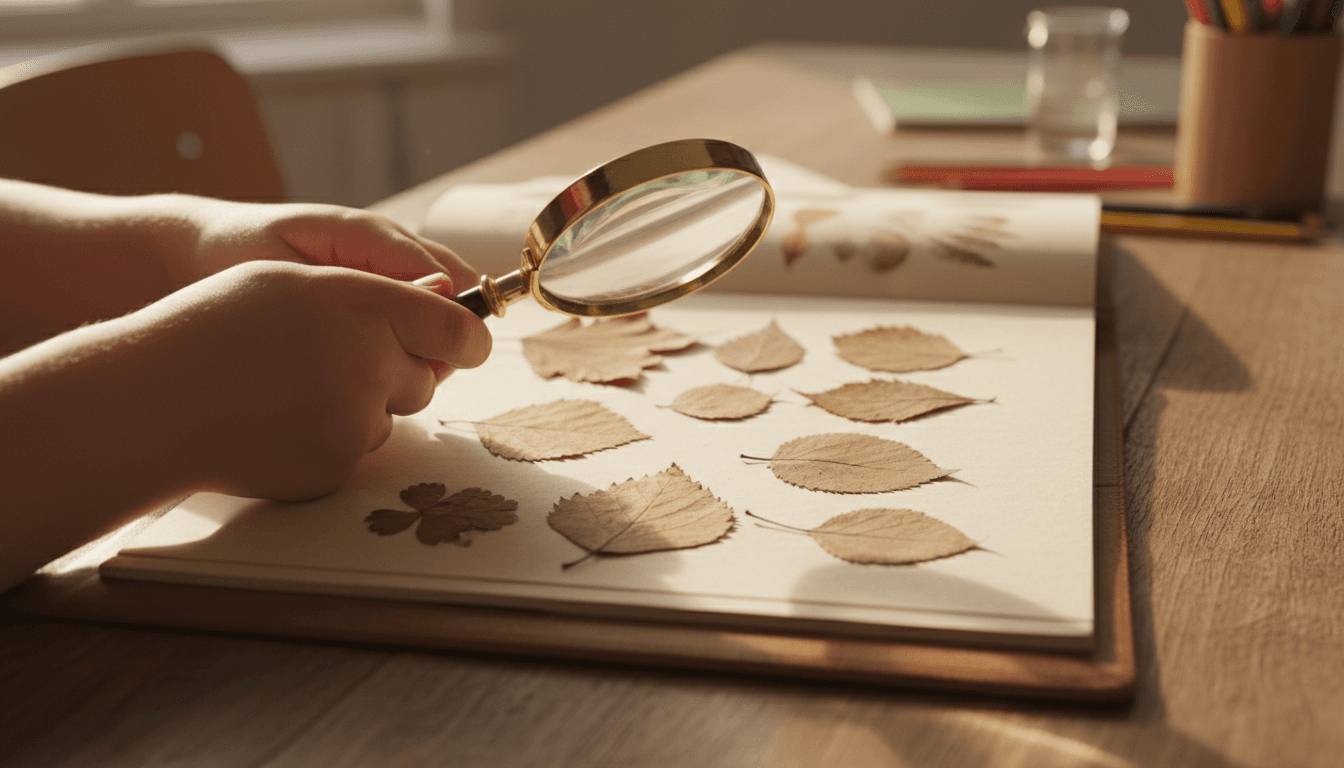
Science Newsletter on Science Notebooks: A Working Template
Parents who grew up with worksheets do not always understand why their kid is gluing things into a marble composition book in science class. The interactive science notebook is one of the best instructional tools of the last 20 years, and one newsletter at the start of the year is all it takes to get parents on board. Once they understand the left-right system, they stop asking about loose papers and start asking what their kid drew last week.
Lead with what the notebook is
Two sentences. "Your student keeps every piece of science work this year in one composition notebook. Notes, lab handouts, sketches, vocabulary, reflections all live in the same book, in order, dated, with a table of contents up front." Now parents know it is not random. It is the whole year, organized.
Explain the left-right page system
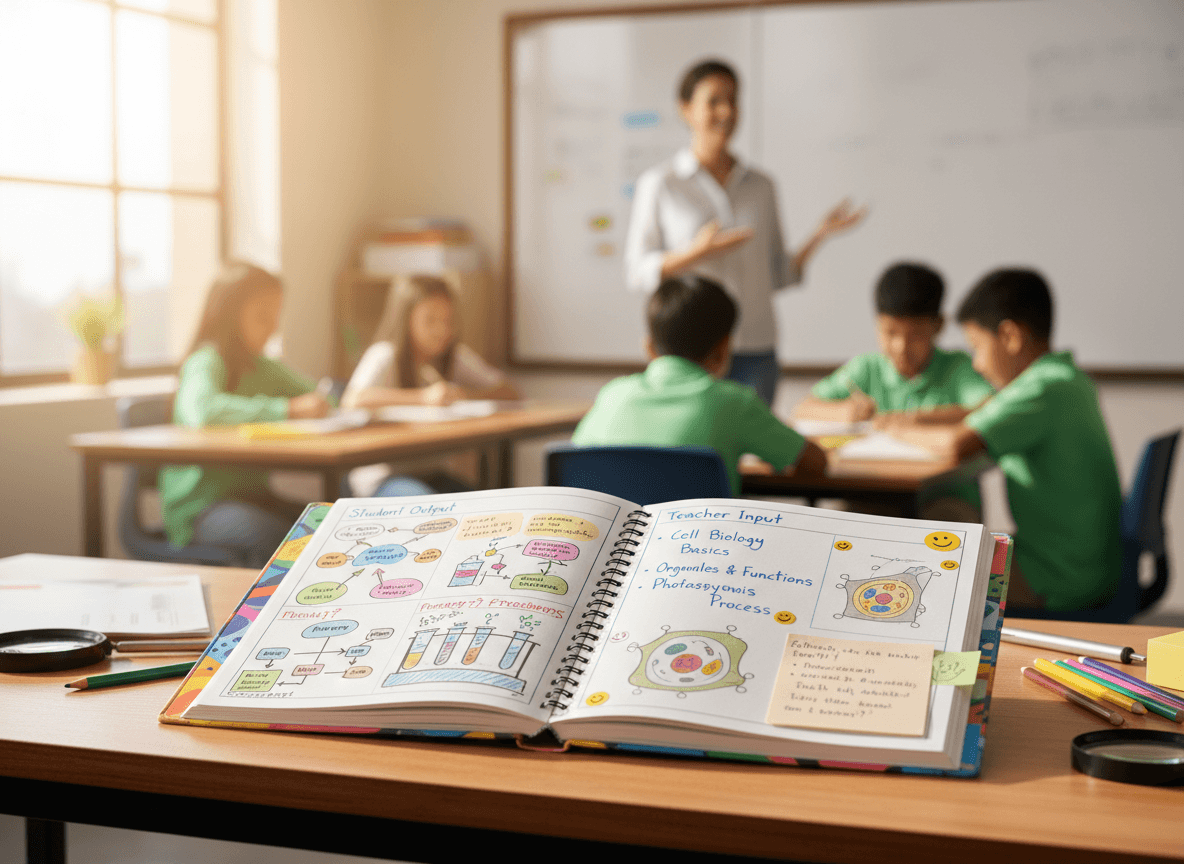
Three short lines. "Right page is teacher input: notes, diagrams, what was taught. Left page is student output: how the student processed it, summarized it, applied it. Right and left always face each other so you can see the connection." Now the notebook makes sense. Pasted handouts go on the right. Student reflections and drawings go on the left.
Name what gets pasted in
Three to five examples. "Lab handouts, graphic organizers, photos of class anchor charts, vocabulary cards, exit tickets." Parents who see a fat notebook full of pasted material understand it is not busywork. It is the year, in one place, with the kid's own thinking next to it.
Say why this beats a folder of worksheets
One paragraph. "A folder of worksheets gets lost piece by piece and goes in the recycling in June. A notebook stays whole all year. Students flip back to past entries during labs and before tests. They use the notebook the way scientists use a lab book." That framing is what parents needed to hear.
Sample paragraph: the parent-facing summary
Here is what a clean parent-facing summary looks like:
Your student's science notebook is the single record of everything they do in this class. Right pages are notes and handouts I give them. Left pages are how they made sense of it: a summary in their own words, a labeled drawing, a question they still have. We use the notebooks every day. We grade them once a month using a checklist that comes home in their folder. You can flip through it any night and see the year so far.
Tell parents what to do at home
One line. "Ask your student to show you something from the notebook this week. That is it. No correcting, no quizzing." The notebook is a conversation tool for parents, not a homework artifact. Parents who try to grade it kill the kid's investment in it. Parents who ask to see it build the habit.
How Daystage helps with science notebook newsletters
Daystage sends the science notebook explainer at the start of the year, attaches a photo of a real notebook page as the content image, and tracks who opened it. The families who did not get a curriculum night reminder. Reuse the newsletter every year by swapping the dates. Twenty minutes to write once. Pays off every parent conference.
Get one newsletter idea every week.
Free. For teachers. No spam.
Frequently asked questions
What is the left-right page system in an interactive science notebook?
The right page is teacher input: notes, diagrams, anchor charts, anything taught directly. The left page is student output: how they processed it, summarized it, drew it, applied it. Both pages always face each other. Parents who get this can flip through the notebook and see what the kid learned and what they made of it.
Why do kids paste things into the notebook?
Because the notebook is a single record of the year. Lab handouts, graphic organizers, photos, vocabulary cards all live in the notebook, not in a folder that loses pieces. Pasting is faster than copying and keeps the notebook complete. Parents who see a fat, well-kept notebook see the whole year of science at a glance.
Do notebooks really beat worksheets?
For science, yes. Worksheets are one-and-done. Notebooks accumulate. Kids review past entries to see how their thinking changed. The notebook becomes a reference they actually use during a lab or before a test. A stack of loose worksheets gets recycled in June.
What should parents do with the notebook at home?
Look at it. Ask one question per week: 'show me something you did this week.' That is the whole job. The notebook is a conversation starter, not a homework artifact. Do not try to grade it or correct it. The teacher does that. Parent's job is interest.
Can Daystage send a science notebook newsletter?
Yes. Daystage lets you send the notebook explainer at the start of the year, attach a photo of a sample notebook page as a content image, and reuse the newsletter every year. Track who opened it and follow up at curriculum night with the families who missed it.

Adi Ackerman
Author
Adi Ackerman is a former classroom teacher and curriculum writer with 8 years in K-8 schools. She writes about school communication, parent engagement, and what actually works in real classrooms.
More for Science Newsletter
Ready to send your first newsletter?
3 newsletters free. No credit card. First one ready in under 5 minutes.
Get started free