

Science Newsletter for a Rocks and Minerals Unit: A Template
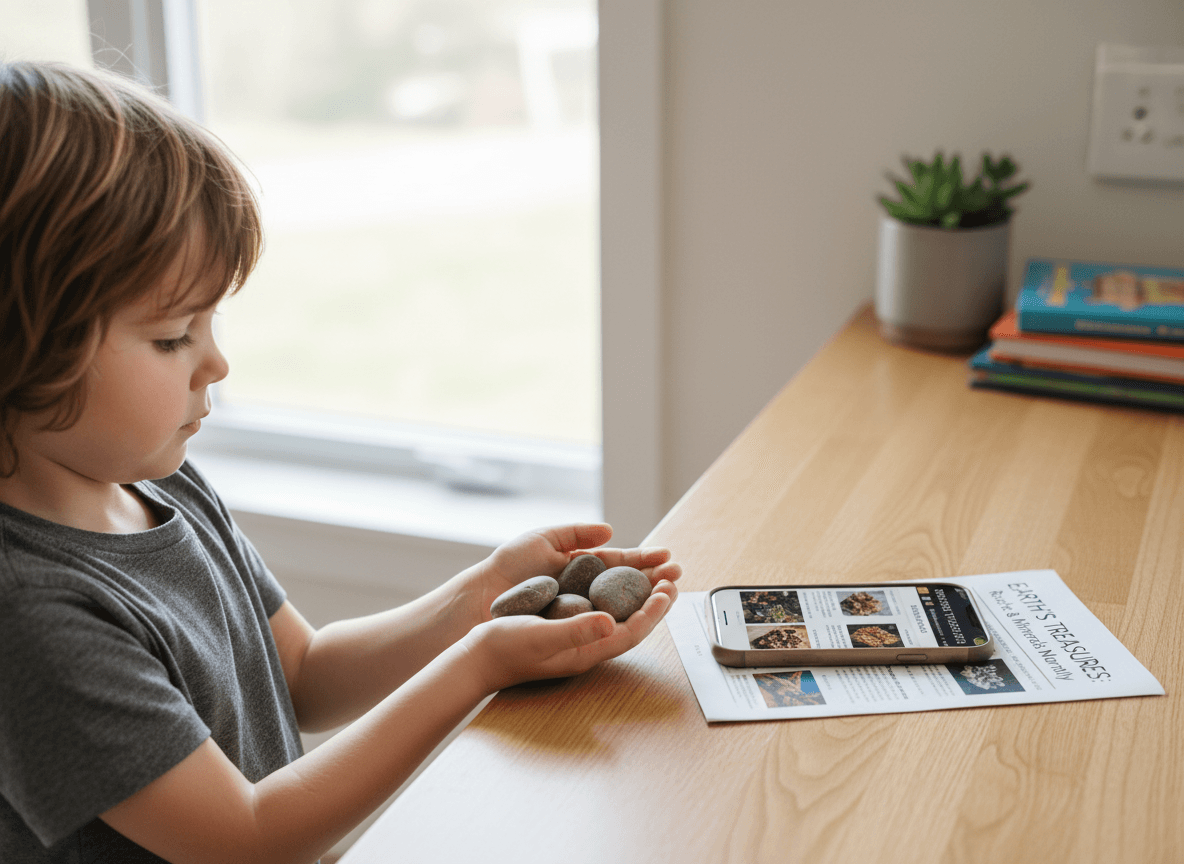
A rocks and minerals unit is one of the most touchable science units of the year. Every student picks up a rock at recess, every family has a windowsill collection from a vacation, and every kid wants to know what their rock is. The newsletter has to give the parent the three big categories, one test they can run with kitchen items, and a 10-minute backyard task. Five sections do all of it.
Open with the big idea
"This unit, students learn that all rocks fall into one of three groups based on how they formed." One sentence. Parents get it. From there, every section reinforces the same framework.
The three rock types in plain words
Igneous (cooled from melted rock, like lava). Sedimentary (layers of sand, mud, or shells pressed together over a long time). Metamorphic (a rock that was changed by heat and pressure underground). Three lines. Parents learn this in 30 seconds and use it for the rest of the unit.
Real-world examples for each type
Granite (igneous, common in countertops). Sandstone (sedimentary, look at any old building). Marble (metamorphic, from limestone under heat and pressure). Naming a kitchen counter or a tombstone is what makes parents lock in the difference. Abstract categories slide off. Real examples stick.
What we did this week
Pick the moment. "Students tested six rock samples for hardness using a fingernail, a penny, and a steel nail. The biggest debate was about a piece of slate. Three students said soft, four said hard. Turns out it depends which direction you scratch." Real. Specific. Names a moment.
Vocabulary parents will use
Rock, mineral, igneous, sedimentary, metamorphic, hardness. Six words. The big distinction worth one line: "Rocks are made of minerals. Minerals are the building blocks." Parents who get that one line stop using rock and mineral interchangeably.
At-home extension: the three-rock walk
"Walk around your yard, park, or sidewalk. Find three rocks that look different from each other. Look closely. Are they smooth or rough? One color or many? Bring one to school on Friday for the class rock table." Ten minutes. Free. Every student brings in something.
Template excerpt: a fourth grade rocks issue
Big idea: All rocks fall into one of three groups based on how they formed: igneous, sedimentary, or metamorphic.
What we did: Students sorted twelve rock samples into the three groups. The trickiest sample was a piece of conglomerate, which has pebbles cemented into a larger rock. It is sedimentary.
Vocabulary: Igneous, sedimentary, metamorphic, mineral, hardness.
Ask at home: Look at your kitchen counter, a sidewalk, or a fireplace. Can you spot a rock type you have learned about?
Coming up: Class rock table Friday. Send one rock with your child.
The misconception worth heading off
Many kids believe rocks are alive or that they grow. Drop a line. "Rocks do not grow the way plants and animals do. They change, but it takes thousands or millions of years." That one sentence prevents the most common confusion and gives a parent the right answer when their kid asks.
How Daystage helps with a rocks and minerals newsletter
Daystage gives you the five-section science template plus a "specimen of the week" line you can use to feature one student's rock in every issue. You build the template once at the start of the unit and edit only the activity and the vocabulary each week. It sends to your class roster as a real email and works on any phone.
Get one newsletter idea every week.
Free. For teachers. No spam.
Frequently asked questions
What three rock types should the newsletter cover?
Igneous, sedimentary, metamorphic. One sentence each. Igneous (cooled from lava or magma). Sedimentary (layers of stuff pressed together over time). Metamorphic (one of the first two changed by heat and pressure). Three rocks. Three origins. That covers the whole unit at fourth grade.
How do I explain the scratch test to parents?
Use a fingernail, a penny, and a steel nail. 'If your fingernail can scratch it, it is soft. If a penny can scratch it but your fingernail cannot, it is medium. If only the steel nail can scratch it, it is hard.' That is the Mohs scale at home, no test kit required.
What at-home extension works for a rocks unit?
A backyard rock collection. 'Find three different rocks outside. Look closely with a magnifying glass if you have one. Are they smooth or rough? One color or many? Bring one to school on Friday for our class rock table.' Free. Doable. Gives every student something to show.
How do I handle the polished store-rock vs. real-specimen issue?
Address it directly. 'The pretty rocks in gift shops have been polished. The same rock in the wild looks rougher and duller. Both are real. The polish just makes the inside crystals show.' That one sentence prevents the kid who says 'but my rock does not look like that.'
Does Daystage have a template for a rocks and minerals newsletter?
Yes. Daystage gives you the five-section science template you build once and reuse weekly. It sends to your class roster as a real email, no app, and works on a phone. Perfect for a unit where every student is bringing in samples from home.

Adi Ackerman
Author
Adi Ackerman is a former classroom teacher and curriculum writer with 8 years in K-8 schools. She writes about school communication, parent engagement, and what actually works in real classrooms.
More for Science Newsletter
Ready to send your first newsletter?
3 newsletters free. No credit card. First one ready in under 5 minutes.
Get started free