

Science Newsletter Explaining Phenomena-Based Learning
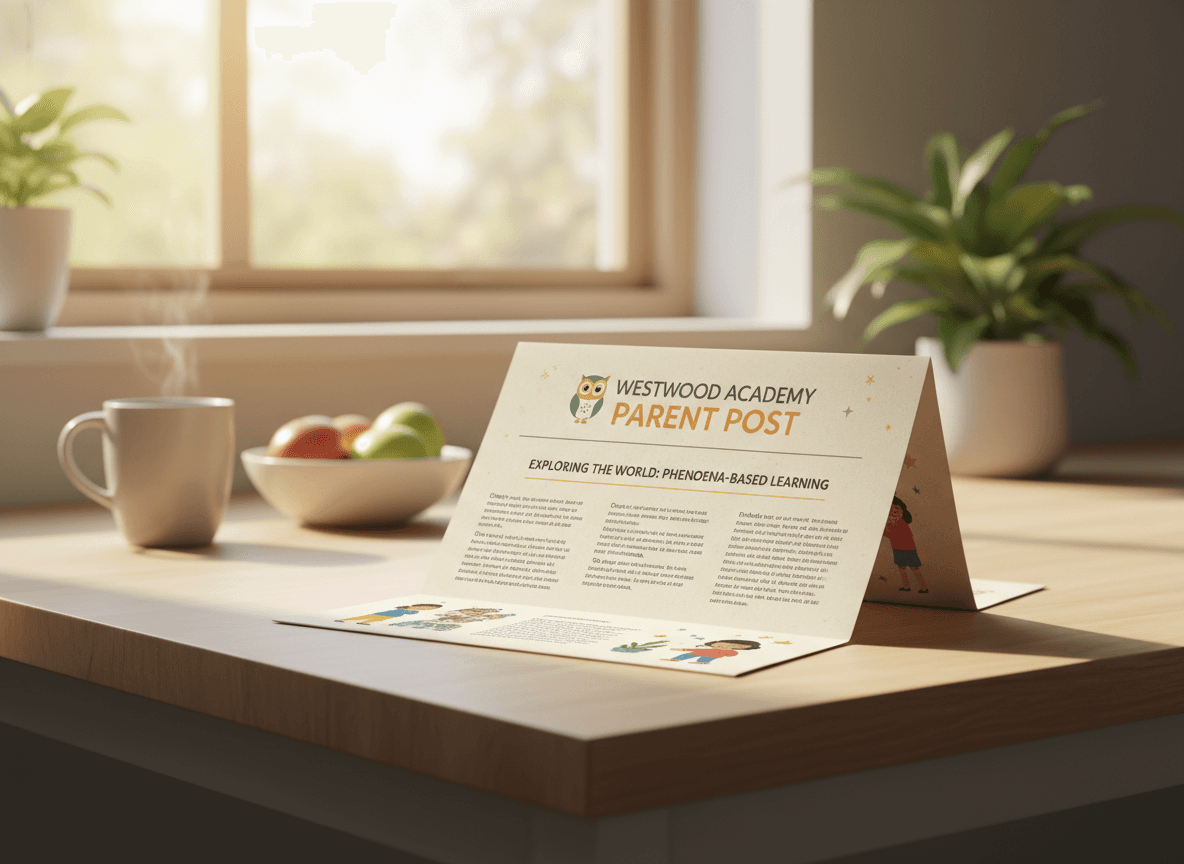
Phenomena-based learning is now the standard in most middle and high school science classrooms, but it is rarely explained to parents. They hear their child say 'we are trying to figure out why the pond freezes on top' and wonder where the textbook went. This newsletter template fixes that. One issue, five sections, and a clear explanation of why an anchoring phenomenon is doing more work than a chapter title ever could.
Section 1: What an anchoring phenomenon is
Two sentences. "An anchoring phenomenon is a real event we use to drive the entire unit. For our ecosystems unit, the phenomenon is 'how can a pond freeze on top in January and still have living fish inside it the whole winter?'." A parent reads that and pictures the question their kid is wrestling with for weeks.
Section 2: Why 'what is going on here?' beats 'today's topic'
Two sentences. "When the question is real and the answer is not obvious, students stay curious for weeks. When we open class with 'today's topic is density', they take notes and forget by Friday." That is the whole pitch.
Section 3: How the unit unfolds
Three or four sentences walking through how the class returns to the phenomenon over time. "Week one: students list everything they notice about the pond and write questions. Week two: investigate how water behaves at different temperatures. Week three: investigate what fish need to live. Week four: build a model that explains how the pond works, present it to the class." That is the arc.
Section 4: What you might hear at home
Three lines. "Your child might say things like 'we still do not know why the fish do not freeze' or 'we found out that the cold water stays on top because of density'. Both are normal at different points in the unit. The unit is designed so that the explanation builds across weeks, not in one lesson."
Section 5: A good question for the car ride home
One question, recycled across the unit. "Ask your child what their best current explanation for the phenomenon is. The answer will get better each week. By the end of the unit they should be able to walk you through it using the words they learned in class." Parents track the change. Students notice their own progress.
Example: a parent newsletter for the frozen pond unit
Opens with the phenomenon: a pond freezes on top in January but has living fish inside it all winter. Explains why this beats 'today's topic is density'. Walks through the four-week arc from noticing, to investigating water behavior, to investigating fish needs, to building an explanation. Notes what a parent might hear at different points in the unit. Closes with the weekly car-ride question. Total length: 420 words. A parent reads it once at the start of the unit and refers back over the four weeks.
Why this template works
Parents who do not understand phenomena-based learning think their child's class is meandering. Parents who do understand it see depth. One newsletter at the start of a unit changes the whole frame. After it goes out, the 'we still have not figured it out yet' comment lands as evidence of a good unit, not a bad one.
How Daystage helps with phenomena-based newsletters
Daystage lets you tag every newsletter in a unit with the same anchoring phenomenon. The phenomenon shows up in every issue, which keeps the story coherent for parents. You build the phenomena-explainer template once and reuse it every unit, just swapping in the new phenomenon and arc.
Get one newsletter idea every week.
Free. For teachers. No spam.
Frequently asked questions
What is an anchoring phenomenon?
A real, observable event that the entire unit comes back to. 'Why does a pond freeze on top but not all the way down?' is an anchoring phenomenon for an ecosystems and heat unit. Students investigate parts of it for weeks and return to the original question every few lessons.
Why does 'what is going on here?' beat 'today's topic is'?
Because 'what is going on here?' creates a question students want to answer. 'Today's topic is convection' creates a section to memorize. One drives engagement for three weeks. The other drives engagement until the bell.
How long does a class spend on one phenomenon?
Usually two to six weeks for one anchoring phenomenon. Smaller 'investigative phenomena' come up along the way. The point is depth, not coverage. A class that explains one phenomenon thoroughly learns more than a class that touches twelve.
Will my child still learn the content?
Yes, and they will retain it better because it is attached to a real question. The same vocabulary, concepts, and standards get covered. They just arrive as tools for explaining the phenomenon, not as a list to memorize.
Can Daystage track which phenomenon each class is on?
Yes. Daystage lets you tag every newsletter with the unit's anchoring phenomenon, so parents can scroll back and see the arc of the year. The phenomenon shows up in every issue of that unit, which keeps the story coherent.

Adi Ackerman
Author
Adi Ackerman is a former classroom teacher and curriculum writer with 8 years in K-8 schools. She writes about school communication, parent engagement, and what actually works in real classrooms.
More for Science Newsletter
Ready to send your first newsletter?
3 newsletters free. No credit card. First one ready in under 5 minutes.
Get started free