
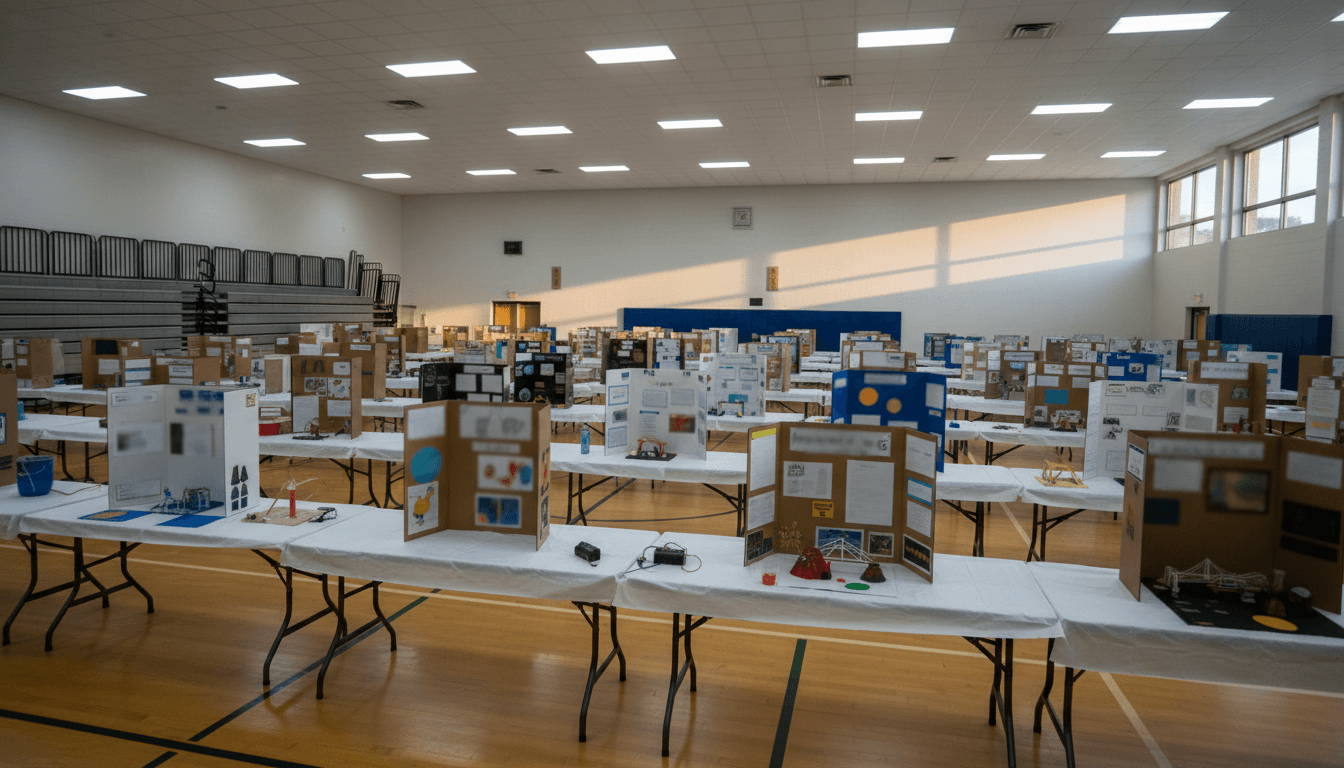
Science Fair Newsletter Template: Driving Real Project Submissions
Science fair runs on parent buy-in. The students who submit strong projects on time almost always have a parent who understood the timeline, helped manage the experiment schedule, and knew when to step back so the work stayed the student's. The newsletter is how you get that parent on the same page as you. Done well, you double your submission rate. Done poorly, you spend the week before the fair sending frantic reminders that no one reads.
Send four issues, not one fat one
A single 1,500-word newsletter at the start of the project window will not survive a parent's inbox. Break it up. Issue one at week eight covers the timeline and topic selection. Issue two at week six covers experiment setup and the topic approval deadline. Issue three at week three covers data collection and writing up. Issue four at week one covers the tri-fold board and presentation day logistics. Each issue does one job.
Lead every issue with the next deadline
Parents read the first three lines of an email. Put the next deadline there. "Topic approval forms are due Friday, October 11. Without an approved topic, your student cannot start the experiment." That is the lede. Everything else is supporting detail.
Show example projects from past years
Three real examples beat any abstract description of "good projects." Pick one student who tested whether different soil pH affects bean sprout growth, one who measured how phone screen brightness drains the battery, and one who compared paper towel absorbency. Include a photo of each board. Parents who see "ah, that level of project" calibrate immediately.
Address the topic-selection problem head on
Most weak projects come from weak topics. "Which paper airplane flies farthest" is a forces and motion topic, but it is also done to death and rarely surfaces a real investigation. In the newsletter, list five categories of strong topics (life science, physical science, environmental, behavioral, engineering) with two examples each. Tell students they can pick from these or propose their own with teacher approval.
Walk parents through the tri-fold board
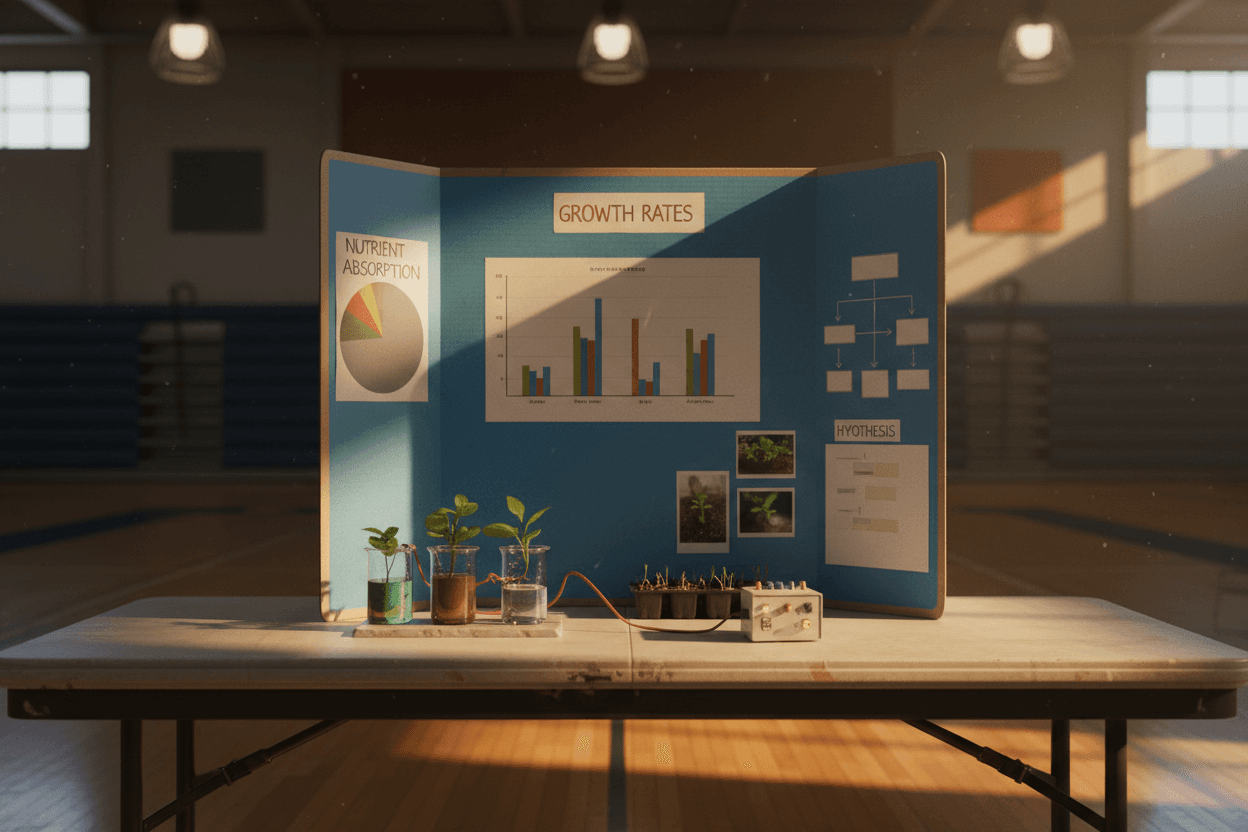
Parents who have not done a science fair board in 25 years do not know what goes on it. Spell it out. Left panel: question, hypothesis, background. Center panel: procedure, data, photos. Right panel: results, conclusion, next steps. Tell them where to buy a board (most office supply stores carry them for under $10), how big it is (36 by 48 inches), and that it does not need to be expensive.
Template excerpt: issue three at week three
Here is what a midpoint science fair newsletter section looks like:
Where you should be this week: Experiment is finished or close to it. Data is collected. Your student should start drafting the conclusion paragraph and picking which photos and charts to put on the board.
What is due Friday: Draft of the conclusion paragraph (typed, one page, brought to class). I will give feedback over the weekend so students can revise before the board work starts.
Common stumble: Students often write "my hypothesis was right" or "my hypothesis was wrong" and stop there. The conclusion needs to explain why the data supported or did not support the hypothesis, and what they would do differently if they ran the experiment again.
Be honest about parent involvement
Include one paragraph in every issue about what help is appropriate and what is not. "Help your student plan the experiment schedule and buy materials. Do not run the experiment for them. Do not write the conclusion. Do not glue the board together while they sleep." Said directly, this lands. Most parents want to do the right thing and appreciate the clarity.
How Daystage helps with science fair newsletters
Daystage lets you build the full four-issue series at the start of the project window, schedule each issue to send on a specific date, and attach the rubric and forms once. Parents get clean, consistent emails on schedule, you stop scrambling on a Sunday night to write next week's update, and your submission rate goes up because parents actually know what is due and when.
Get one newsletter idea every week.
Free. For teachers. No spam.
Frequently asked questions
How early should the first science fair newsletter go out?
Eight weeks before the fair. That gives parents and students enough time to pick a topic, get approval, run the experiment, collect data, and build the board without panicking the night before. Less than six weeks and you will see a flood of last-minute volcanoes and crystal gardens that show no real investigation.
What should be in the first science fair newsletter?
The full timeline with every deadline, the topic approval form, two or three example projects from past years (with photos), and the rubric students will be graded against. Parents who see the rubric early shape the project toward it. Parents who see the rubric the week before the fair argue with you about it.
Do parents really need a separate newsletter for science fair?
Yes. Science fair has its own deadlines, its own paperwork, and its own logistics that do not fit inside your regular biweekly science newsletter. Trying to cram fair updates into the regular issue means parents miss them. A dedicated science fair newsletter, sent on its own schedule, gets opened and acted on.
How do you handle parents who want to do the project for their kid?
Address it directly in the newsletter. 'Judges can tell when a project was done by a parent. Students who present their own work, even with rough edges, score higher than students presenting a polished parent project.' That sentence does more than any private conversation. Parents who read it correct themselves.
Can Daystage handle a science fair newsletter series?
Yes. Daystage lets you build a four or five issue science fair series, schedule the issues across the eight weeks before the fair, and send to your full class roster. You can attach the rubric, the topic approval form, and any other handouts as PDFs that arrive in the same email.

Adi Ackerman
Author
Adi Ackerman is a former classroom teacher and curriculum writer with 8 years in K-8 schools. She writes about school communication, parent engagement, and what actually works in real classrooms.
More for Science Newsletter
Ready to send your first newsletter?
3 newsletters free. No credit card. First one ready in under 5 minutes.
Get started free