

Monthly Science Newsletter: A Template You Can Reuse
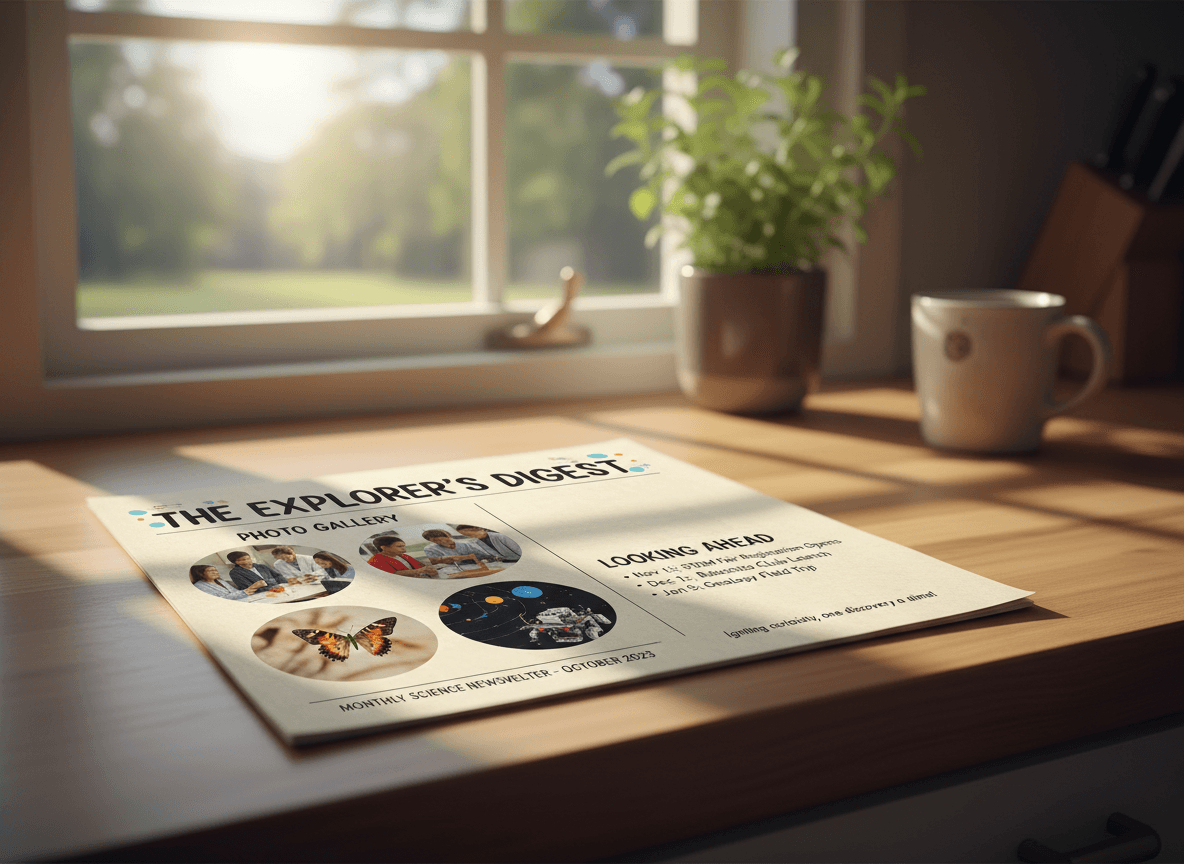
The monthly science newsletter is where the year takes shape for parents. The weekly is logistics, the monthly is story. Photos, a recap of what kids actually did, what is coming, and once a year a survey question that tells you what parents want more of. Send it on the first Saturday of the month and parents read it with coffee. Send it any other time and it gets buried.
Section 1: Month in review
Three to four sentences. Name the units. Name one moment per unit that captures what kids did. "October was ecosystems and the start of population dynamics. Students built food webs out of card sets, then walked them outside to spot real producers and consumers in the schoolyard. The Isle Royale data lab on the 23rd was the favorite of the month." Specific moments beat generic summaries every time.
Section 2: Photo gallery
Three to six photos with one-line captions. Pull them from your phone, do not stage anything new. "Building food webs, October 8." "Schoolyard species count, October 14." "Isle Royale data analysis, October 23." Parents who see their kid in a photo open the newsletter every month going forward. Get a media release at the start of the year so you can use photos without asking per shot.
Section 3: Looking ahead
Two or three lines. Name the next unit and any major dates. "November moves into matter and chemical reactions. Lab on the 12th involves vinegar and baking soda, expect a slight mess. Parent conferences are November 14, sign up through the office portal." Parents who see what is coming put it on the calendar.
Section 4: The annual parent survey question
Once a year, in the October or January issue. One question, reply-by-email. "What is one thing you wish you knew about how your kid is doing in science?" Three to six parents will reply. Use the replies to shape next month's newsletter. Resist the urge to ask every month, the replies dry up.
Sample paragraph: the month-in-review section
Here is what a clean month-in-review section looks like in practice:
October was ecosystems month. Students started by building food webs with cards for ten local species, then walked them outside and spotted real examples in the schoolyard. The middle of the month was population dynamics: the Isle Royale wolf and moose data lab on October 23 was the moment the unit clicked for most students. We ended with a one-day biodiversity audit of a 10-meter strip behind the school. Photos from each of those moments are below.
Close with the standing items
Two lines. Office hours, contact info, a one-line reminder about the weekly newsletter if you send one. "Weekly newsletters land Monday at 6am. The monthly is the longer story. Reach me at mrsackerman@school.org or by reply to this email." Parents who know how to find you do not have to guess.
How Daystage helps with monthly science newsletters
Daystage lets you build the monthly template with photo blocks, drop in the month's photos from your phone in two minutes, write the four short sections in fifteen, and schedule the send for Saturday morning. Reuse the shell every month by swapping the dates and photos. The survey question lives in one issue per year. The whole monthly sequence runs on 20 minutes a month and tells the story of the year better than any portfolio meeting.
Get one newsletter idea every week.
Free. For teachers. No spam.
Frequently asked questions
How is the monthly newsletter different from the weekly?
The weekly is a five-minute scan. The monthly is the longer-form companion: photos, a month-in-review, the next unit preview, and once a year a survey question. Send both if you can. Weekly for logistics, monthly for the story of the year.
When should the monthly newsletter go out?
First weekend of the month, covering the previous month. Parents read it with coffee on Saturday. Sending it on the 15th means half the month is already gone. Sending it on the last day of the month means you are scrambling. First weekend, every time.
How many photos belong in the monthly?
Three to six. Enough to tell the story of the month, few enough to load on a phone in two seconds. Include captions. A photo of a lab in progress with the caption 'building water filters, week of October 14' is worth three paragraphs of writing.
What should the parent survey question be?
Once a year, one question, simple. 'What is one thing you wish you knew about how your kid is doing in science?' Or 'What is the best topic your kid has talked about at home this year?' Replies come back. Use them to adjust the next year's newsletters.
Can Daystage send a monthly science newsletter?
Yes. Daystage lets you build the monthly template with photo blocks, drop in the month's photos from your phone, write the four short sections, and schedule the send for Saturday morning. Reuse the shell every month. The survey question lives in one issue per year.

Adi Ackerman
Author
Adi Ackerman is a former classroom teacher and curriculum writer with 8 years in K-8 schools. She writes about school communication, parent engagement, and what actually works in real classrooms.
More for Science Newsletter
Ready to send your first newsletter?
3 newsletters free. No credit card. First one ready in under 5 minutes.
Get started free