
Start-of-Year Library Newsletter: A Template Parents Will Read
The start-of-year library newsletter is the one most families actually save. It sets the rhythm for the whole year. If you get it right in August, you spend less time in September answering the same five questions over email. If you skip it, you spend October repeating yourself.
Why the start-of-year newsletter is different from a monthly
A monthly newsletter is about new books and current programs. The start-of-year edition is a reference document. Families will pull it up in November when their kid loses a book, in February when they forget which day is library day, and in May when they want to know if summer checkout is a thing. Build it like a small handbook, not like a flyer.
Section 1: a short note from the librarian
Three sentences. Welcome the new families, name one thing you are excited about for the year, and give them the one promise that matters: you will send a short newsletter once a month. Example: "Welcome back. We added 180 new titles over the summer, with a big push on graphic novels and middle-grade nonfiction. You will get one library newsletter on the first Tuesday of every month."
Section 2: library hours and how to reach you
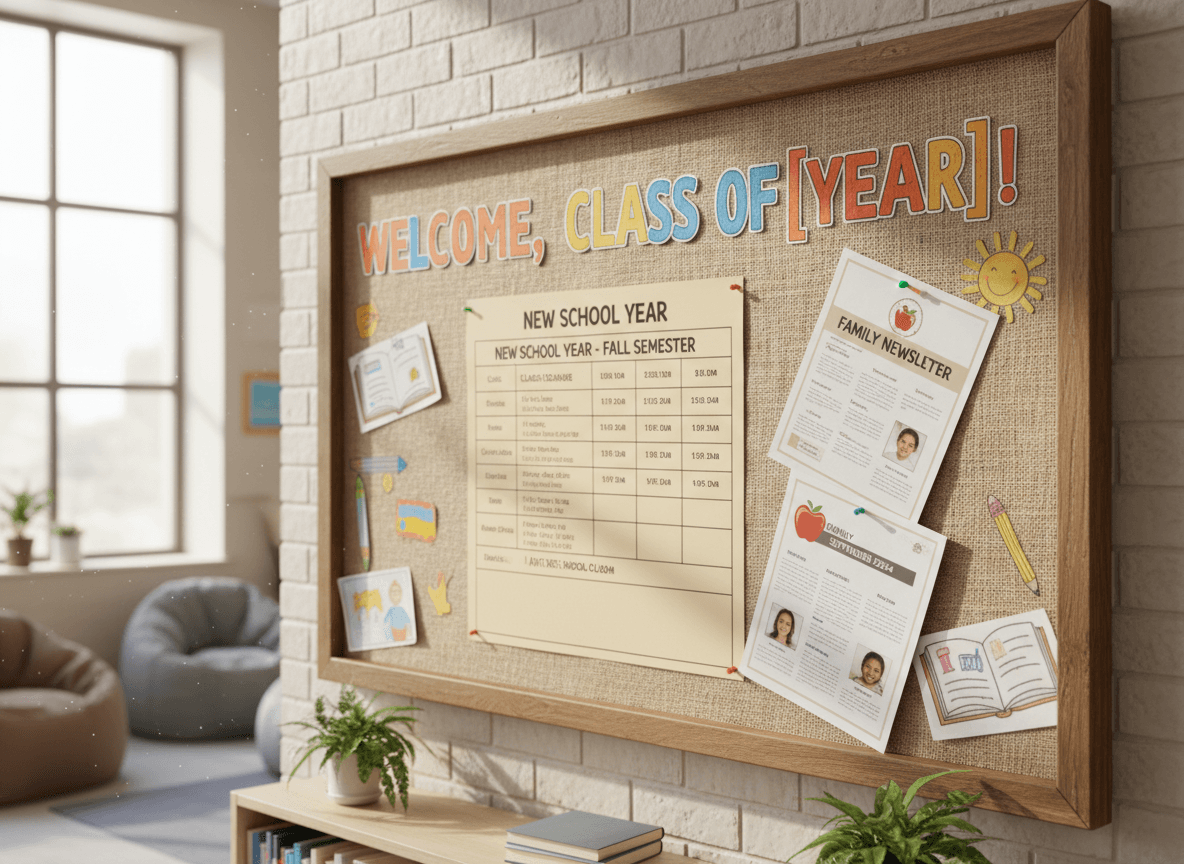
Lay out the hours by day in a small table. Include before-school open hours if you have them, regular class visit windows, recess access days, and after-school hours. Add your email and the best way to reach you for a lost book or a request. Keep it to six lines total.
Section 3: checkout policy reset
One paragraph. Grades K-1 check out one book for one week. Grades 2-5 check out two books for two weeks. Middle school checks out three for three. Lost or damaged books are billed at replacement cost, and the family can replace the book themselves with a matching title. That is the whole policy most families need. Link to the full version for the small number who ask.
Section 4: first-week class visit schedule
A small table with grade, teacher, and library day. Tell families this is the schedule for the year barring schedule changes. Add one line: "Your child should bring their library books back on their library day." That sentence does more for return rates than any reminder email.
Section 5: what kids do at recess in the library
Many parents do not know the library is open at recess. Tell them which days it is open, who can come (any grade, no pass needed, or by permission depending on your setup), and what kids actually do there. Example: "Tuesday and Thursday recess, grades 3-5. Kids read, browse, play chess or Mancala, or work on book reviews for the wall. Quiet voices, no food, sign in at the desk."
Section 6: book pick and one family tip
End with one book pick for the start of the year and one tip families can use this week. The book pick should be something that works for a wide grade band, since the newsletter goes to every family. The tip for August: "Set up a 'library book spot' at home, a single shelf or basket where library books live between visits. The single biggest cause of lost books is that they migrate into the toy bin."
How Daystage helps with start-of-year library newsletters
Daystage gives media specialists a reusable start-of-year template that does not need to be rebuilt each August. The hours table, checkout policy, and class visit grid stay where they are. You refill the librarian note, the book pick, and the family tip, and the newsletter sends to your full family list looking like the school built it on purpose.
Get one newsletter idea every week.
Free. For teachers. No spam.
Frequently asked questions
When should the start-of-year library newsletter actually go out?
The Tuesday of the second week of school. Week one is buried under classroom welcome letters, supply lists, and bus route changes. Wait one week and the library newsletter lands in an inbox that has space for it. Parents read it, save it, and refer back to it when their kid forgets a book at home in November.
How detailed should the checkout policy section be?
One short paragraph. Number of books per checkout by grade band, loan length, and what happens with lost or damaged books. Skip the full policy document. Link to it for families who want the long version. Most parents only need the four numbers: how many books, how many weeks, what if it is lost, who to email.
Should the first-week class visit schedule go in the newsletter?
Yes, but as a small block, not the main feature. Parents do not need the full rotation. They need to know which day their kid's class has library this week so they can pack the returned book. A simple table with grade, teacher name, and day works. Update it once and reuse it for the rest of the year.
What goes in the 'what kids do at recess in the library' section?
Three things: the days the library is open at recess, the rules (quiet voices, no food, sign in), and what kids can actually do (browse, read, play approved board games, work on a research project). Families ask about this every year. Putting it in the start-of-year newsletter saves you twenty emails in September.
What is the easiest way to send a polished start-of-year newsletter without spending a full day on it?
Daystage lets you build the start-of-year template once, save it, and refill it next August in under an hour. The hours, policies, and visit schedule rarely change year to year. You update the new arrivals and the librarian note, swap one date, and send. The layout stays clean across every device.

Adi Ackerman
Author
Adi Ackerman is a former classroom teacher and curriculum writer with 8 years in K-8 schools. She writes about school communication, parent engagement, and what actually works in real classrooms.
More for School Librarian
Ready to send your first newsletter?
3 newsletters free. No credit card. First one ready in under 5 minutes.
Get started free