
Second Grade Library Newsletter: A Working Template
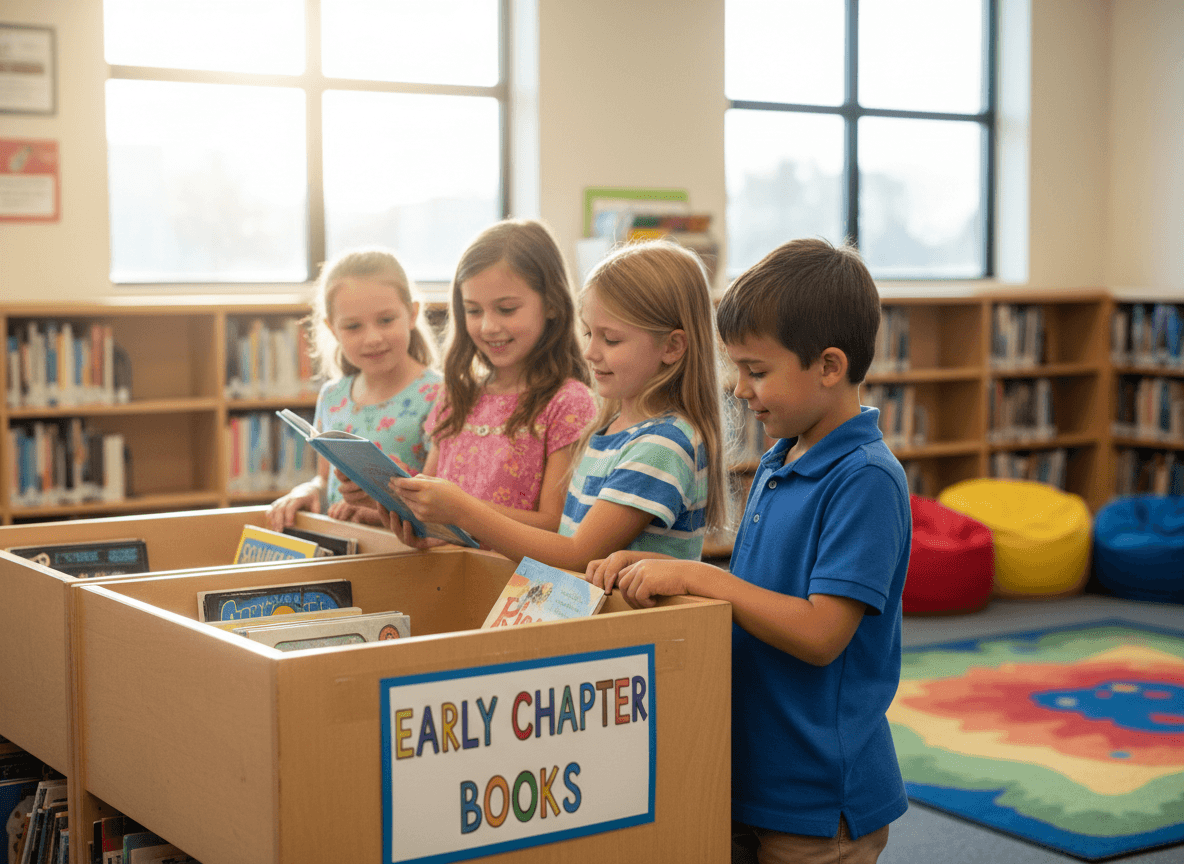
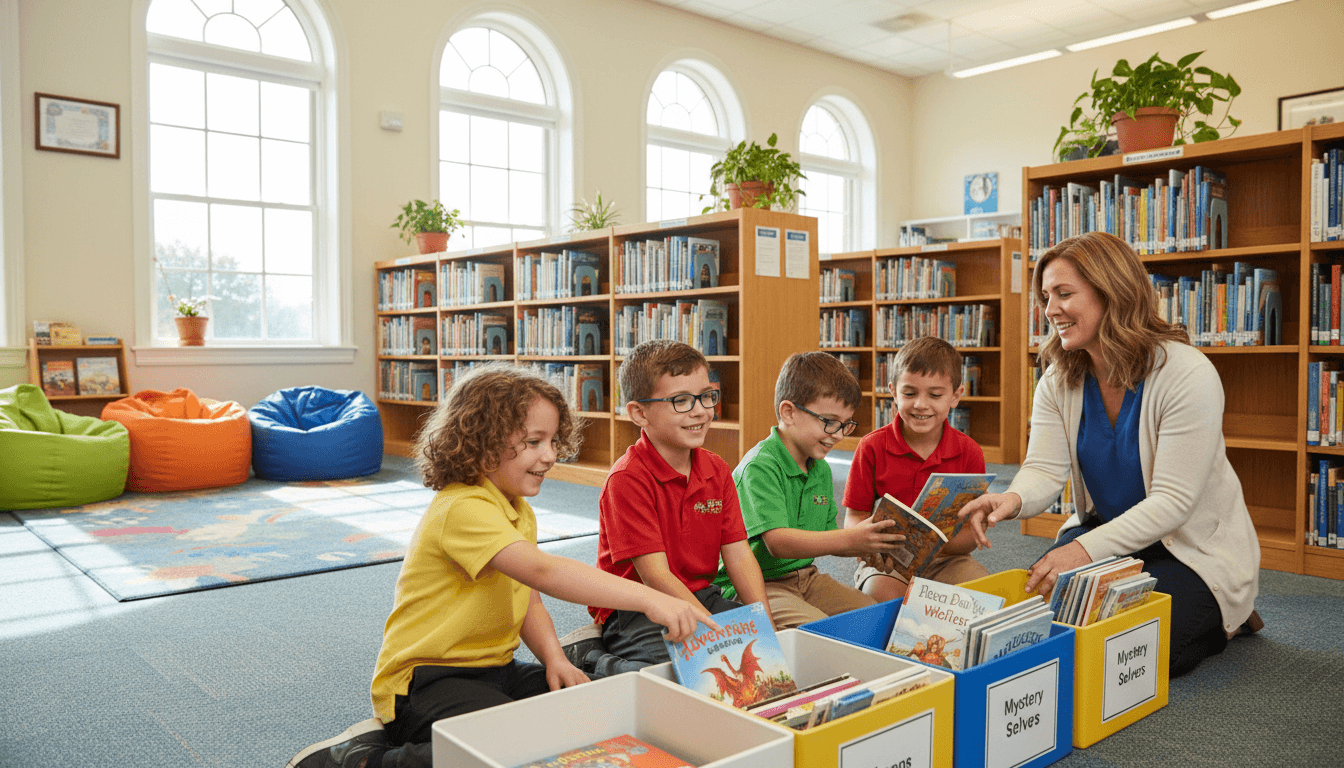
Second grade is the year the library starts to feel different. Half the class is still happily in picture books. The other half has discovered chapter books and will not put them down. The newsletter has to talk to both groups in the same email without making either family feel like their kid is behind.
Who the second grade newsletter is for
Parents, first. Teachers will skim it, but the people deciding what gets read at home are the families. Write every section assuming a parent is reading it on their phone between school pickup and dinner. Short paragraphs, no jargon, one clear action per section.
Section 1: a note from the librarian
Two or three sentences. What is happening in the library right now with second grade specifically. Example: "Second grade has discovered Mercy Watson this month. We circulated 22 copies in two weeks. If your kid finishes the first one and asks for more, books two through six are on the shelf and ready."
Section 2: the book pick of the month
Pick one. Cover image, three sentences, grade range, and one specific kid reaction. Example: "Mercy Watson to the Rescue by Kate DiCamillo. A toast-loving pig saves the day in a story split into short, fast chapters with big print and pictures on every page. Best for second graders who are ready to try chapter books but still want pictures. One of our second graders read it twice in one week and asked for the next five."
Section 3: the just-right shelf
This is the section parents actually wait for. List five to seven titles in the early chapter range with grade bands. Examples:
- Owl Diaries by Rebecca Elliott (grades 1-3)
- Princess in Black by Shannon Hale (grades 1-3)
- Magic Tree House by Mary Pope Osborne (grades 2-4)
- Frog and Toad by Arnold Lobel (grades 1-2, still excellent)
- Yasmin by Saadia Faruqi (grades 1-3)
No synopsis. Cover and grade range is enough. Parents who care will look the book up. The point is to put titles in front of them they would not find on their own.
Section 4: how checkout works in second grade
Most parents do not know the checkout rules. Tell them once a year, then put it in the footer the rest of the year. "Second graders can check out up to three books at a time. They visit the library on Wednesdays. Books are due back the following Wednesday. Lost books are replaced at cost, but talk to me first because we have a fund for families who need it."
Section 5: try this at home this week
One concrete activity that fits second grade. Not "read every day". Something specific: "Try a chapter swap on Sunday nights. You read one chapter of your kid's book out loud, then they read the next chapter to you. Most second graders will go further into a book this way than they will reading alone. Works especially well with Mercy Watson and Owl Diaries."
Cadence and send time
Send once a month, first Tuesday, between 7 and 9 AM. If a book fair or author visit lands mid-month, send a short standalone email rather than waiting. Second grade parents are still tuned in to school communication at this age, but the window narrows every year, so do not waste their attention.
What to do about the picture-book-only kid
Every second grade has at least a few kids who have not yet made the jump to chapter books and whose parents are quietly worried. Use a recurring sub-section once a quarter that names the bridge zone by name. "Some second graders are reading early chapter books, some are still in picture books, and a few are reading chapter books with 200 pages. All three are normal." Then list three bridge titles like Frog and Toad, Elephant and Piggie, and Yasmin that hold up at any reading level. The parents who needed this paragraph will read it twice. The parents who did not will scroll past, and that is fine.
The book fair month variation
When the book fair is running, the picks section pulls double duty. Lead with two titles you actually saw on the fair preview list, so parents can find them at the fair instead of just hearing about them after. Add one sentence under the cover with a price band when you know it. Second grade families often spend the most at the fair because their kids are old enough to read on their own but young enough to still trust adult recommendations.
How Daystage helps with second grade library newsletters
Daystage gives you a template you build once and refill each month. The five-section structure plugs in cleanly, the email goes out branded to your school, and the second grade families get a professional newsletter that actually fits on a phone screen. You write the content, Daystage handles the layout.
Get one newsletter idea every week.
Free. For teachers. No spam.
Frequently asked questions
What makes a second grade library newsletter different from a first grade one?
Second graders are mid-transition from picture books to early chapter books. The newsletter has to speak to both. Parents of strong readers want chapter book picks. Parents of kids still on picture books need to know that is fine and where the bridge titles live. A good second grade newsletter names both lanes by name and stops the comparison anxiety.
How many books should second graders be checking out each week?
Two to three is the sweet spot. One picture book they can finish in a sitting, one early chapter they will read across the week, and one wildcard. Some libraries cap at one and parents get frustrated when the book gets finished by Tuesday. Three is the workable number for most second grade families.
Should the newsletter recommend specific series or one-off books?
Lean series at this age. Second graders who find a series they love will read eight books in a row, which is exactly what builds reading stamina. Mercy Watson, Owl Diaries, Princess in Black, Magic Tree House. Name the series, name the first book, and tell parents the library has the next six on the shelf.
How do you talk about reading levels without making families anxious?
Skip the level number. Say grade range and use the words just-right. Second graders read across a wider range than most parents realize. A kid reading at a first grade level and a kid reading at a fourth grade level can both be thriving second graders. The newsletter should make that normal instead of hiding it.
Is there a tool that makes sending this kind of newsletter easier?
Daystage was built for school staff who want a clean, branded newsletter without fighting with image sizes or column layouts. The five-section template plugs in cleanly, the email looks like the school sent it on purpose, and the second grade families get the same professional feel as the rest of the school. You write, it sends.

Adi Ackerman
Author
Adi Ackerman is a former classroom teacher and curriculum writer with 8 years in K-8 schools. She writes about school communication, parent engagement, and what actually works in real classrooms.
More for School Librarian
Ready to send your first newsletter?
3 newsletters free. No credit card. First one ready in under 5 minutes.
Get started free