
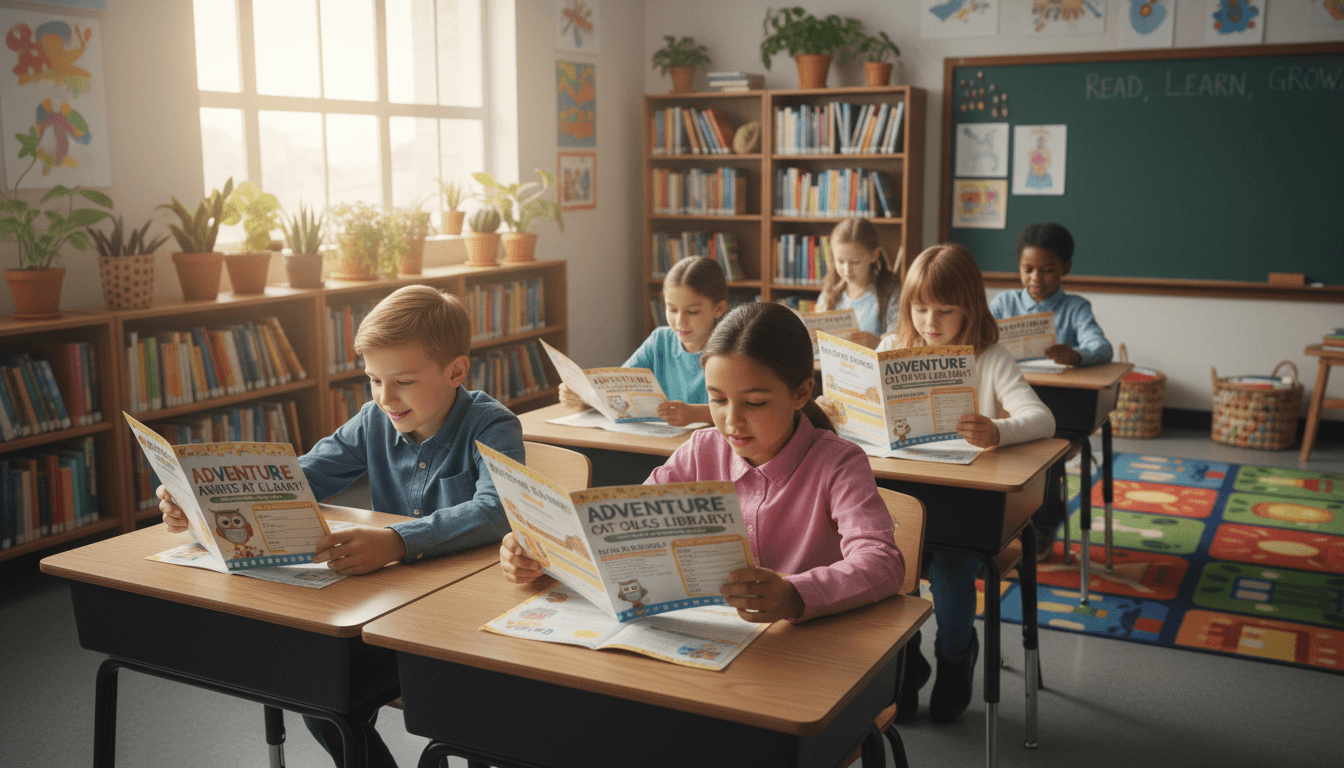
Library Newsletter Written for Students: A Working Template
A library newsletter written for students is the one librarians rarely try, and the one that moves the most books. Family newsletters tell parents what to put in front of their kids. A student newsletter tells the kid directly, in their voice, what to ask for next.
Why write a newsletter to students at all
Because the kid is the actual reader. Parents are the gatekeeper, but the kid decides what comes home from the library. Speaking to them directly, weekly, in a voice they recognize, builds the habit of thinking of the library as a place that talks to them. That habit is worth more than any single book recommendation.
Voice and format
Short paragraphs. Two to three sentences each. Direct address: "you", not "students". Active verbs. One image max. No headers longer than five words. Whole thing fits on a half-sheet of paper if you print it. Kids read what looks readable. Walls of text get folded into paper airplanes.
Section 1: the librarian hello
Two sentences. Talk to them. Example: "Hi readers. This week the library is wild with new graphic novels. There are 14 new ones on the front cart, come grab one before they all walk away."
Section 2: the weekly book pick
One book, three sentences, kid voice. Example: "This week: The Wild Robot by Peter Brown. A robot wakes up on an island and the animals think she is a monster. If you liked Wings of Fire or The One and Only Ivan, this one is for you." Add a line that tells them how to get the book: "Come check it out before recess on Tuesday."
Section 3: the weekly challenge
One small challenge that takes five minutes to enter. Examples that work: read a book with a one-word title, read a book about an animal you have never heard of, read a book set in a country you have not been to, read a book that makes you laugh out loud at least twice. Tell them how to enter: "Bring the book to the library by Friday and put a sticky note with your name on the challenge wall." Add a reward if you can: a sticker, a bookmark, name on the wall.
Section 4: what is happening in the library
One short paragraph. What program, event, or change should kids know about? Example: "The makerspace is open Tuesday and Thursday at recess. We have new circuit kits and the soldering iron is finally fixed. First-time users get a five-minute tour, just find me at the desk."
Section 5: shout-outs
Name students by name if your school's policy allows it. Example: "Shout-out to the third graders who finished the graphic novel challenge last week. Special call to Mia, who read all four Dog Man books in five days." Kids whose names show up in the newsletter share it with their family that night. That is how the newsletter spreads through the school.
Section 6: the librarian sign-off
Two sentences. Friendly, direct. Example: "Come see me if you need a book and you do not know what to pick. I will find you something. See you in the library."
How Daystage helps with library newsletters to students
Daystage lets you build the student newsletter template once with the book pick, challenge box, and shout-out section in place. You refill each week in under 15 minutes and either print to distribute or send to a student email list for older grades. The layout stays clean on phones, which is where middle school readers actually read it.
Get one newsletter idea every week.
Free. For teachers. No spam.
Frequently asked questions
Can you really send a newsletter directly to elementary students?
Most elementary students do not have email, so 'directly to students' usually means: printed and handed out, posted on the classroom door, or read aloud at the start of library class. For grades 5 and up with school email, you can send it to their accounts. The format and voice below works for all three delivery methods.
How long should a student-facing newsletter actually be?
Half a page. Six short paragraphs maximum. Kids do not scroll. If it cannot fit on one printed half-sheet, it is too long. The whole point is to be readable in 90 seconds during morning meeting or while waiting in the library line. Long copy is the fastest way to lose the audience.
What makes a good weekly book pick for students?
One book, three sentences, written in a kid voice. Example: 'This week: The Wild Robot by Peter Brown. A robot wakes up alone on an island full of animals who think she is a monster. If you liked The One and Only Ivan, you will probably love this. Come check it out before recess on Tuesday.' Speak to them directly. Do not describe the book like a publisher would.
What does a good reading challenge look like?
Small, specific, and fast to complete. Example: 'Challenge of the week: read a book with a one-word title. Bring it to the library by Friday and put a sticky note with your name on the challenge wall.' Avoid month-long challenges with point systems. Kids respond to weekly challenges that take five minutes to enter and feel like a game, not homework.
What tool makes a student newsletter easy to produce every week?
Daystage lets you build the student template once with the book pick block, challenge box, and short notes section. You refill each week in 15 minutes and send to the staff list to print and distribute, or to the student email list for older grades. The layout holds on phones, which is where middle schoolers actually read it.

Adi Ackerman
Author
Adi Ackerman is a former classroom teacher and curriculum writer with 8 years in K-8 schools. She writes about school communication, parent engagement, and what actually works in real classrooms.
More for School Librarian
Ready to send your first newsletter?
3 newsletters free. No credit card. First one ready in under 5 minutes.
Get started free