
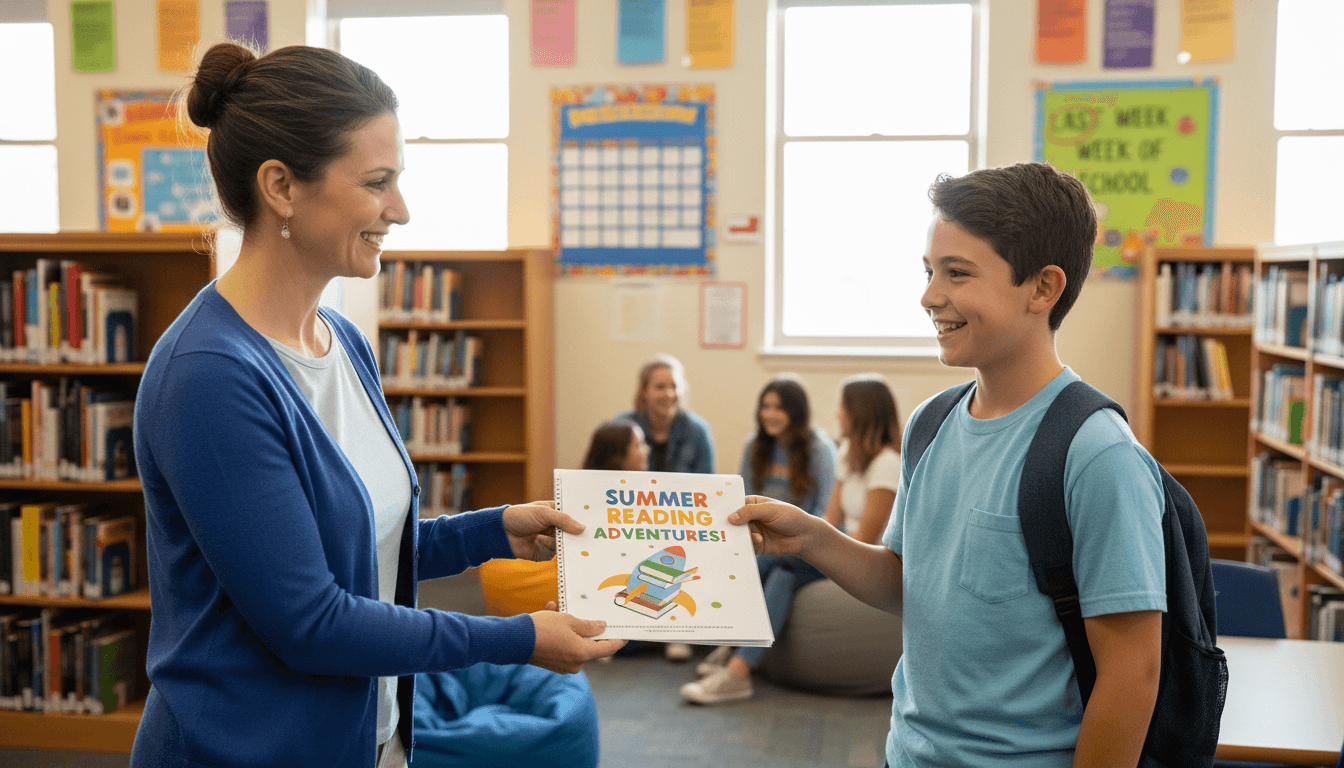
Library Newsletter for a Summer Reading List: A Template
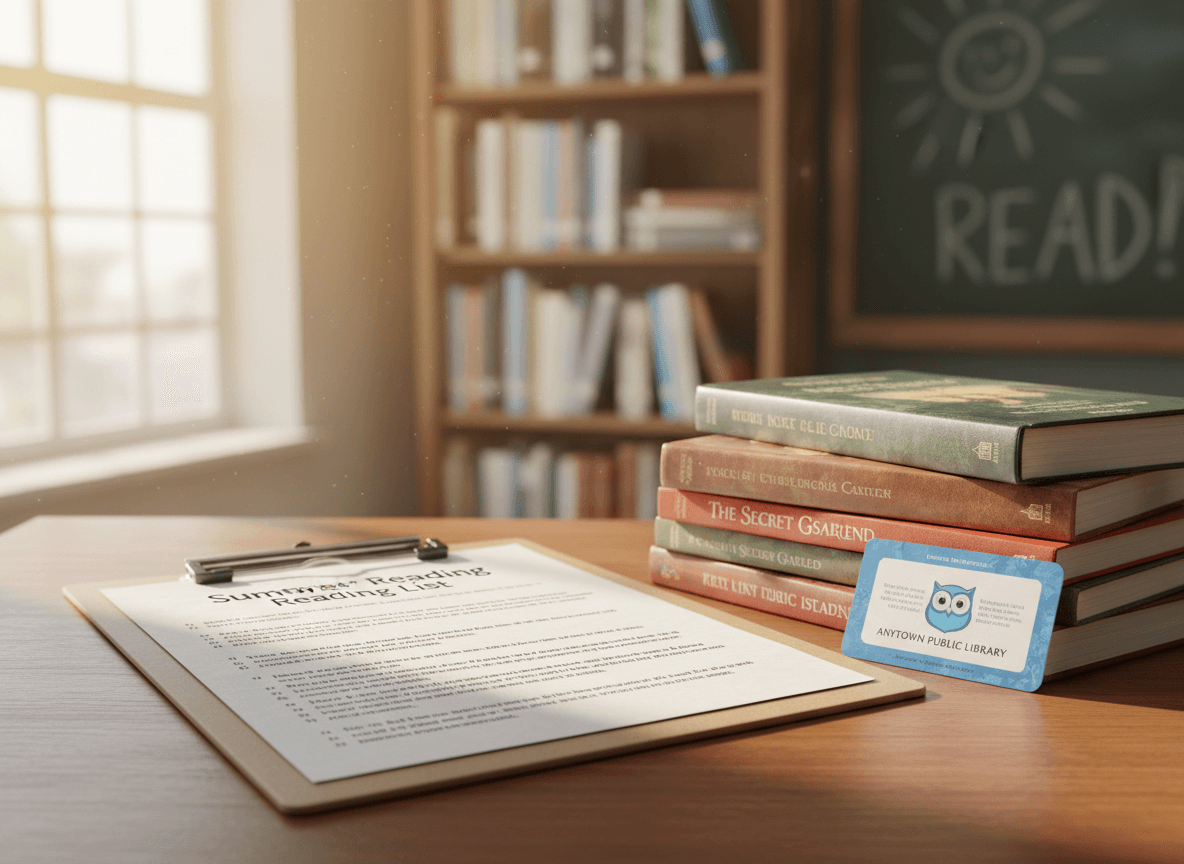
The summer reading list newsletter is the one issue every school library family opens. It also has to do more work than any other issue, because it lives in the family inbox for three months without you there to clarify. Here is the template that holds up.
Send it two weeks before the last day
Two weeks gives families time to plan a library visit before the summer rush. Three weeks gets forgotten. The last week of school is too late. Send the full list at week two, a one-line reminder in the final week of school newsletter, and a mid-summer encouragement email in late July.
The tiered grade structure
Split the list by grade band: K-1, 2-3, 4-5, 6-8, 9-12. Twelve to twenty titles per tier. Cover image, title, author, grade range, one-sentence hook. Families with multiple kids find the relevant tier and ignore the rest. A flat list of 90 books gets skimmed and closed.
The audiobook permission line
Near the top, in its own short paragraph: "Audiobooks count as reading on this list. The cognitive work of following a story works the same whether your kid is reading or listening. Car trips, beach time, before bed, all of it counts." Parents need the line in writing to count the audiobook as reading. The sentence does more work than any single book recommendation.
The any-reading-counts rule
Comics, magazines, graphic novels, recipes, video game guides, sports stats, fan fiction. Name them. "If your kid reads it, it counts." The point of summer reading is keeping the reading muscle warm. A kid who reads three Calvin and Hobbes books and every Madden cover article is reading. Treat them like a reader.
The public library push
One paragraph with the name of the local public library, the address, the summer reading program details if you know them, and how to get a library card. If your school is in a multi-library area, link to all of them. Public library cards are the closest thing to free books a family can get. The school newsletter is often where families learn the card exists.
Example: Brookside Elementary, 510 students. Last May the librarian sent a summer reading list with tiered grade blocks, the audiobook line, and a paragraph on the local public library summer program. Public library sign-ups from the school's families went from 38 the previous summer to 127 that summer. The librarian had paired the email with a half-page reminder slip sent home with the last-day report cards.
The mid-summer encouragement
Late July, one short send. Three sentences. "How is summer reading going? If your kid found a book they loved, reply and tell me. If they have lost the list, here it is again." That single mid-summer touch keeps the reading rhythm going for the families who are slipping.
The first-week-back ask
End the original summer reading newsletter with one line: "When we come back in August, I want to hear what you read. Bring a title to the first library visit and I will add it to a wall of summer reads in the library." That sentence pulls the kids who read into the new school year already engaged with the library.
How Daystage helps with summer reading list newsletters
Daystage lets you save the full summer reading template and update it year over year. The tier blocks, the audiobook line, and the public library push stay in the same layout. You refresh the titles each spring and the send goes out clean. Families can return to the email all summer without needing a printed copy.
Get one newsletter idea every week.
Free. For teachers. No spam.
Frequently asked questions
How long should a summer reading list be?
Twelve to twenty titles per grade band is the working range. Shorter and families feel boxed in. Longer and it turns into a wall of text no one reads. Split into clear tiers (K-1, 2-3, 4-5, 6-8, 9-12) so families with kids at different ages can find the right block in three seconds.
Should audiobooks count toward summer reading?
Yes, and put that line in writing. 'Audiobooks count as reading on this list.' Research backs it up and families need permission to count the car-trip audiobook as reading. The kids who listen to two audiobooks a week over the summer are still doing the cognitive work of following a story.
How do you handle families who do not have access to books over the summer?
Push the public library card hard. One paragraph with the local library's address, hours, and how to get a card, plus a sentence about the summer reading program at the public library. If the school has a leave-a-book-take-a-book box, name it. The summer access gap is real, and the newsletter is one of the few tools you have to close it.
Is there a reading minimum the newsletter should suggest?
No. Any minimum turns reading into a chore for kids who already read for fun and a guilt trip for kids who do not. Replace the minimum with the rule 'any reading counts.' Comics, magazines, audiobooks, picture books, fan fiction, recipes, video game guides. The kid who reads a Pokémon strategy guide every day is reading. Treat them like a reader.
Is there a tool for sending the summer reading list as a clean newsletter?
Daystage lets school librarians build a summer reading template and reuse it year over year. The tier structure, audiobook line, and public library push plug into the same layout. The send goes to the full family list before the last day of school, and stays accessible all summer.

Adi Ackerman
Author
Adi Ackerman is a former classroom teacher and curriculum writer with 8 years in K-8 schools. She writes about school communication, parent engagement, and what actually works in real classrooms.
More for School Librarian
Ready to send your first newsletter?
3 newsletters free. No credit card. First one ready in under 5 minutes.
Get started free