
Library Newsletter for a Reading Challenge: How to Send It
A school library reading challenge sounds simple. Pick a goal, run a thermometer, hand out prizes. Most challenges quietly die in week three because the newsletter stopped doing the work. Here is the template that keeps the challenge alive from kickoff to celebration.
Pick the right length
Six to eight weeks. Anything shorter is a sprint that ends before kids find their groove. Anything longer is a marathon that loses the middle. Six weeks gives you announce, build, midpoint, final push, last call, celebrate. Each week gets a small newsletter update tied to the current count.
Pick the right goal
Pages, not books. Pages are fairer because a 6th grader reading Harry Potter and a 1st grader reading Frog and Toad are doing the same work in different page counts. Books-as-units rewards short books. Pages-as-units rewards reading. Set a school-wide goal in the range of 200 to 400 pages per student over the six weeks. For a 500-student school, that is 100,000 to 200,000 pages.
The thermometer tracker
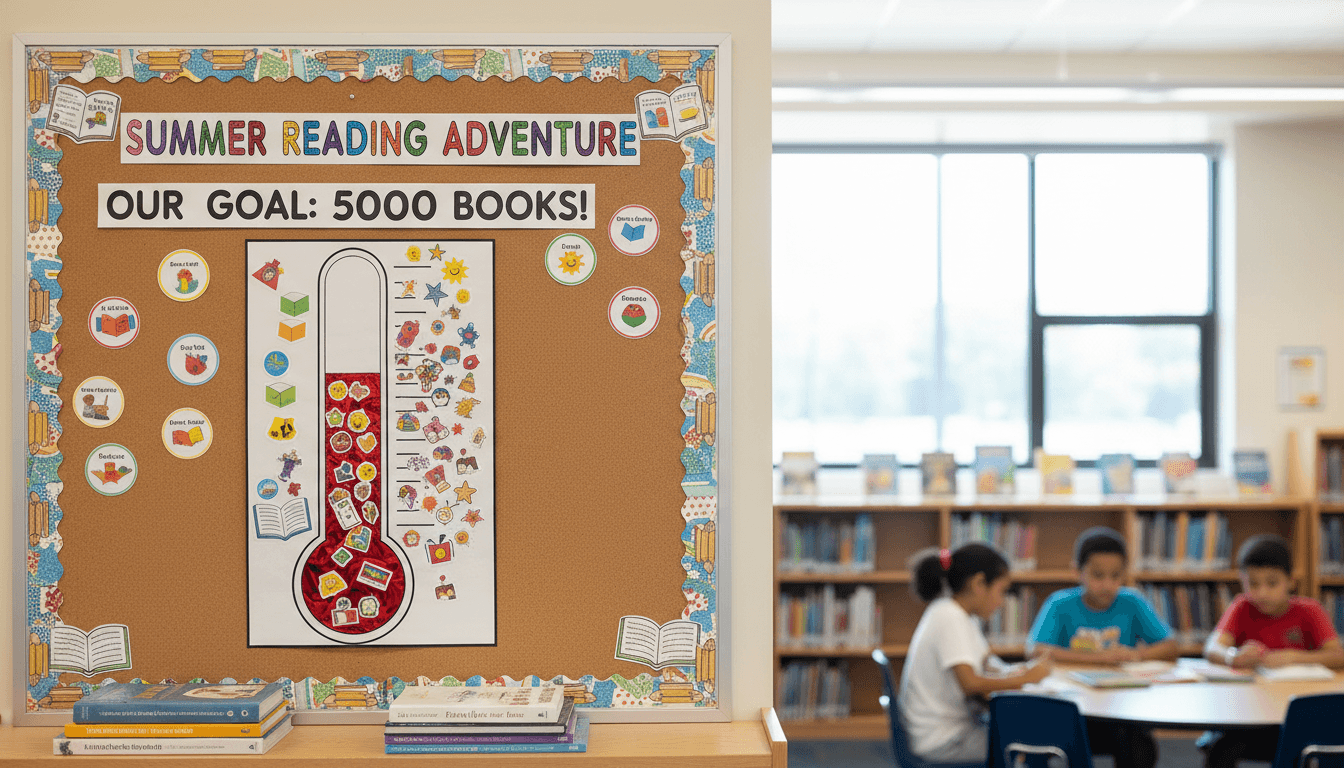
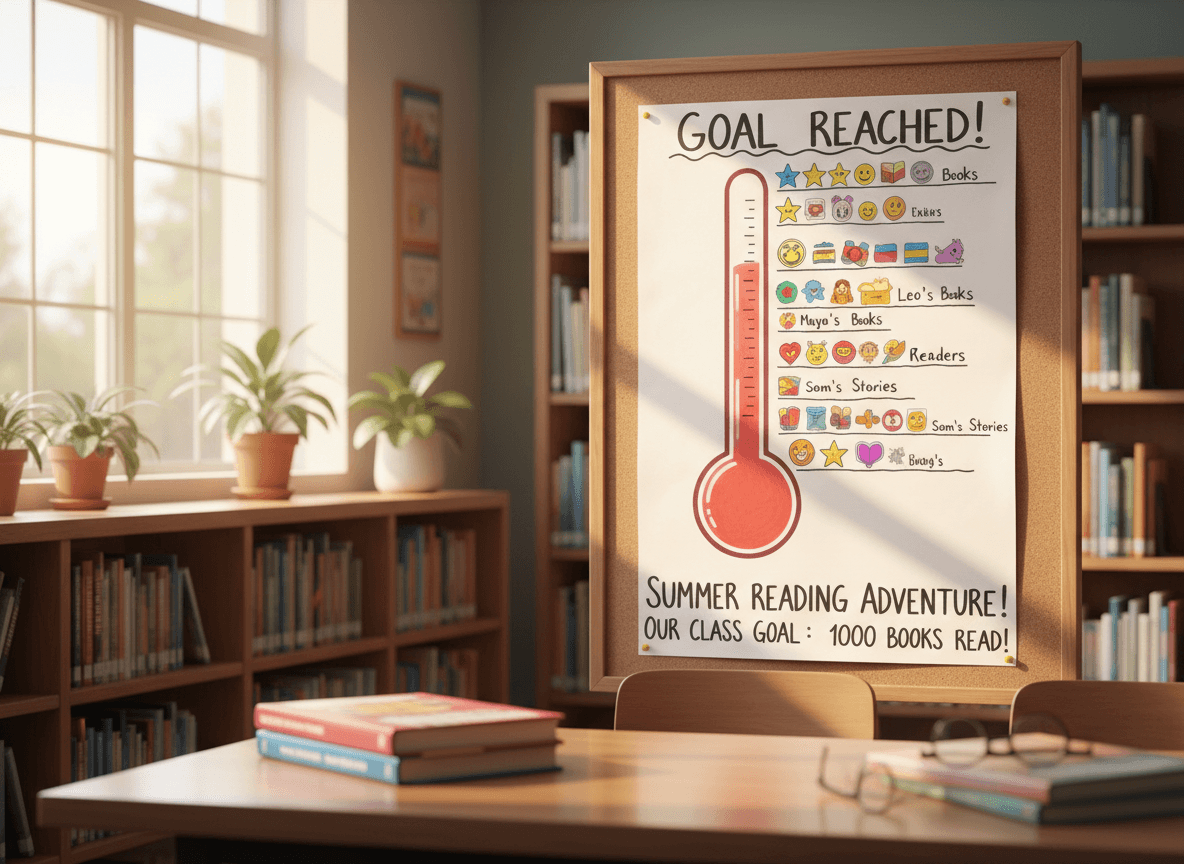
Build a physical thermometer in the library and a digital one in the newsletter. The physical one is for the kids walking by. The digital one is for the families at home. Update both every week. Photograph the physical thermometer for the newsletter so families see the same number their kid is seeing in the hallway.
The classroom competition risk
Avoid class-vs-class. The kid in the bottom-place class with reading struggles will feel worse, not better. A school-wide thermometer where every kid adds to one collective goal removes the loss. Same motivation, none of the shame. If the school hits the goal, every kid celebrated. If not, the librarian owns the miss, not the lowest-reading class.
The prize-less alternative
Skip the per-book coupons. Replace them with one school-wide celebration if the goal is hit: a pajama-read-in afternoon, a guest reader assembly, a popcorn-and-book hour. The celebration is shared, low cost, and not tied to individual page counts. Kids who read two pages a day get the same celebration as kids who read 30. Reading is the win, not the prize.
Example: Hilltop K-8 school, 620 students. Last spring the librarian ran a six-week pages challenge with a goal of 200,000 pages. The newsletter sent weekly updates with the thermometer image, the current count, and one named class. Final count was 218,000 pages. The celebration was a Friday afternoon pajama read-in with hot chocolate. Total cost was $87.
The weekly newsletter rhythm
Six emails, each short. Week 1: announce the goal and the thermometer. Week 2: first count and a named class. Week 3: midpoint check, current pace, two named students who read a lot. Week 4: a featured book that has been popular. Week 5: final push, what is needed to hit the goal. Week 6: did we hit it, celebration details.
The family pages-tracker
Include a one-paragraph note for families on how to log pages at home. A printable bookmark with a page-count field, or a link to a Google Form. Pages get totaled weekly. Honor system is fine, because the goal is reading culture, not audit accuracy.
How Daystage helps with reading challenge newsletters
Daystage lets you build the challenge template once and send the six weekly updates without rebuilding the layout. The thermometer image slot, the count, and the named-class highlight plug into the same structure each week. Twenty minutes a week for six weeks keeps the challenge alive and the families watching.
Get one newsletter idea every week.
Free. For teachers. No spam.
Frequently asked questions
What is the right length for a school-wide reading challenge?
Six to eight weeks. Shorter than four weeks and kids do not get into a rhythm. Longer than ten and the enthusiasm dies in the middle. Six weeks lets you announce in week one, mid-point energy in week three, final push in week five, celebration in week six. Most challenges fail because they ran too long, not too short.
Should the reading challenge use a competition between classrooms?
Carefully. Competition motivates some kids and shuts down others. If you run a class-vs-class race, the kid with reading struggles in the losing class feels worse, not better. Safer model: a single school-wide thermometer with every kid's pages adding to one collective goal. Everyone wins or no one does. Removes the loss for the kid who reads two pages a day.
Do reading challenges need prizes?
Not really, and the data on extrinsic prizes for reading is mixed at best. A pizza party at the end works as a low-cost celebration. Coupon-for-each-book systems tend to teach kids to game the count, picking short books to clear the prize. A prize-less challenge with a real celebration at the end works as well or better in most schools.
How does the newsletter keep the challenge alive past week two?
Weekly updates with the current thermometer count, plus one named student or class doing something specific. 'Mrs. Chen's third grade added 4,200 pages this week, putting them at 18,400 total. The school is now at 124,000 pages with 88,000 to go.' Specific numbers and named groups keep families paying attention. Vague 'great job everyone' kills the rhythm.
Is there a simple tool for sending the weekly challenge updates?
Daystage lets school librarians build a reading challenge template once and send weekly updates without rebuilding the layout. The thermometer image, the count, and the named-class highlight plug into the same structure. Six weekly sends with the same template takes minutes per week, not hours.

Adi Ackerman
Author
Adi Ackerman is a former classroom teacher and curriculum writer with 8 years in K-8 schools. She writes about school communication, parent engagement, and what actually works in real classrooms.
More for School Librarian
Ready to send your first newsletter?
3 newsletters free. No credit card. First one ready in under 5 minutes.
Get started free