
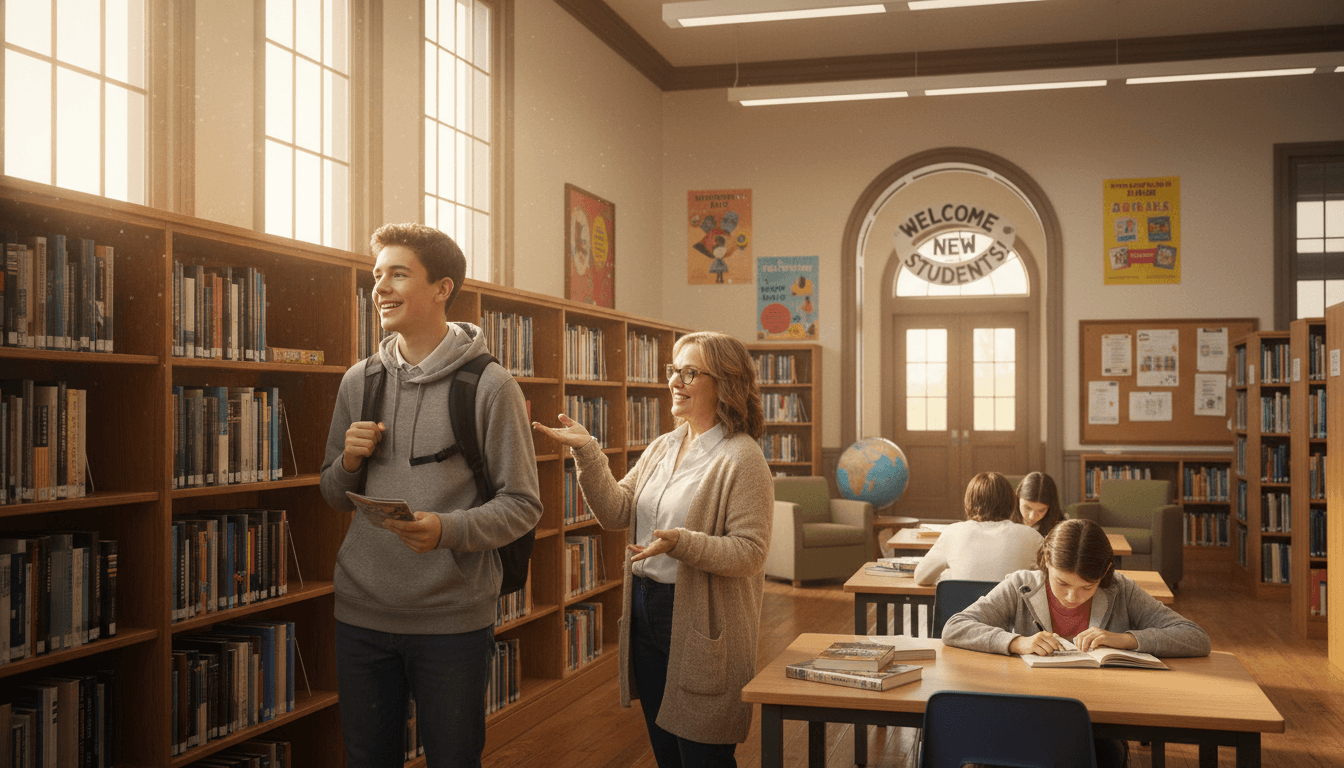
Library Newsletter for New Student Orientation: A Template

New students arrive on every kind of day. First day of school, mid October, the week after spring break. They walk into a building where everyone else already knows the routine, and the library is one of the first places they will need to figure out. A small, specific welcome newsletter is one of the cheapest, highest-trust moves a school librarian can make.
What this newsletter is and is not
It is a one-off email, not a recurring monthly issue. It goes to one family, the day before or the morning of the student's first day. It mirrors the 15-minute library tour the student will get in person, so the family can preview the experience and the student feels less lost when they walk in.
Section 1: a warm, short welcome
Two or three sentences. Use the student's name. Example: "Welcome to Lincoln, Theo. The library is at the end of the second floor hallway, right next to the art room. I am Ms. Aharon, the school librarian, and I will give you a short tour on your first day."
Section 2: the 15-minute tour, previewed
A bulleted list of what you will show the student in person. Example:
- Where the third grade books live (the green bins along the back wall)
- How to check out (scan your school ID, take up to three books)
- When your class visits the library (Tuesdays, 10:30 AM)
- Where to sit during free time (the reading nook by the window)
- One book picked for you to take home on day one
Section 3: your library buddy
Two or three sentences. Example: "Your library buddy for the first two weeks is Maya. She is also in third grade and has been at Lincoln since first grade. She will sit with you in library on Tuesday and help you check out your first book. After two weeks you will not need a buddy, but Maya will still be a good friend to know."
Section 4: the first book pick
One book. Three sentences. Use the student's grade and what you already know about them, even if that is just their grade. Example: "Your first book is Stink: The Incredible Shrinking Kid by Megan McDonald. It is short, funny, and most third graders finish it in three or four days. If you like it, the next six books in the series are on our shelves."
Section 5: how the library works at our school
Short paragraph for the family. Example: "Library hours: 7:45 AM to 3:30 PM daily, open during recess. Third graders check out up to three books at a time. Books are due back at the next library block (one week later). Lost or damaged books: please email me before paying, we have a fund for families who need it."
Section 6: how to reach me
Two sentences. Example: "If your family has any questions before Theo's first day, you can email me at this address. I usually respond within a school day. If you do not hear back, it means your email got stuck somewhere, please try again."
What to skip in the welcome email
Resist the urge to send a comprehensive library handbook on day one. New students and their families are absorbing a thousand new things that week. The library does not need to be one of the louder voices. Five sections plus a footer is enough. The rest of what they need to know will land naturally over the first month, through the regular newsletter and through the student's own experience in the building. Day one is for warmth and one usable book.
The mid-year arrival variation
Mid-year new students need a slightly different version of the same template. Replace the "first day" framing with "this week" and add a one-paragraph catch-up on what the grade has been doing in the library. Example: "Third grade just finished the habitat research unit and is starting a biography unit next Monday. Your kid will jump in mid-unit and pick a subject this week. I will help them choose, no pressure to pick one immediately." That sentence lowers the anxiety of arriving in the middle of something more than any general welcome ever will.
Following up at the two-week mark
Send one follow-up email two weeks after the student arrives. Three sentences. "Hi, just checking in. Theo has been in the library twice now and seems comfortable. If you have any questions about how the library is going, this is a good moment to ask." That follow-up takes 30 seconds to send and catches the families who were too overwhelmed to read the first email but are now settled enough to engage. Most librarians who add this two-week check-in say it is the single highest-trust move in the orientation arc.
How Daystage helps with new-student orientation newsletters
Daystage lets you build the orientation template once and send a personalized welcome to each new student in about 10 minutes. The email goes out branded to your school, fits on a phone screen, and lands the family in your library before the student walks in the door. You write the content, Daystage sends.
Get one newsletter idea every week.
Free. For teachers. No spam.
Frequently asked questions
When should a new-student library orientation newsletter go out?
Send it the day before the student's first day, or the morning of, addressed to the family. New students who arrive mid-year are the most likely to be missed by the regular library communication cycle. A small, specific welcome email lands well and takes 10 minutes to send if you have a template.
What does a good 15-minute library tour cover?
Five things, in order: where your books live by grade, how to check out, when your class visits, where to sit during free time, and one book picked for you to take home today. Anything more and a brand-new student stops absorbing. The newsletter should mirror that order so it feels like a recap, not a quiz.
Should the newsletter assign the new student a buddy?
If your library uses a buddy system, yes. Two sentences naming the buddy and what the buddy will help with on day one. 'Your library buddy for this week is Maya. She will sit with you during library on Wednesday and help you check out your first book.' Specificity beats general welcomes.
What is the right first book recommendation for a brand-new student?
Pick something short, popular at their grade level, and easy to finish in a week. Mercy Watson for second grade, Stink for third, Front Desk for fourth, Wonder for fifth and sixth. A new student finishing one book in the first week of their new school gives them a small win they can carry into week two.
Is there a tool that handles sending one-off welcome emails like this?
Daystage was built for school staff who want a clean, branded email out the door without wrestling with image sizes or design software. The orientation template plugs in cleanly, you save it once, and each new student gets a personalized welcome in 10 minutes. The email looks like the school sent it on purpose.

Adi Ackerman
Author
Adi Ackerman is a former classroom teacher and curriculum writer with 8 years in K-8 schools. She writes about school communication, parent engagement, and what actually works in real classrooms.
More for School Librarian
Ready to send your first newsletter?
3 newsletters free. No credit card. First one ready in under 5 minutes.
Get started free