
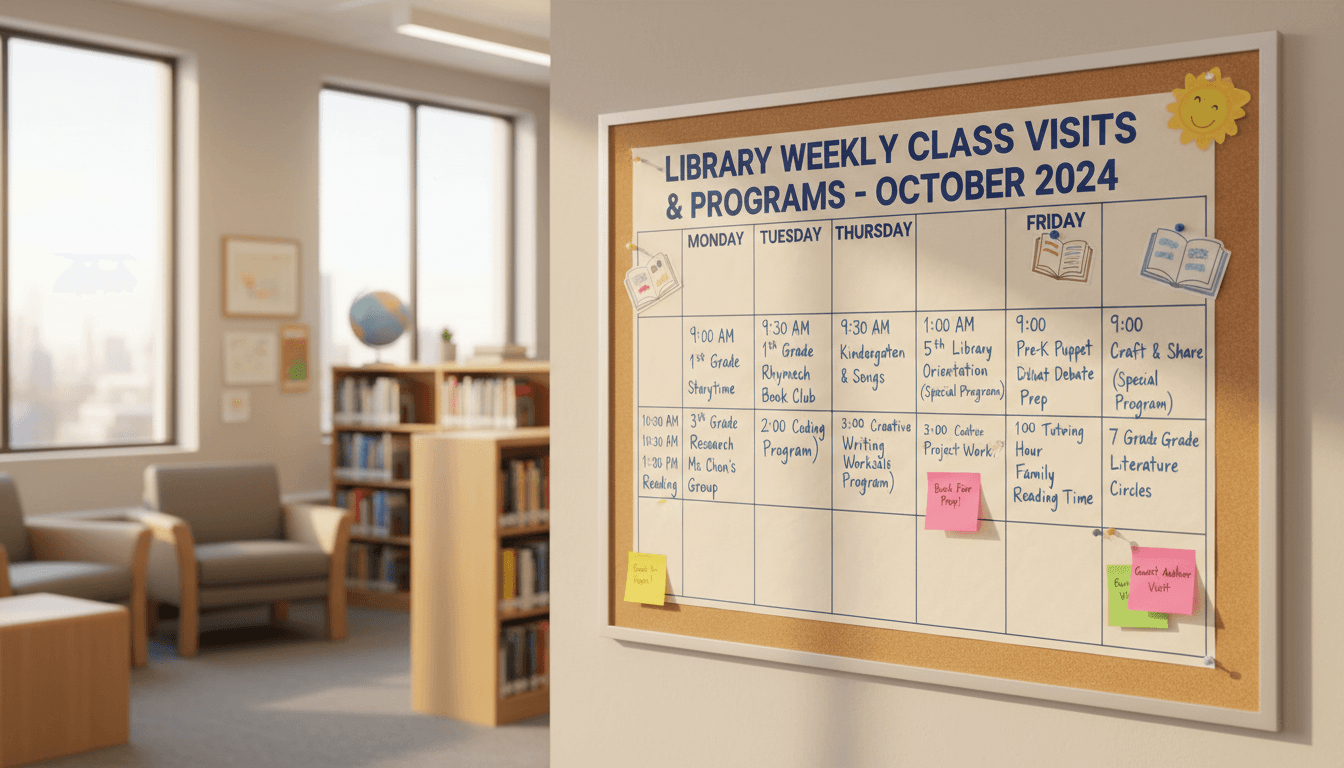
Library Newsletter on Library Scheduling: A Plain-Language Template
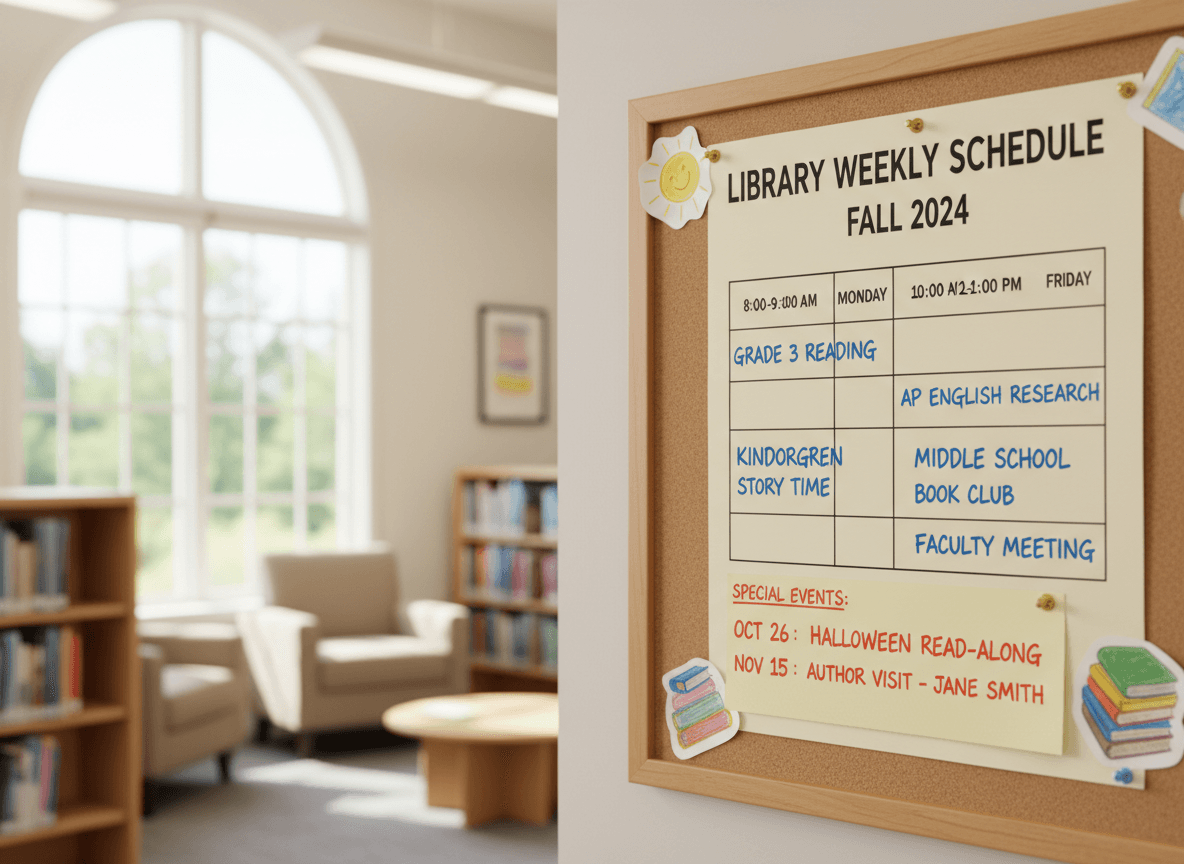
Most parents have no idea how their kid's library time works. They assume there is a weekly block, every class, all year. Some schools run it that way. Many do not. A single, well-written newsletter at the start of the year (and a refresh in January) is usually enough to put the whole question to rest.
Why this matters more than it sounds
When parents do not understand the library schedule, they fill in the gap with assumptions. They think their kid is not reading because no books came home this week. They think the library is underused because their kid has not mentioned it. A small explainer prevents months of quiet frustration.
Section 1: a note from the librarian
Two or three sentences. Example: "A few families have asked how often their kid actually visits the library this year. The short answer is: it depends on the grade. Here is the longer answer in plain language."
Section 2: what scheduling model we use, in plain language
One paragraph. Example: "Our school uses a hybrid model. Kindergarten through second grade have a fixed weekly library block on a set day. Third through fifth grade have flexible scheduling, which means classes come to the library when the teacher and I plan it together for a specific unit. Both groups also have open library time during recess and lunch."
Section 3: what your kid actually gets, by grade
A short table or bulleted list. Example:
- Kindergarten: every Monday, 30 minutes, story-time plus checkout (one book)
- First grade: every Tuesday, 40 minutes, story-time plus checkout (two books)
- Second grade: every Wednesday, 40 minutes, lesson plus checkout (three books)
- Third grade: at least 6 visits per year for research and checkout, plus open recess and lunch access
- Fourth grade: at least 8 visits per year for research and checkout, plus open recess and lunch access
- Fifth grade: at least 8 visits per year, plus weekly book club for kids who sign up
Section 4: why the model looks this way
Two or three sentences. Example: "The fixed schedule for K-2 gives younger kids a predictable rhythm and protects story-time. The flexible schedule for 3-5 lets the library plug into real research units instead of trying to teach to a class schedule that does not match the unit calendar. Both models keep open library access for every kid, every day."
Section 5: what to do if you have questions
Two sentences. Example: "If you want to know exactly when your kid is visiting the library this month, email me and I will send you the schedule for their class. If your kid is missing the library and wants more time, they can come during recess any day of the week."
Footer: standing library info
Same block at the bottom every year. "Library hours: 7:45 AM to 3:30 PM daily, open during recess. Checkout limits: K-1 one or two books, 2-3 three books, 4-5 four books. Books are due back at the next class library block, or two weeks for open checkouts. Lost or damaged books: see me, we have a fund."
The January refresh
Send the schedule explainer once at the start of the year and once in January. The January version is shorter: a reminder of the model, any changes to the schedule for the second half of the year, and a refreshed grade-by-grade list. New families join mid-year, regular families forget the schedule by December, and a quick reset in January cuts the spring confusion before it builds.
What to say when the model changes
Schools sometimes shift from fixed to flexible scheduling or the reverse. When that happens, the schedule newsletter does extra work for one cycle. Three things to include: what is changing, why the school made the call, and what stays the same. The "what stays the same" line matters most. Parents who feel the library is being taken away will push back. Parents who hear "your kid still has open library access every day at recess and lunch, plus at least eight scheduled visits a year" usually accept the change.
The teacher-facing version
Send a parallel version of the schedule newsletter to teachers on the first day of school. The structure is the same, but the content shifts. Teachers need to know how to book flexible time, what the lead time is, what materials the library can prepare for them, and which units the library is already co-planning. Two pages, sent once, prevents months of confused emails. The parent version and the teacher version share the same template skeleton, which means you write the structure once and refill twice.
How Daystage helps with scheduling-explainer newsletters
Daystage gives you a template you build once and send at the start of every school year with small updates. The schedule explainer goes out branded to your school, fits on a phone, and cuts the confusion that quietly drains library trust over a year. You write the content, Daystage handles the send.
Get one newsletter idea every week.
Free. For teachers. No spam.
Frequently asked questions
Why send a whole newsletter about library scheduling?
Because parents do not understand it and teachers often do not either. Schools quietly use fixed schedules, flexible schedules, or a hybrid, and each one shapes what their kid does in the library. Sending one well-written explanation a year cuts confusion and builds trust in the program.
What is the difference between fixed and flexible library scheduling?
Fixed: every class visits the library at a set time each week, regardless of what the unit is. Flexible: classes come to the library when the unit needs the library, scheduled by the teacher and librarian together. Most elementary schools use fixed, most middle and high schools use flexible, and many K-8 schools run a hybrid by grade band.
Should the newsletter argue for one model over the other?
No. Explain what your school does and why, and what it means for the family. Parents do not want a research paper on best practices. They want to know whether their kid sees the librarian every week and whether they can borrow books on a predictable cycle.
How do you handle parents who want a fixed schedule when the school moved to flexible?
Acknowledge the change, explain the rationale in two sentences, and tell them how their kid will still get library access. 'Your fifth grader will no longer have a fixed weekly library block, but will visit the library at least twice a unit with their class and can check out books during recess and lunch.' Concrete beats philosophical.
Is there a tool that handles sending a schedule-explainer newsletter cleanly?
Daystage was built for school staff who want a clean, branded newsletter without wrestling with image sizes or columns. The scheduling explainer template plugs in cleanly, you save it once, and you can send the same email at the start of every school year with small updates. The email looks like the school sent it on purpose.

Adi Ackerman
Author
Adi Ackerman is a former classroom teacher and curriculum writer with 8 years in K-8 schools. She writes about school communication, parent engagement, and what actually works in real classrooms.
More for School Librarian
Ready to send your first newsletter?
3 newsletters free. No credit card. First one ready in under 5 minutes.
Get started free