
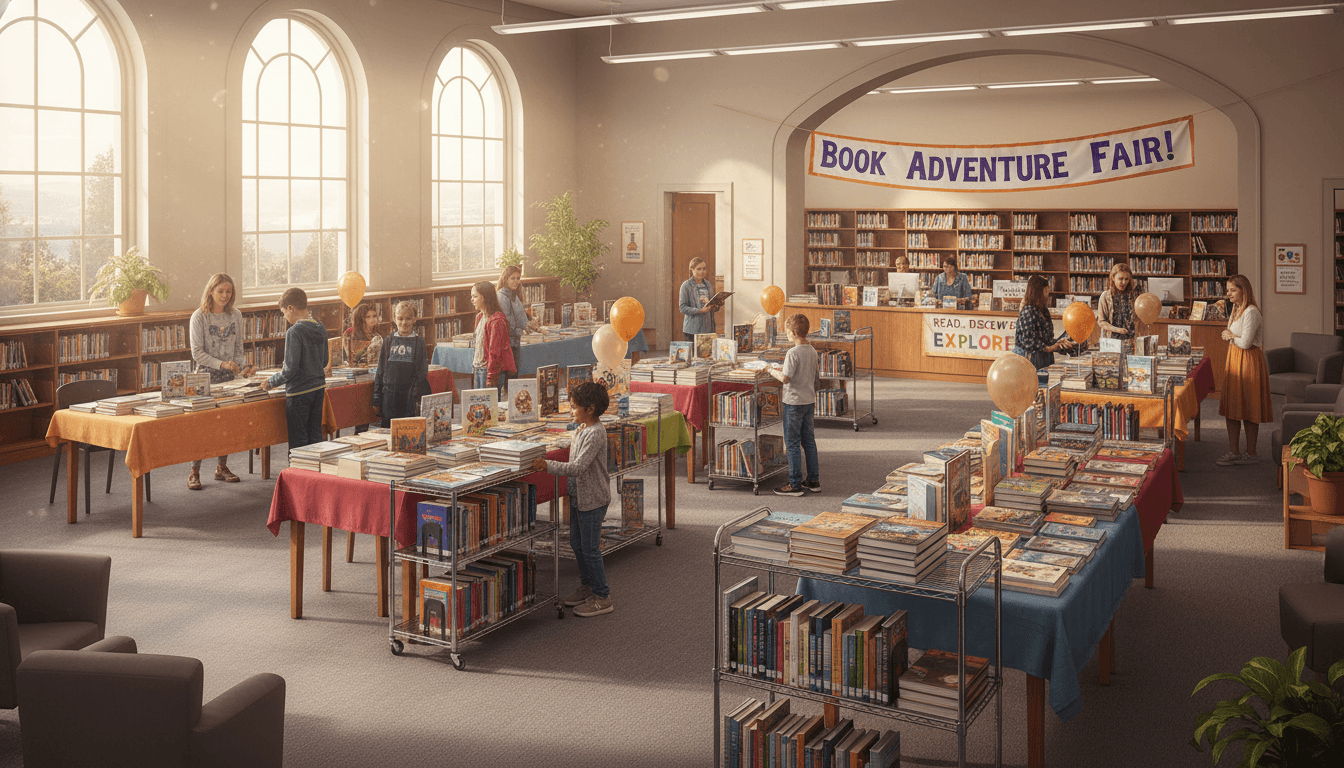
Library Newsletter for a Book Fair: A Template That Works
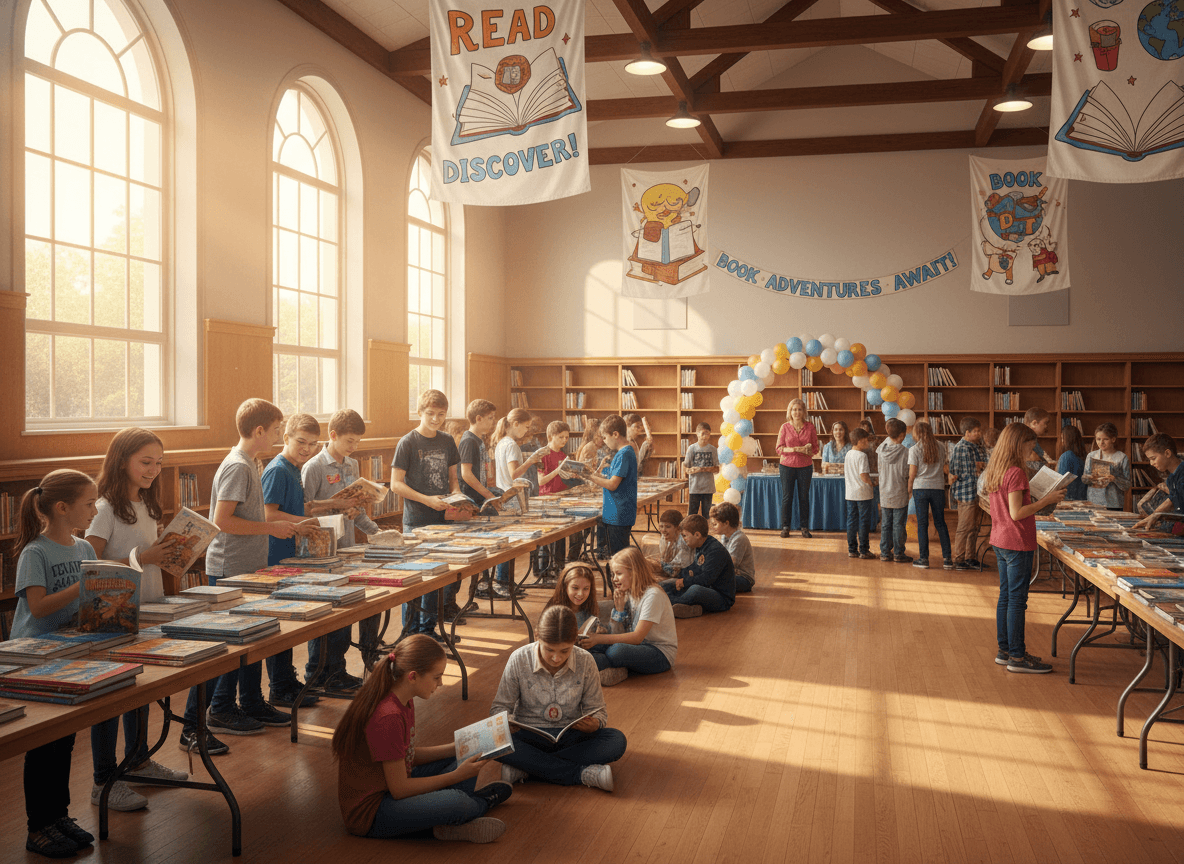
A school book fair lives or dies on the newsletter that announces it. The fair itself is fine. The wall of posters in the hallway is fine. But the families who come on family night, the volunteers who show up Monday morning, and the kids who arrive with a list in hand are the ones who read the email.
Pick the dates and lock them in
Book fairs run four school days plus one family night. Setup happens the Friday or Monday before. Classes visit Tuesday through Friday in 30-minute slots. Family night is Wednesday or Thursday evening, 5 to 7 PM. Breakdown happens the following Monday. Put all five dates in the newsletter at the top, in a list, with times.
Lead with family night, not the fair itself
Family night is the one date families need to put on the calendar. Lead the newsletter with it. "Family night: Thursday, November 7, 5 to 7 PM in the library. Snacks, raffle, and the full fair open for shopping with your kid." That single line drives more attendance than any general "the book fair is coming" paragraph.
Name the provider and the profit share
One sentence each. "This year's fair is a Scholastic Book Fair. The school earns 50 percent of every dollar spent back in books for the library collection." Transparency turns the fair into a fundraiser story, which is what it actually is. Families who know spend more.
The class visit schedule
Parents want to know when their kid's class is visiting so they can send money on the right day. Either embed the schedule by grade or link to a Google Sheet. Include the wishlist option: students who cannot bring money on visit day can fill out a wishlist and the family can pay online or send it the next day.
The online shopping link
Most fair providers offer online shopping with delivery to the school. Put the link in the newsletter, bold the date the link closes, and note that online sales count toward the same profit share as in-person sales. Grandparents in another state buy more than families realize once the link is visible.
Volunteer ask
Specific times, specific roles. "Setup help: Monday 8-10 AM (unboxing and shelving). Class visit help: Tuesday-Friday 9-11 AM (cashier and floor support). Family night: Thursday 4:30-7:30 PM (greeters and cashier). Breakdown: Monday 8-10 AM. Reply to this email with the slots you can take." Vague volunteer asks get ignored. Specific ones get filled.
Example: Parkview Elementary, 460 students. Last fall the librarian ran a four-day Scholastic fair with one family night. The newsletter led with the family night date and included the profit-share line. Family night attendance was 220 people, up from 140 the year before. Total fair revenue was $9,800. The library got $4,900 in book credit.
The teacher wishlist line
Near the bottom, one sentence: "Teachers have built classroom wishlists. If you would like to buy a book for your child's class, ask their teacher or check the display in the library lobby." This quietly handles families who want to give and families who cannot afford the fair, in the same sentence.
How Daystage helps with book fair newsletters
Daystage lets you save the book fair template and reuse it for every fair. The four-day schedule, family night call-out, profit share line, and volunteer ask plug into the same layout each time. You update the dates and the provider, and the rest of the newsletter is ready to send in under 20 minutes.
Get one newsletter idea every week.
Free. For teachers. No spam.
Frequently asked questions
How early should the book fair announcement go out?
Three weeks before is the sweet spot. Two weeks does not give working families enough time to plan family night. Four weeks gets forgotten before the fair arrives. Send the full announcement at week three, a reminder at week one with family night details, and a same-week note about online shopping if your provider offers it.
Should the newsletter push Scholastic or an independent book fair?
Both work, but be transparent about which one. Scholastic fairs are easier logistically, well-known to families, and come with built-in marketing. Independent fairs (Literati, local bookstore partnerships) often give better titles and a higher profit share. Whichever you pick, name the provider in the newsletter so families know what to expect.
How much of the profit should the school keep, and should that be in the newsletter?
Yes, be transparent. Scholastic gives 25 percent in cash or 50 percent in book credit toward the library collection. Independent fairs sometimes go higher. Telling families 'every dollar spent puts about 50 cents of new books on our shelves' makes the fair feel like a fundraiser, not a sales push. Families spend more when they know where the money goes.
How do you handle families who cannot afford the book fair?
Set up a quiet 'teacher wishlist' system. Families who can afford to give pick a wishlist book from a classroom teacher, pay for it at the fair, and the teacher passes it to a student. No public list, no shaming. Most book fairs sell out the wishlists within two days when the option is announced gently in the newsletter.
Is there an easy way to send the book fair newsletter to all families?
Daystage gives librarians a book fair template they can build once and reuse every fair. The four-day logistics, family night details, and online shopping link plug into the same structure each time. The send goes out branded to the school and reaches the full family list without bouncing.

Adi Ackerman
Author
Adi Ackerman is a former classroom teacher and curriculum writer with 8 years in K-8 schools. She writes about school communication, parent engagement, and what actually works in real classrooms.
More for School Librarian
Ready to send your first newsletter?
3 newsletters free. No credit card. First one ready in under 5 minutes.
Get started free