

Quarterly Library Newsletter: A Working Template
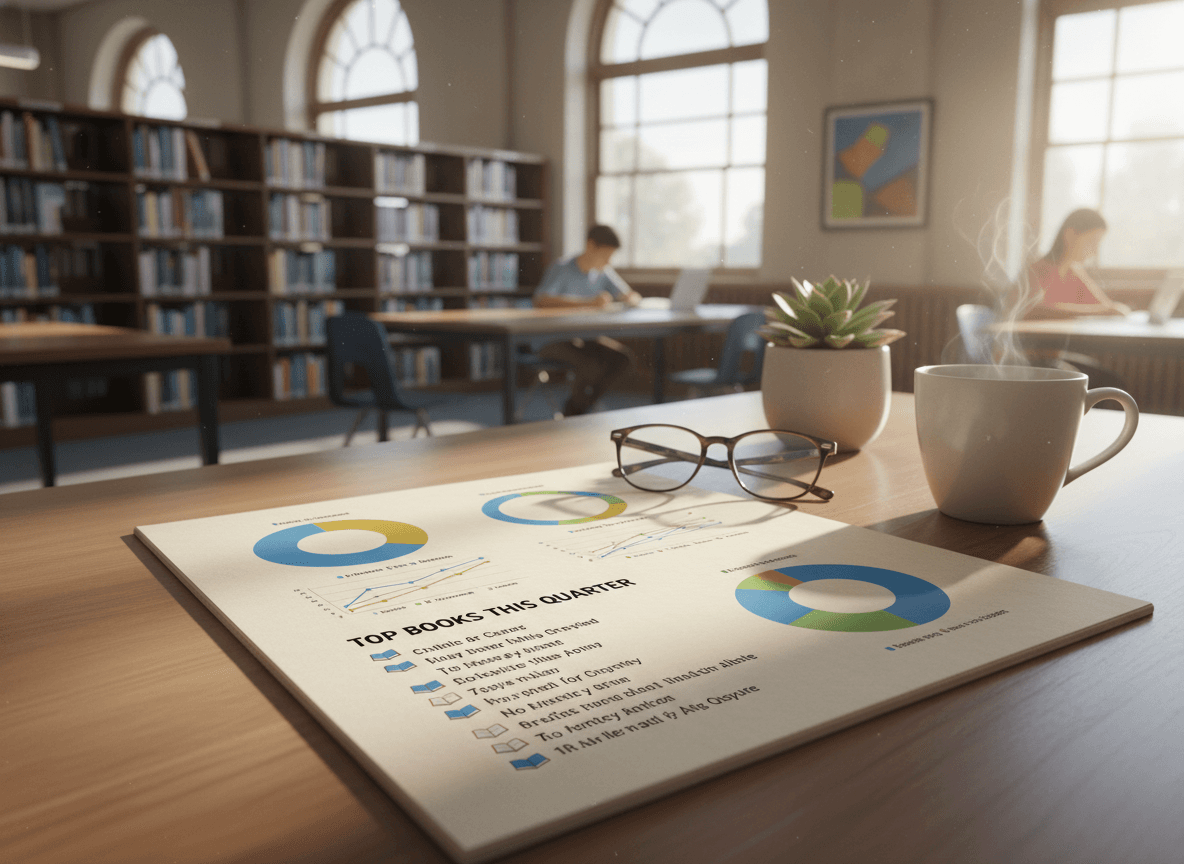
A quarterly library newsletter is the one most media specialists skip, and it is the one with the most influence in the building. Monthly newsletters keep families current. The quarterly tells the story of what the library actually did over twelve weeks. It is the document that builds the case for the program at budget time.
Who the quarterly is for
Three audiences, one email. Families want to see what their kids are reading and what is coming next. Teachers want to see which collections are getting use. The principal wants to see whether the library is moving the needle. Write it for all three and let each scroll to the section that matters to them.
Section 1: the 12-week recap
Two short paragraphs. What was the focus of the quarter and what happened? Example: "Q1 was about getting every grade through a library orientation and seeing what stuck. By week six, our K-2 students were checking out independently. Third grade ran a peer book-review project that filled an entire bulletin board. We hosted one author visit and ran the fall book fair."
Section 2: circulation data
Three numbers, no more. Total checkouts, percent change from the prior quarter, and the most-circulated grade. Example: "Q1 circulation: 2,840 books, up 11 percent from Q4 of last year. Third grade led the building with 612 checkouts." That is the entire section. A small bar graphic can sit next to it if your tool supports it cleanly. If not, the numbers alone do the work.
Section 3: top 10 books of the quarter
Pulled from your circulation system. List title, author, and grade range. No synopsis. Example:
1. Dog Man: Twenty Thousand Fleas Under the Sea by Dav Pilkey (grades K-3)
2. The Wild Robot by Peter Brown (grades 3-5)
3. Wings of Fire: The Dragonet Prophecy by Tui T. Sutherland (grades 4-7)
4. New Kid by Jerry Craft (grades 4-7)
5. Front Desk by Kelly Yang (grades 4-6)
Five to ten is the right range. More than ten gets ignored. Less than five reads as if nothing circulated.
Section 4: what teachers and students did with the library
One paragraph. Name two or three collaborations from the quarter. Example: "Worked with third grade on a six-week research project on animal habitats. Co-taught a unit on source evaluation with the fifth grade ELA team. Hosted weekly book talks during fourth grade lunch." Specificity here builds the case that the library is instructional space, not storage.
Section 5: programming preview for the next quarter
A short list of what is coming. Three to five items with dates if you have them. Example: "November: author visit with Erin Entrada Kelly, date TBD. December: holiday book swap, Dec 15. January: battle of the books kickoff for grades 4-6." Families plan early. Teachers plan earlier. The preview lets both adjust.
Section 6: one ask
Every quarterly should end with one specific ask. Volunteers for an upcoming event, donations of gently used graphic novels, parent recommendations for the spring book fair. One ask, one paragraph. Multiple asks dilute the response. A single concrete ask in a quarterly newsletter typically pulls more volunteers than three months of monthly mentions.
How Daystage helps with quarterly library newsletters
Daystage gives you a quarterly template that holds the structure steady across four sends a year. The data blocks, top 10 list, and preview section keep their formatting. You refill the numbers each quarter and send to families, teachers, and the principal in one go, without rebuilding the layout each time.
Get one newsletter idea every week.
Free. For teachers. No spam.
Frequently asked questions
Why send a quarterly newsletter on top of a monthly one?
Different job. The monthly newsletter is for families to act on this month. The quarterly is for everyone to see the bigger picture: how circulation is trending, what kids are actually reading, what programs hit, and what is coming next. Send the quarterly to families, teachers, and the principal. It builds the case for the library every twelve weeks.
What circulation data is worth sharing?
Three numbers. Total checkouts for the quarter, top three checkout days, and the most-circulated grade or class. Skip averages and ratios. Parents and principals respond to whole numbers and trend arrows. 'We circulated 2,840 books this quarter, up 11 percent from last quarter' lands. A bar chart of weekly averages does not.
How do you pick the top 10 books for the quarter?
Pull straight from your circulation system. Sort by total checkouts in the date range, filter out reference and textbook records, and take the top 10. Resist the urge to swap in books you wish kids were reading. The whole point is to show families what their kids' peers are actually reading. That list moves books off shelves the next quarter.
What goes in the programming preview section?
Three to five lines about what is coming in the next twelve weeks. Author visit, book fair, battle of the books, summer reading kickoff, whatever fits the calendar. Include dates if you have them. If you do not have dates yet, give the month and say 'date TBD'. Families plan their calendars far ahead. They will thank you for the heads-up.
Is there a tool that makes the quarterly easy to put together?
Daystage lets you build the quarterly template with reusable sections for circulation data, top 10, and the program preview. You refill the numbers and the titles each quarter and send. The chart blocks hold their formatting, the top 10 list stays clean on mobile, and the email looks the same to families, teachers, and the principal who all get the same send.

Adi Ackerman
Author
Adi Ackerman is a former classroom teacher and curriculum writer with 8 years in K-8 schools. She writes about school communication, parent engagement, and what actually works in real classrooms.
More for School Librarian
Ready to send your first newsletter?
3 newsletters free. No credit card. First one ready in under 5 minutes.
Get started free